
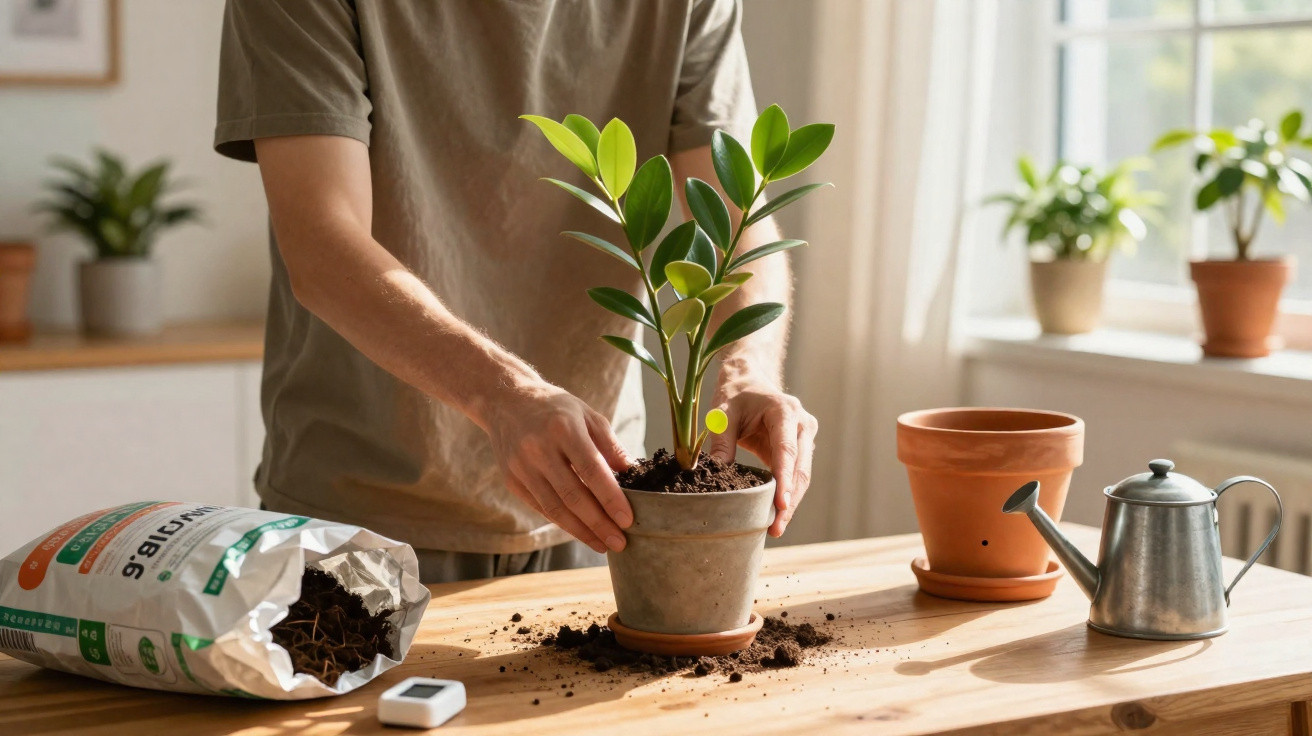
The zamioculca has become a popular choice for homes and offices because it copes well indoors and manages with low light. Even so, many owners notice the same issue: the plant simply does not grow. Leaves that stay the same size for months, or the lack of any new shoots, can be a sign that something in your care routine is holding back development - even when everything appears to be in order.
Why is a zamioculca that is not growing a reason to pay attention?
When a zamioculca is not growing, it can look “stuck”: only a few stems, foliage that seems sparse and spaced out, and no new shoots appearing. The underlying issue often starts in its thick, water-storing roots, which shift into a conservation mode if the conditions inside the pot are not supporting healthy growth.
This species is naturally slow-growing, which can lead people to overcorrect - watering too often or repeatedly changing pots. In most cases, gentle tweaks across the seasons, combined with patient observation, work better than a series of sudden, frequent changes.
Which watering, compost and pot mistakes stop a zamioculca from growing?
Overwatering is one of the most common reasons a zamioculca stalls. Because its roots and rhizomes store moisture, it does not tolerate waterlogged compost. Saturated conditions reduce root respiration and increase the risk of rot, forcing the plant to divert energy away from growth and towards staying alive.
Very compact mixes and poorly chosen pots can also get in the way, as they hold too much water and restrict healthy root space. To create a more suitable setup, it helps to follow a simple structure that improves drainage and aeration:
- A standard houseplant compost that is light and well sieved
- Coarse sand, perlite, or fine gravel to boost drainage
- A lightweight organic component, such as pine bark or coconut coir
- A pot with drainage holes, sized only slightly larger than the root ball
How light and moving it around affect zamioculca development
Moving a zamioculca from place to place too often slows adaptation and growth, as the plant has to readjust every time the light conditions change. When it is shifted between very bright rooms and much shadier spots, you may see yellowing leaves, leaflet drop, and overly elongated stems.
Bright but filtered, indirect light - in a consistent position such as near a well-lit window - supports sturdier new growth. In very dark spaces it can survive, but it focuses on maintaining what it already has, producing new shoots less frequently and at an even slower pace.
How to safely encourage a zamioculca that is not growing
To promote growth without stressing the plant, aim for gradual, steady adjustments. Watching the roots, leaves and shooting pattern over several months helps you judge whether changes are working and prevents unnecessary repeat interventions.
Some of the most useful steps include repotting into a free-draining mix when needed, letting the compost dry out properly between waterings, choosing a fixed spot with good indirect light, and using a balanced feed only in spring and summer. With stronger roots and a stable environment, new stems tend to appear little by little - a sign that the plant has returned to growing at its own natural rate.

Comments
No comments yet. Be the first to comment!
Leave a Comment