
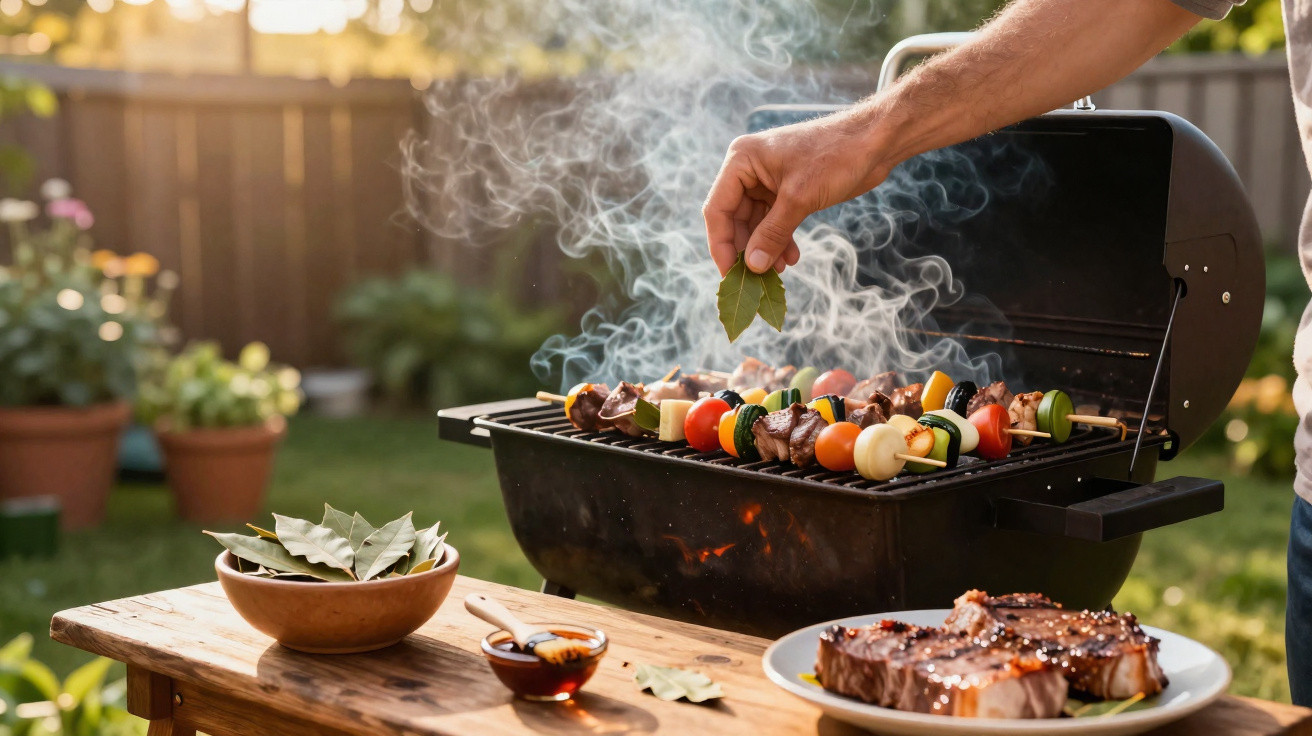
Adding bay leaves to the barbecue embers is a way to create an aromatic smoke that gives grilled meat, vegetables and cheeses a subtle herbal edge. The effect is gentle and tends to work best when you place just a few dried culinary leaves on a steady bed of embers, with no big flare-ups.
What happens when bay leaves come into contact with the embers?
Bay leaves from Laurus nobilis contain volatile compounds such as 1,8-cineole, linalool and eugenol. As the leaves heat up, some of these aromatic elements are released into the smoke and settle on the surface of the food, producing a fragrance that is different from charcoal alone.
Used straight on the coals, bay leaf is best thought of as an aroma boost rather than a primary seasoning. Meat still needs salt and whatever seasonings you have chosen, because a handful of leaves cannot meaningfully flavour the inside.
What is this barbecue trick for?
The idea is to add a herbal, lightly balsamic note to the smoke moving through the grill. You will usually notice it more on food set nearer the embers, or when cooking on a barbecue with a lid, where the smoke stays in contact with the surface for longer.
- Scent beef, pork and poultry cuts;
- Add aroma to grilled vegetables;
- Pair well with garlic, rosemary and citrus peel;
- Create a smoky note without changing the marinade;
- Perfume larger joints for part of the cook.
When should you put bay leaves on the embers?
The best point is once the charcoal has burned down into even embers and the flames have calmed. If you add the leaves right at the start, the fragrance may fade before the food even reaches the grill. If you wait until the very end, there may not be enough contact time to produce a noticeable aroma.
For items that stay on the barbecue longer, you can add bay leaf in small rounds, avoiding excessive smoke. For a balanced result, a few precautions help:
- Use only a few dried leaves at a time;
- Spread the bay leaves over different spots on the ember bed;
- Avoid tipping a whole handful onto the charcoal at once;
- Let the initial strong smoke die down;
- Keep food away from sudden flare-ups.
Fresh or dried bay leaves: which works better?
Dried bay leaves usually burn more predictably and release their aroma quickly. Fresh leaves contain more water, can produce heavier smoke at the start, and take longer to char. Either way, use only properly identified culinary bay; never use unknown ornamental leaves.
What precautions make this safer to do?
Keep the barbecue outdoors in a well-ventilated area, as smoke from both charcoal and leaves contains irritating particles. Anyone with asthma, severe rhinitis or respiratory sensitivity should not stand directly in the smoke stream. It also matters not to lean your face over the embers, and not to use alcohol or other flammable liquids to relight the fire.
Bay leaf is only for aroma: it does not make barbecuing “healthier”, it does not eliminate microorganisms in meat, and it does not replace proper cooking. With stable embers, a small number of leaves and good ventilation, it adds a discreet herbal scent without masking the food’s natural flavour.



Comments
No comments yet. Be the first to comment!
Leave a Comment