
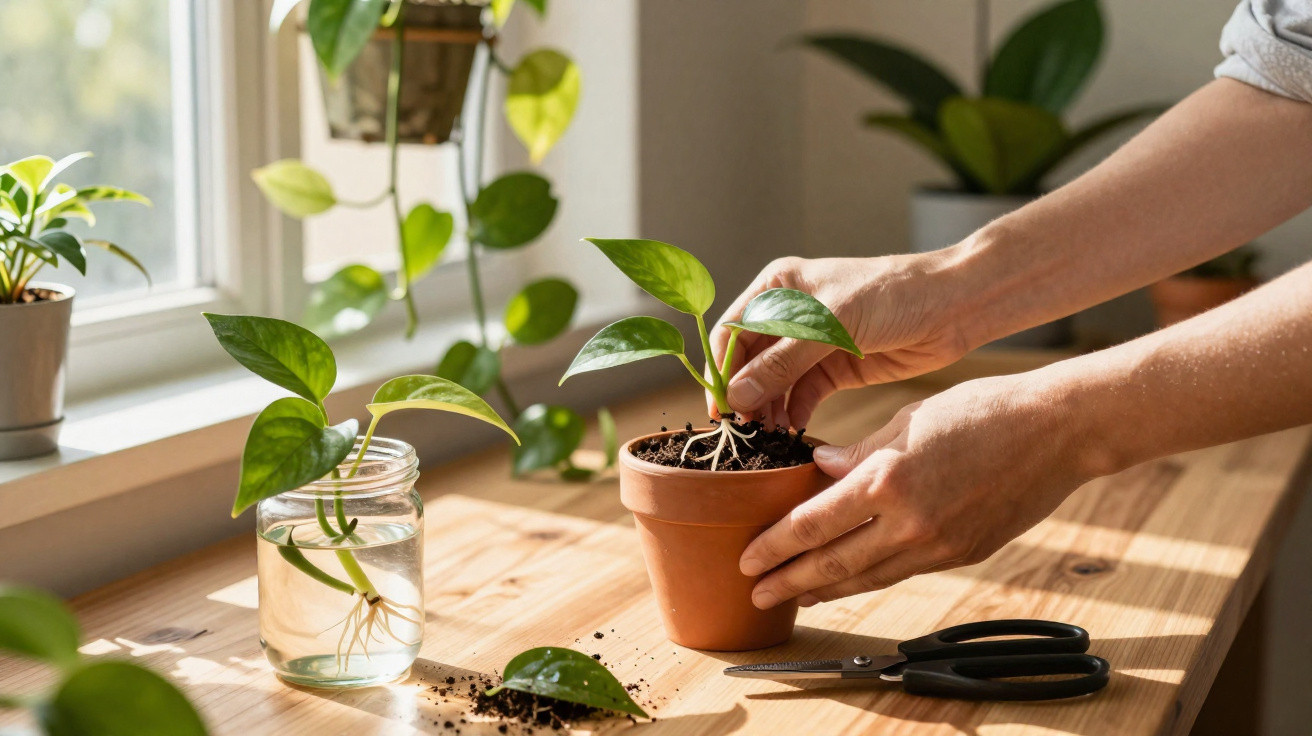
Growing more pothos at home has become a popular option for anyone who wants to add extra greenery indoors without spending much. This plant-often called devil’s ivy in the UK-is valued for being hardy and for coping well in a range of spaces. New plants can be raised from small sections of the stem through cutting propagation, a method that keeps the mother plant intact and, when done correctly, tends to succeed at a high rate.
What is cutting propagation for pothos?
Cutting propagation for pothos involves taking stem pieces that include at least one healthy node and encouraging those pieces to produce new roots. Unlike growing from seed, this approach creates a clone of the mother plant, which means the new leaves keep the same colour pattern and shape-an important benefit for indoor displays.
To get reliable results, choosing the right mother plant matters. Ideally, use a well-established pothos with firm leaves, no signs of pests, and stems long enough to make more than one cut. Weak or stressed stems are slower to root, can root unevenly, and may undermine the development of strong new plants.
How to multiply pothos at home, step by step
The process starts by gathering a few basic, easy-to-find items. Typically you will need clean scissors or a sharp knife, a container of water or a pot filled with a light growing medium, and-if possible-a small amount of organic-rich compost for the final potting stage. Keeping tools and containers clean is important to reduce the risk of disease.
Next, cut the pothos stem into sections containing one to three nodes. Make each cut a few millimetres below a node, either straight across or at a slight angle. Remove the leaves closest to the base so they will not sit under water or be buried in the growing medium; this helps prevent rot and allows the cutting to focus its energy on producing roots.
- Cuttings with clearly defined nodes usually root more efficiently.
- Sharp, clean tools create neater cuts and cause less damage.
- Removing excess leaves reduces water loss and improves the chance that the cutting will take.
Differences between rooting pothos in water and in compost
When rooting in water, place the cuttings in a cup or glass so that only the nodes are submerged. Keep the container in a bright spot out of strong direct sun, and change the water regularly. Under suitable conditions, the first roots appear within a few weeks, and you can monitor the entire process visually.
When rooting in compost (growing medium), use a pot filled with a light, well-draining mix that is rich in organic matter-for example a blend of compost with coarse sand or perlite. Insert each cutting so at least one node is under the surface, and keep the mix lightly moist. This method encourages roots that are already adapted to pot culture, which can reduce stress when you move the plant into its final pot.
Caring for pothos after the cutting has rooted
Once the roots are a few centimetres long, the young plant is ready for its permanent pot. Choose a container with drainage holes and use a loose, fertile growing medium. Pothos grown from cuttings generally settles well indoors in bright conditions with plenty of indirect light, avoiding prolonged exposure to intense sun, which can scorch the leaves.
For the first few months, water moderately and always check the moisture in the pot before adding more, as young plants are sensitive to waterlogged conditions. Over time, the plant will produce new shoots and can be trained up supports or trellises, or left to trail. This also allows regular pruning and future propagation from the same mother plant-making it an ongoing source of new plants for gifts or to green up other rooms.

Comments
No comments yet. Be the first to comment!
Leave a Comment