
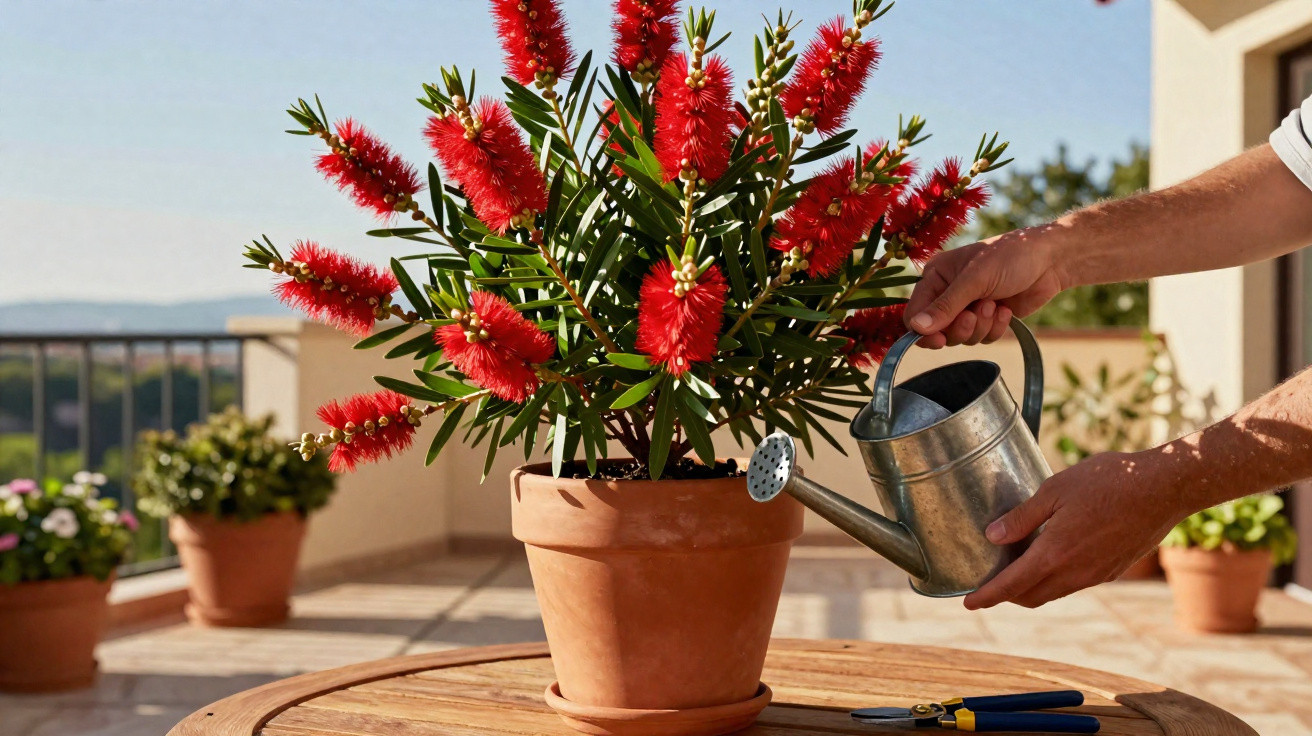
Callistemon is an ornamental shrub well suited to sunny terraces because, once established, it copes with heat, wind and short spells with little water. Often called bottlebrush, it stands out for its cylindrical flower spikes-typically red-and it can be grown in a pot as long as it gets direct sun, excellent drainage and enough room for the roots to expand.
Why does Callistemon adapt so well to growing on a terrace?
The Callistemon genus belongs to the Myrtaceae family and includes species that mostly originate from Australia. That background helps explain its tolerance of intense sun and environments that go through drier periods, although young plants still need consistent watering while their root systems develop. Callistemon includes dozens of fairly slow-growing species, and some can reach several metres when planted in the ground.
On a terrace, the pot naturally restricts the plant’s size and makes it easier to manage its growth. Even so, bottlebrush should be positioned in an open spot, away from constant shade cast by walls, coverings or nearby buildings. Very strong winds can dry out the compost quickly, so you may need to monitor moisture more closely on hot days.
How much sun is needed to produce more flowers?
For a strong display of flowers, Callistemon needs at least six hours of direct sunshine per day. In dimmer conditions, branches may become leggy, the canopy looks sparser and fewer flower spikes appear. When choosing the best place on your terrace, check for the following:
- Direct sun in the morning or for much of the afternoon;
- Good air movement without gusts strong enough to topple the pot;
- Enough distance from walls that radiate excessive heat;
- Space for branches to extend without blocking walkways;
- A saucer with no standing water beneath the container.
What are the best pot and compost for bottlebrush?
Choose a container that is wide, deep and in proportion to the size of the young plant. Small pots dry out quickly, limit root growth and can make the plant unstable once the crown becomes heavier. Drainage holes are essential, as waterlogged roots can lead to yellowing leaves and reduced vigour.
A free-draining compost can be made by mixing topsoil, organic compost and an aerating ingredient such as coarse horticultural sand. Callistemon prefers soil that is slightly acidic to neutral and, once established, it can cope with poorer soils; however, it performs better when there is organic matter and the mix is not compacted.
How to water, feed and prune Callistemon?
In the first few months, water often enough to keep the compost lightly moist, without turning it into sludge. After the roots have settled in, you can water less frequently, topping up again when the surface layer feels dry. Bottlebrush tolerates moderate drought and benefits from pruning once flowering has finished.
- Water slowly until it runs out of the drainage holes;
- Cut back on watering during cold or rainy periods;
- Apply light feeding twice a year;
- Avoid overusing high-nitrogen fertilisers;
- Prune branches soon after the end of flowering;
- Remove dead, broken or inward-growing branches.
What to do when the plant grows but does not flower?
A lack of blooms is usually linked to insufficient sunlight, pruning at the wrong time, too much water, or feeding with excessive nitrogen. Nitrogen encourages leafy growth and new shoots, but it can reduce the formation of flower buds. It is also worth noting that very young plants may need time to mature before they are ready to flower.
With direct sun, a stable pot and watering matched to the weather, Callistemon can push out fresh growth after pruning and produce its red spikes in cycles through the year. Because the flowers are rich in nectar, they also draw in bees and birds, turning the terrace into a feeding spot for pollinators-without requiring highly fertile soil or daily watering once the plant is established.

Comments
No comments yet. Be the first to comment!
Leave a Comment