
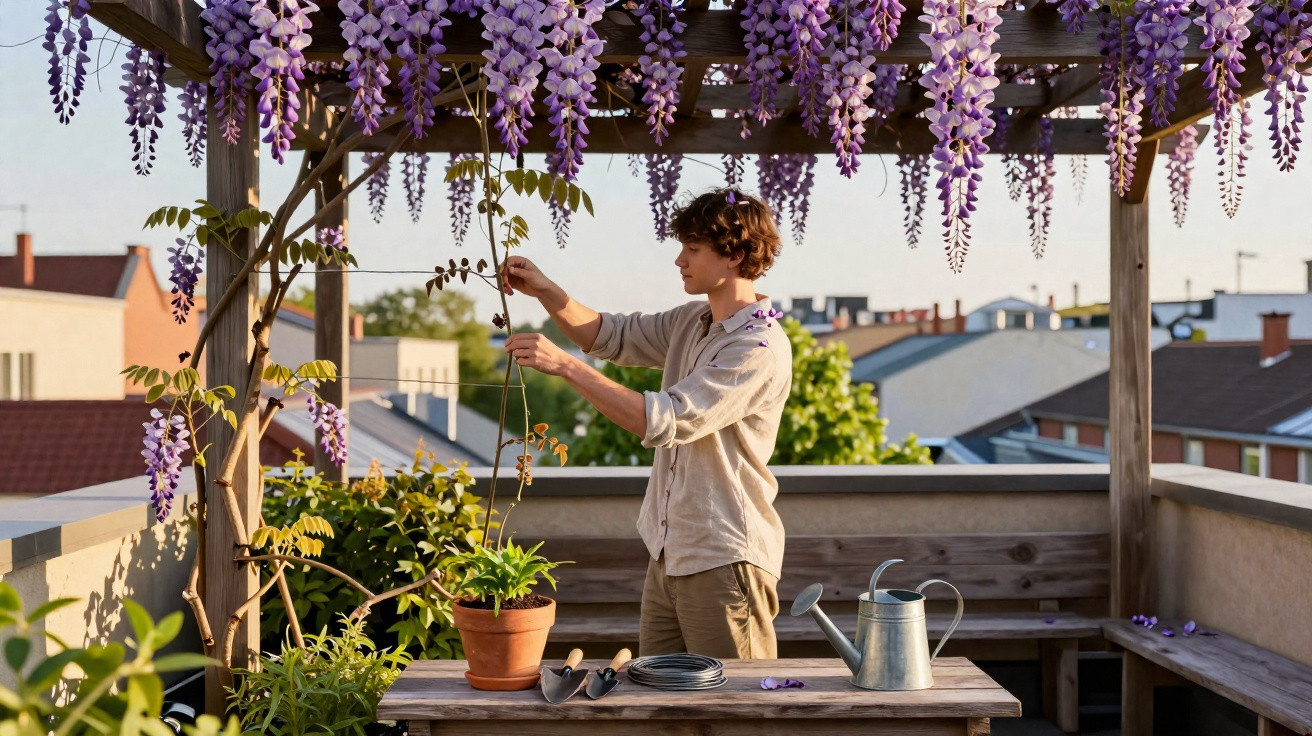
The drive for elegant landscaping has turned wisteria into a top pick for anyone wanting to create shaded, captivating outdoor areas. With its striking cascades of flowers, this ancient species appeals to city residents looking for beauty, hardiness and refinement in open-air spaces.
How did wisteria become the darling of urban pergolas?
Long associated with English gardens, the plant has taken on a prominent role in contemporary landscape architecture. Its woody growth climbs readily over sturdy frameworks, forming dense green canopies and filling spring air with a distinctive fragrance.
Alongside its dramatic appearance, this ornamental climber provides excellent natural shade for city gardens and roof terraces. Because it grows with real vigour, it can cover large structures quickly, making the space noticeably cooler, more comfortable and full of life.
How to refresh your garden the English way with 4 simple rules?
Find out the golden rules British gardeners use to turn any green space into a retreat… Read more
What are the best conditions for growing wisteria?
To achieve abundant, healthy flowering, this species needs many hours each day of direct, full sun. If it is grown in overly shaded spots, flower development suffers and the overall visual impact is greatly reduced.
Light is not the only factor: the soil also needs excellent natural drainage so moisture does not build up around the roots. Rich, well-fed ground supports the climber’s early growth, helping it establish itself very vigorously once planted in its permanent position.
Below, watch the video from the RHS – Royal Horticultural Society on YouTube, which shares useful details about cultivation and care for this species:
How do you plant this spectacular climber correctly?
The best time for planting is when the plant is dormant, ideally during the colder months of autumn. This timing allows the root system to settle properly before fresh growth begins in the following spring.
Support structures such as pergolas and arbours must be exceptionally strong, as the woody stem becomes very heavy over the years. Early training of the shoots encourages upward growth and helps achieve the intended ornamental form of the cover.
Essential planting kit
Indispensable elements - Here are the key items to help ensure successful growth:
- 1
Reinforced wooden or metal support for training and stability; - 2
Fertile, well-draining compost rich in organic matter; - 3
Sharp pruning shears for guiding and managing shoots.
Which maintenance routines ensure spectacular flowering?
Regular pruning is the single most important technique for encouraging the development of hanging flower clusters. Summer pruning keeps unruly shoots in check, while winter pruning sets up the framework for the next season.
Watering should be moderate yet consistent while the plant is young, keeping moisture levels balanced. In addition, periodic feeding with fertilisers high in phosphorus helps produce dense, colourful blooms that are also notably long-lasting.
Below are the main maintenance practices recommended for this species:
- Prune annually to encourage new flowering growth.
- Keep the soil watered regularly without waterlogging.
- Apply organic feed around the base of the stem in spring.
Why choose wisteria to transform your outdoor space?
Choosing this species is like adding a living, truly architectural feature to a landscaping plan. Its ability to turn simple frames into flower-filled tunnels creates a welcoming retreat, bringing the elegance of European gardens into an urban setting.
With impressive longevity and strong ornamental value, this climber enhances any property with its unmistakable presence. Growing it also offers daily contact with nature, filling the home with perfume, gentle shade and unforgettable moments of tranquillity and beauty.

Comments
No comments yet. Be the first to comment!
Leave a Comment