
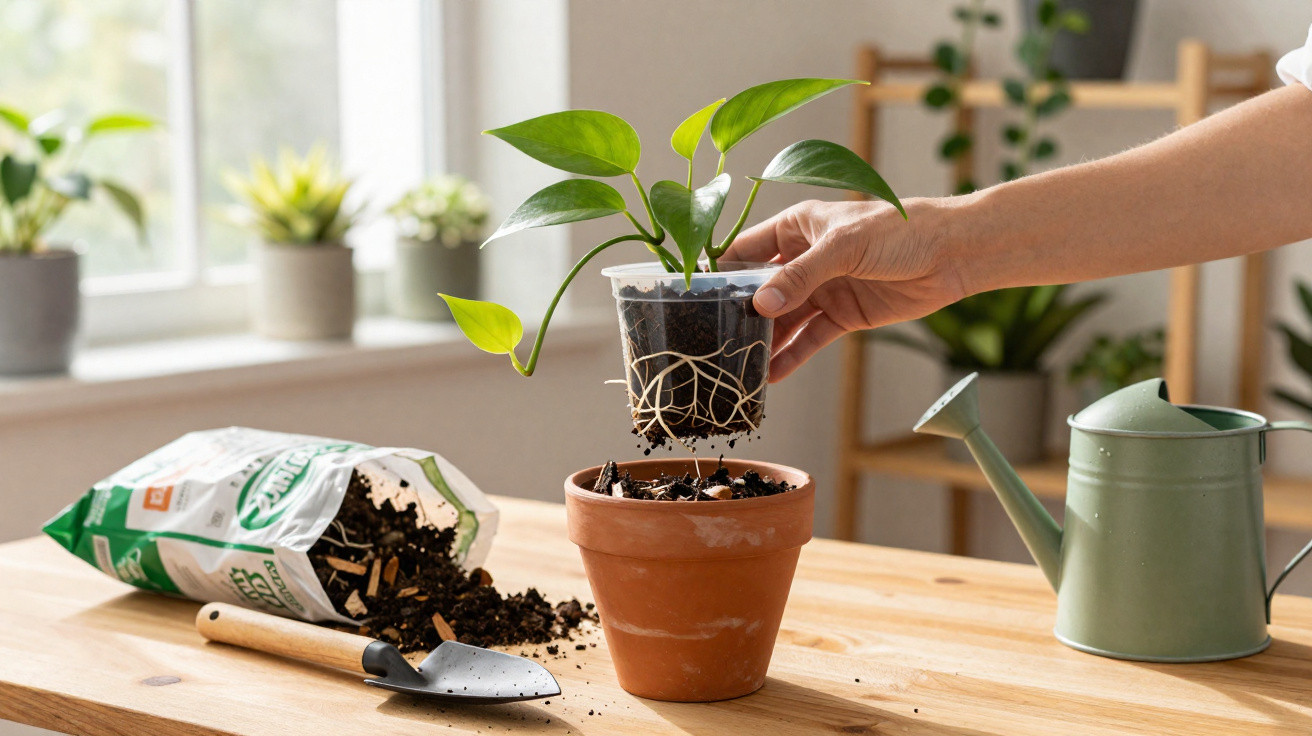
Pothos (devil’s ivy) is one of the most common houseplants found in homes and flats because it copes well with a range of conditions. Even so, it’s not unusual for growth to slow down, leaves to come through smaller, and the plant to look less robust-most often because the roots have run out of room in an undersized pot, combined with unsuitable compost and watering habits.
When should you repot pothos to keep growth healthy?
In most cases, repotting is needed every one to two years, once the inside of the pot is close to being filled with roots. A typical clue is a noticeable drop in new growth: fewer fresh leaves appear and the stems extend very little, even when the plant is getting good light.
It also helps to keep the pot size in proportion to the amount of foliage, rather than jumping to a much larger container. As a rule, choosing a pot just 2–4 cm wider in diameter than the current one usually gives the roots the extra space they need without holding onto too much moisture, which can encourage fungal problems and rot.
What signs show pothos has become rootbound?
When roots become tightly packed, they form a dense mass that takes up most of the root ball and restricts the plant’s development. You may spot roots pushing out through the drainage holes or appearing on the surface of the compost as they search for more space and oxygen.
Once this sets in, the plant tends to respond poorly to feeding and starts to show clear signs that the root system is at its limit, including:
- New leaves that are smaller and more widely spaced along the stems;
- Rapid wilting soon after watering, even when you’re watering correctly;
- Compost drying out within a few hours, with very little visible soil volume;
- Roots tightly coiled around the sides of the root ball when the plant is lifted from the pot.
What is the best potting mix and watering frequency for pothos in a pot?
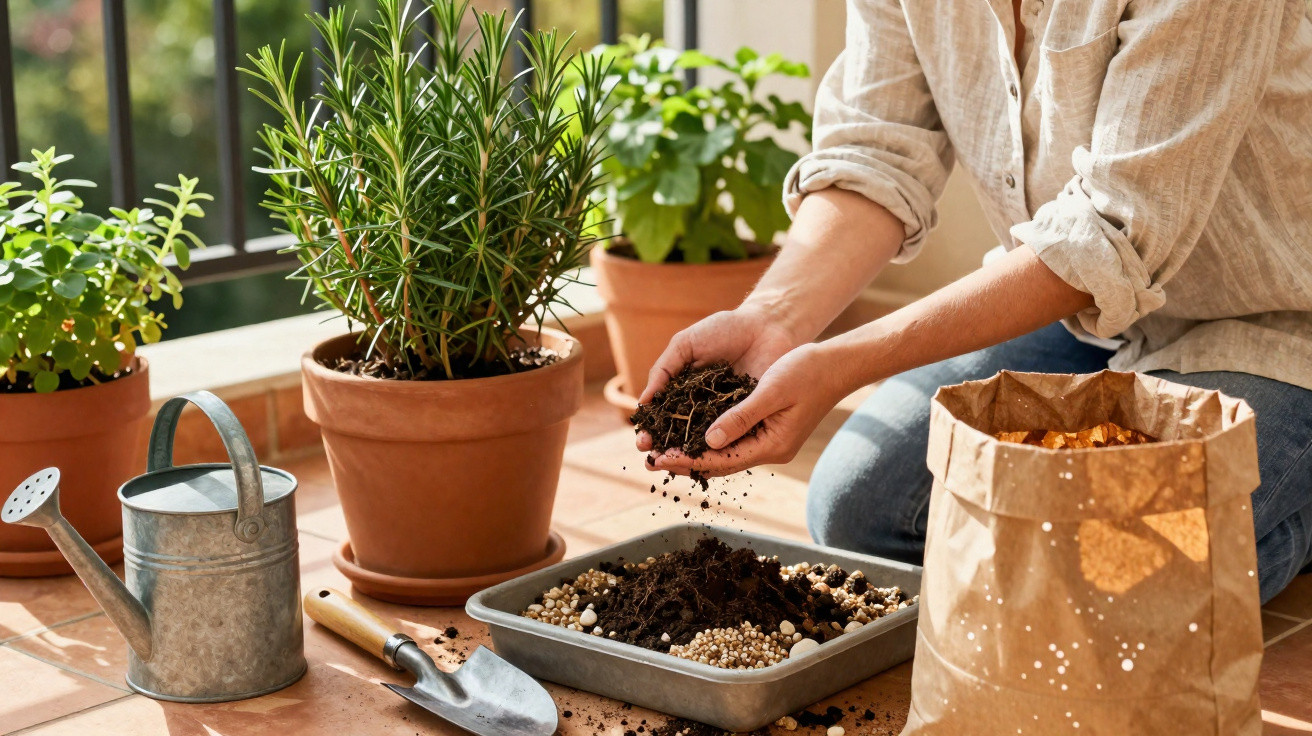
An ideal potting mix should be light, free-draining, and still able to hold a little moisture-avoiding both waterlogging and extreme dryness. A well-balanced blend usually combines a nutritious base with aerating materials and a small fibrous component to keep the structure open.
A practical mix that brings together nutrition, drainage and root oxygenation includes:
- Multi-purpose compost or well-rotted organic compost to supply nutrients;
- Perlite, washed coarse sand or carbonised rice husk to improve airflow;
- Pine bark or a small amount of coconut coir for a fibrous, loose structure.
How often to water depends on the climate, pot size and light levels, but indoors it often falls somewhere between every two and five days. The best approach is to water when roughly 2 cm of the surface feels dry to the touch, while also watching for signs of over- or under-watering.
How to transplant pothos safely and encourage fresh growth
Transplanting should be done slowly and carefully to minimise stress and keep as many roots intact as possible. Lightly watering the day before can help the root ball slide out more easily, and the new pot should have good drainage and be only slightly larger than the old one.
Once the plant is out, gently tease apart some of the circling roots, then add fresh potting mix around the root ball without pressing it down too firmly. Water thoroughly until water runs from the drainage holes, then empty any excess from the saucer. After repotting, keep pothos in bright, indirect light, water moderately, and avoid strong fertilisers for a few weeks; it’s normal for the plant to “pause” briefly while the roots settle, after which growth typically resumes in a stronger, steadier way.
Comments
No comments yet. Be the first to comment!
Leave a Comment