
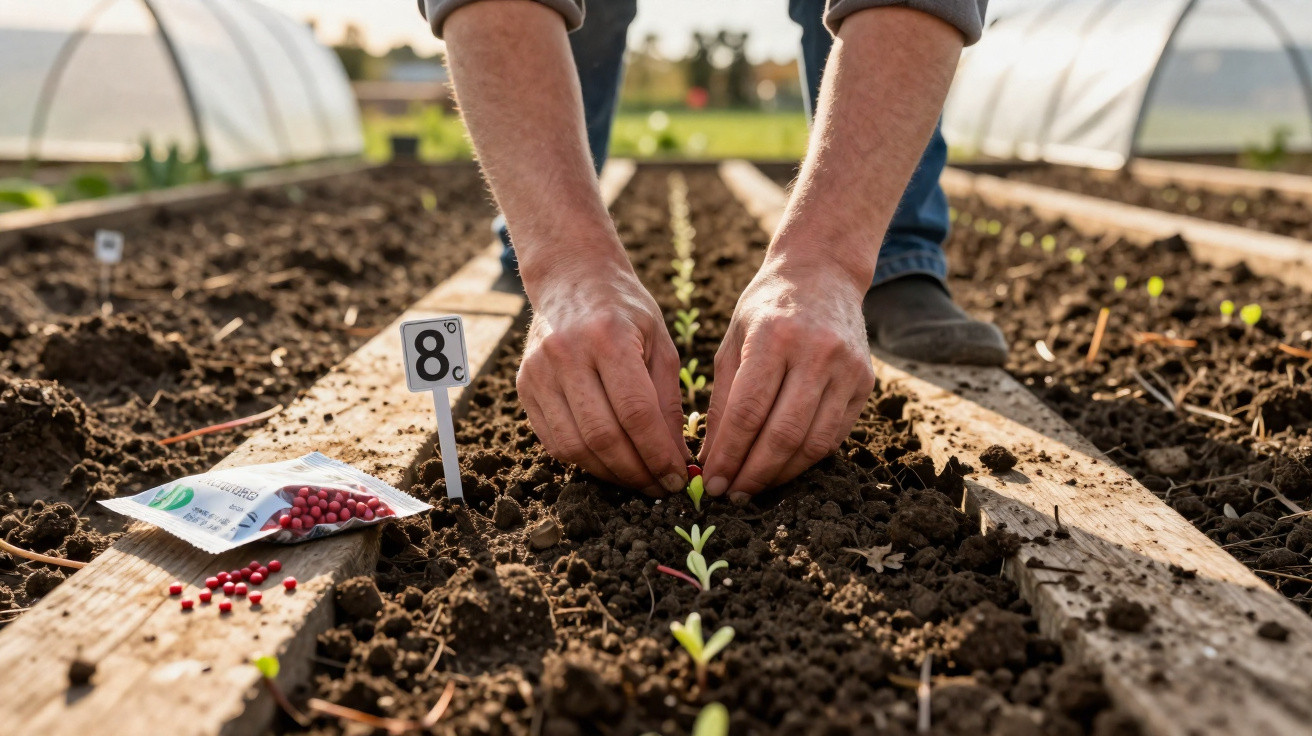
Across temperate regions, eager gardeners often sow beetroot at the first suggestion of spring. Shiny packets of seed fly off the shelves at garden centres, yet, several weeks on, plenty of rows are sparse, weak or entirely empty. “Bad seeds” are seldom to blame. More often, growers miss one crucial point: the way beetroot responds to cold, changeable spring soil, and the simple routine that prevents most disappointments.
Why early-spring beetroot sowings so often fail
Beetroot appears to be a straightforward crop. Its seeds are large, the roots are rewarding, and packets commonly advertise plentiful yields. However, March weather across much of the UK, the northern US and comparable climates is rarely ideal for it unless you prepare first.
Beetroot seed will sit, rot or stall if the soil is cold, compacted or allowed to swing wildly between dry and soaked.
The outcome can be frustrating: germination is irregular, rows develop bare patches, plants fail to swell, or roots become forked and split. Fortunately, several easy checks and routines can greatly improve your chances.
The hidden rule: soil temperature before seed packet dates
Waiting for the magic eight degrees
Gardeners are misled by calendar dates every year. A seed packet may state “sow from March”, but beetroot pays attention to one signal above all: soil temperature. At below roughly 8°C (46°F), seeds remain in limbo. They may begin to germinate before stopping again. Fungal problems and rot can take hold well before a red stem appears above ground.
For reliable germination, aim for soil at 8–10°C (46–50°F) at seed depth, not just warm air above your head.
A low-cost soil thermometer inserted 2 cm into the bed is more useful than any extended weather forecast. Check in the afternoon over several consecutive dry days. Once the soil reliably reaches 8°C, beetroot can begin growing rather than struggling in cold ground.
Using sunlight to cheat the season
Gardeners who cannot wait can bring the soil into the safe range slightly sooner. A few days before sowing, remove debris and gently rake the surface. Next:
- Put a clear cloche, an old window frame or a tunnel over the intended row.
- Alternatively, pull fleece or a plastic sheet across hoops.
- Secure the sides so that the covering cannot flap around and lose its stored warmth.
The sun raises the temperature of the covered soil by a few degrees while the covering protects it from chilly winds. Following three to five days of this “preheating”, the upper couple of centimetres will often reach that vital point even while nearby uncovered soil remains distinctly wintry.
The most common mistake: sowing depth and spacing
Beet “seeds” are actually little clusters
Many people assume each beetroot seed contains one embryo, whereas the item sown is usually a dried cluster called a glomerule. A single nugget commonly holds two to four viable seeds. In practice, this means:
Each “seed” can produce a tiny tuft of seedlings, all crowded into the same spot, all competing for food and light.
This feature is why beetroot rows frequently resemble miniature hedges in some stretches while remaining bare elsewhere. Once you recognise that you are sowing families rather than individual plants, the later need for spacing and thinning makes much more sense.
The two centimetre rule that saves energy
Beetroot does not respond well to being buried deeply. In March, growers often push seeds down too far, “just to be safe from frost”. The emerging shoot then uses up its limited reserves forcing its way through cold, dense earth and may never break the surface.
Follow this straightforward method:
- Rake the bed until it is level and the soil has a fine, crumbly texture.
- Create shallow drills 2 cm deep, leaving around 30 cm between them.
- Set glomerules at intervals of 5–7 cm along each drill.
- Cover them lightly, then firm the surface using your palm or the back of a rake.
That 2 cm depth is important. Seeds sown shallowly into warmed ground can emerge quickly, before disease gains a foothold below the surface.
Firming and watering: the ten critical days after sowing
Why gentle pressure boosts warmth and contact
After covering the seeds, many gardeners consider the task complete. Yet one short additional step can make a major difference: firming the soil. Gentle pressure along the row removes air gaps and brings the soil into close contact with each seed.
Firm soil around the seed creates a snug, moist microclimate that holds heat overnight and improves water transfer.
A roller is unnecessary. Press a flat board or the back of a rake lightly along the drill instead. You want good seed-to-soil contact, not compacted ground.
Keeping the surface moist but never flooded
The following stage is one where you must not look away. Over approximately 10 days, beetroot seeds absorb water, split open and begin forming a root. Dry soil interrupts this process, while waterlogged conditions suffocate the seed. A light, consistent approach is most effective:
- Use a fine rose or hand sprayer to water without forming a crust on the soil.
- Inspect the bed each day; during dry, windy weather, a light watering in both the morning and evening may be necessary.
- When heavy rain is expected, use fleece or a tunnel to stop pounding rain from sealing the surface.
When the first red-tinged stems emerge, watering can be reduced slightly, although the soil should not be allowed to bake solid. A light layer of compost mulch between the rows steadies both moisture and temperature as spring alternates between cold and warm conditions.
The ruthless step most beginners skip: thinning
Thinning the “siblings” for better roots
Think back to the multiple seeds within each glomerule. Where germination is successful, groups of seedlings will appear every few centimetres. If they are left together, the roots compete beneath the ground and twist around one another.
To grow round, even beetroot, you must remove siblings and keep just one strong plant every 10 cm or so.
Wait until seedlings have developed two or three true leaves, rather than only their initial seed leaves. Choose a dry day, then pinch out or snip weaker seedlings at ground level, leaving the strongest plant in every cluster. Do not pull seedlings out, as this can disrupt the plant you intend to retain.
What proper spacing gives you by summer
After thinning, every surviving plant has enough room to fill out. Roots become rounder, less woody and less prone to forking. The foliage receives more light and dries sooner after rain, helping to limit certain leaf diseases.
| Stage | Key spacing | Benefit |
|---|---|---|
| Sowing | Glomerules every 5–7 cm | Ensures enough seedlings to choose from |
| Row layout | Rows 30 cm apart | Air flow and easy hoeing between rows |
| After thinning | One plant every 10 cm | Room for full-size, even roots |
By midsummer, correctly spaced beetroot creates a neat leafy canopy that shades the ground, allowing it to remain cooler and moister during heatwaves.
Extra gains: soil, varieties and early harvest tactics
Choosing the right soil and varieties for early sowings
Established beetroot tolerates light frost, but it dislikes remaining in cold, waterlogged soil. Raised beds and ridges heat up sooner and offer better drainage, giving early sowings an advantage. Where beds contain heavy clay, dig them in autumn and add compost or leafmould so the soil is more open by spring.
For March sowings, growers often choose varieties described as “early” or “for baby beets”. Round varieties tend to cope more dependably with cool starts than long, cylindrical types. A further sowing can be made in April or May using maincrop varieties intended for storing later in the year.
Understanding a few useful terms
Gardening advice often uses specialist terms for simple concepts:
- Glomerule: the knobbly beetroot “seed”, actually a dried cluster holding several seeds.
- Cloche or tunnel: a clear covering that retains warmth and protects young plants from wind and cold.
- Crusting: the firm surface layer created when heavy rain is followed by sunshine, which may prevent fragile shoots from emerging.
Once these words are familiar, it becomes far easier to understand and adapt guidance from seed packets and gardening columns for your own plot.
From spring gamble to reliable habit
Picture two gardeners with neighbouring plots in March. One sows beetroot as directed on the packet, in cold and unprepared soil, then leaves the bed to cope alone. The other waits until the soil is 8°C at seed depth, warms it under cover for several days, firms it gently after sowing, and maintains evenly moist soil for ten days before thinning firmly a few weeks afterwards. By July, the contrast between their plots is stark-one has gaps and thin roots, while the other has consistent rows of smooth, plump beetroot for roasting, pickling or adding raw to salads.
When this approach becomes a regular spring practice rather than a collection of tips, March beetroot no longer seems risky. Even in unpredictable springs, the crop becomes reliable, which is often enough to turn a nervous beginner into a self-assured kitchen gardener.


Comments
No comments yet. Be the first to comment!
Leave a Comment