
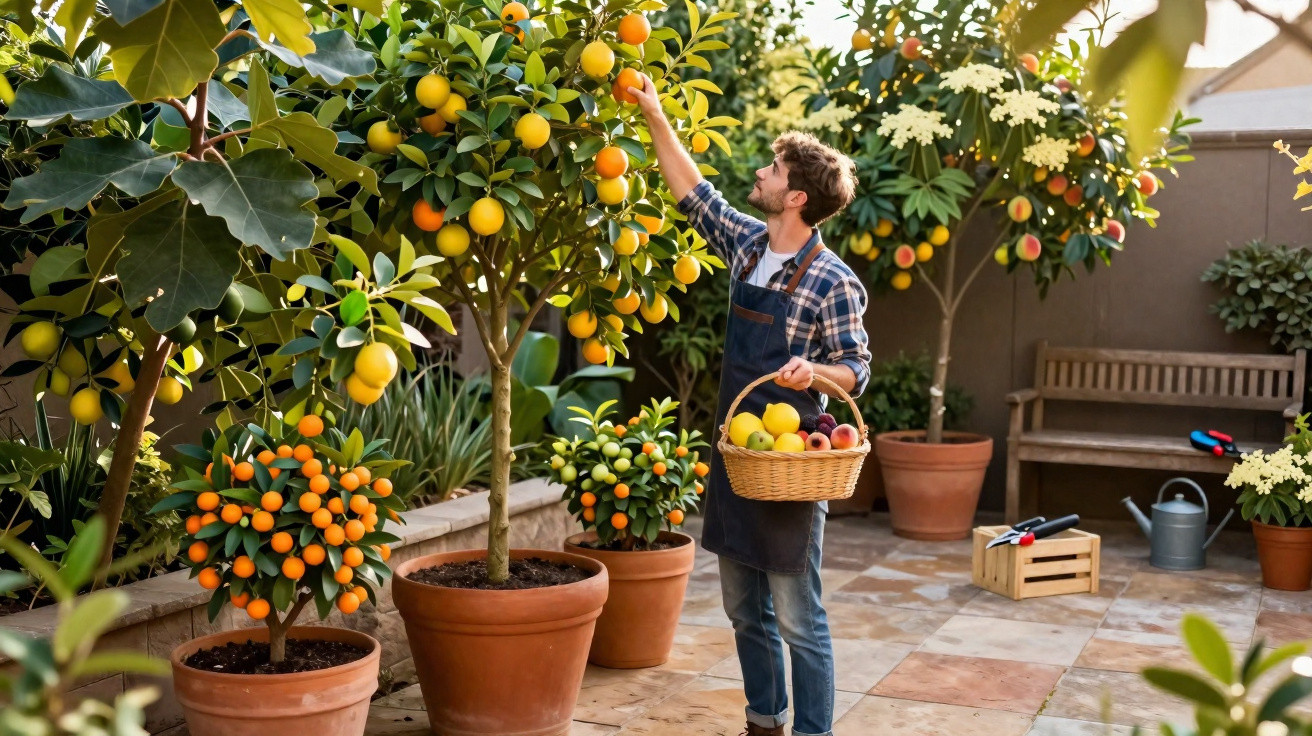
Many hobby gardeners give up in frustration because apples, pears and the like can take ages to crop properly. Yet there are species that can reward you with baskets of fruit after only a few years - even in a small terraced-house garden or on a balcony. Eight types of tree stand out in particular.
A quicker route to your own mini orchard
Fruit trees are often seen as a “project for a lifetime”. That is only partly true. If you choose varieties that grow vigorously and fruit early, and you prepare the soil with care, you can cut years off the wait.
With well-prepared soil, regular watering and organic feeding, certain fruit trees can produce impressive harvests in a short time.
The foundations make the difference: an open, humus-rich soil, enough water during the establishment years, and pruning that is restrained yet consistent. Create those conditions and you’ll be rewarded with trees that put on growth quickly, flower early and crop reliably.
Eight fruit trees that really pick up speed
Two groups are especially appealing:
- compact citrus trees for balconies, patios and conservatories
- traditional garden trees that quickly create a small family domain of shade and fruit
It’s worth taking a closer look at these eight candidates: calamondin, kumquat, lemon tree, mandarin tree, fig, mulberry, elder and peach.
Citrus trees: fresh fruit straight from the balcony
Calamondin: an ornamental tree with near year-round cropping potential
The calamondin orange is a favourite where space is limited. It stays compact, performs well in a pot, and starts producing flowers and fruit while still young. Many plants carry small orange fruits almost all year, visually similar to mandarins. A large container on a bright balcony or against a sunny house wall is ideal.
What matters most is a free-draining growing medium, a proper drainage layer in the pot, and regular feeding. The tree copes poorly with waterlogging, but tolerates short dry spells more readily.
Kumquat: tiny fruits with big flavour
Kumquat trees are slow to gain height, but they quickly build up fruit. They prefer warm, slightly moist positions and can cope with brief light frosts if they are sheltered. Their small, elongated fruits are eaten with the peel - a real talking point for guests.
- Position: full sun, sheltered from wind
- Best in a container; outside in summer, then bright and cool in winter
- Water regularly, but never let the pot sit in water
Lemon tree: a classic for lemonade and the kitchen
The lemon tree is now almost a staple on many patios. With plenty of light, a well-drained compost and a protected spot, it sets flowers and fruit quickly. In mild areas it may stay outside year-round; elsewhere it needs a bright winter home.
If you buy a grafted plant with visible fruit or buds, you can shorten the time to your first harvest even further.
Mandarin tree: a sweet snacking tree for families
Mandarin trees grow quickly and are considered a little tougher than many other citrus types. In warm regions they can thrive planted out in the ground; in the UK they tend to do best in a container that is overwintered frost-free. Children love the easy-to-peel fruit - a deciding factor in many gardens.
Citrus trees stay compact in containers, take up little space, and often produce their first usable harvests after only a few years.
Fig (Ficus), mulberry, elder and peach: powerhouse trees for the garden
Fig tree: Mediterranean character with minimal effort
The fig tree quickly gains height and spread, and it copes surprisingly well with poor, dry soils. In a warm, sheltered position - for example against a south-facing wall - it develops thick shoots and its first ripe figs after only a few years.
Figs are considered straightforward: a little pruning and an occasional addition of compost is often all they ask. In colder areas, winter protection with horticultural fleece or growing in a large container can help.
Mulberry: sugar-rich fruits for people and birds
Mulberry trees grow strongly and form broad crowns. They soon produce lots of small, elongated fruits that resemble blackberries - only sweeter. The berries stain heavily, so a spot above a lawn or seating area can be a nuisance. Mulberries are best placed at the edge of the plot or alongside a path.
This tree is also a genuine food source for birds and insects. If you’re aiming for a wildlife-friendly garden, it’s an excellent choice.
Elder: low-maintenance, fast and versatile
Elder tends to spread more than it grows tall, and it can be trained as a loose shrub or a small tree. It sends up new shoots from underground runners, gradually forming a dense thicket.
The flower heads are suitable for cordial and batter, while the ripe berries - after heating - are used for juice and jelly. Many varieties are native, which means they also support local wildlife.
Peach tree: summer fruit in record time
Peach trees are often seen as sprinters among traditional fruit trees. They grow quickly, flower early and, in warm sunny sites, can produce worthwhile harvests after only a few years. Free-draining soil and an airy position help prevent fungal diseases.
Anyone who wants a “proper” fruit tree with a trunk and crown in the garden quickly often opts for peach or fig.
Why these trees reach the goal so quickly
These species tend to channel their energy into flowers and fruit rather than extreme height. Many originate from warmer climates, where they have adapted to making the most of short favourable periods. For gardeners, that translates into early flowering, early fruit set and faster yields.
You’ll get the best out of them by following a few basic rules:
- Loosen the soil deeply before planting and enrich it with compost
- Water in thoroughly after planting, then water regularly for the first few years
- Feed only moderately, preferably with organic fertiliser
- Prune gently each year in late winter or early spring
Correct pruning, correct care: keeping the trees on track
Regular, moderate pruning strengthens the crown, helps prevent breakage and directs energy into fruiting branches. Hard pruning, by contrast, can trigger vigorous new growth and delay fruiting.
As a rule of thumb, it’s better to thin a little every year than to cut back severely every few years. Remove dead wood and branches that cross or grow inwards, so light and air can reach the centre of the crown.
Opportunities, risks and smart combinations
Fast-growing fruit trees also bring a few challenges. A strong crown casts shade quickly, so plants beneath the tree will need to be shade-tolerant. Citrus in pots may need watering almost daily in dry summers; otherwise they can drop leaves or young fruits.
With thoughtful planning, you can make the most of natural pairings: Mediterranean herbs do well around the edges beneath figs and mulberries, elder can be combined with berry shrubs such as redcurrant, and peach fits beautifully into a sunny front garden with a border of perennials. In this way you build, step by step, a lively, productive garden that doesn’t take 20 years to pay off, but delivers after only a few seasons.
Comments
No comments yet. Be the first to comment!
Leave a Comment