
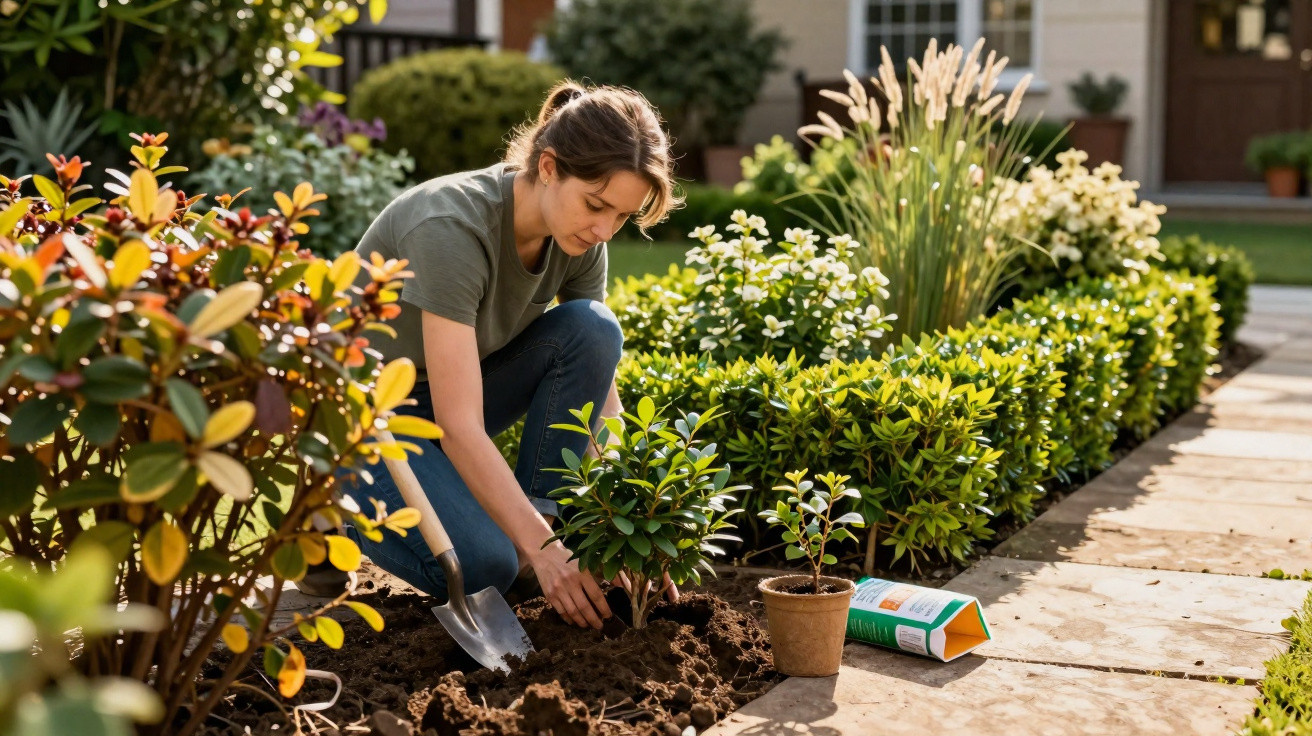
Popular Photinia hedges are looking increasingly miserable in more and more gardens: bare patches, diseased leaves and hardly any privacy left. That is why garden designers are turning their attention to a different, colourful shrub that is noticeably tougher and can be looked after with very little fuss.
Why so many Photinia hedges are failing
For years, Photinia was seen as a miracle option: fast-growing, fresh red new shoots and a dense screen in a short time. In many new-build areas, the hedge became almost the default choice. Lately, however, complaints have been mounting.
- Leaves with red or brown spots
- Bare branches and gaps through the hedge
- A thin silhouette that has lost its shape
The main culprit has a clunky name: Entomosporium leaf spot (Entomosporiose). It is a fungal disease that starts with small marks, then causes entire leaves to dry out. Those leaves drop off, and within a few years the hedge can lose much of its density.
Mild winters and damp springs strongly encourage the disease. Exactly these weather patterns are becoming more common in Central Europe. Planting the hedge too tightly or leaving infected leaves on the ground makes the situation worse.
"Many Photinia hedges are victims of climate change and planting too close together - less so of individual gardeners’ care mistakes."
Simply putting the same species back into the same soil rarely improves anything. Spores remain nearby, flare up again with the next spell of wet weather, and the whole problem starts over. That is why more and more property owners are considering a genuine fresh start with a different hedge plant.
The quiet star for 2026: Pittosporum as a new hedge
As a replacement for Photinia, one evergreen shrub is increasingly coming out on top: Pittosporum. It has been familiar for a long time in milder regions, and now it is appearing far more often in garden plans across Germany, Austria and Switzerland.
What makes Pittosporum so appealing
- Evergreen foliage for year-round privacy
- Calm growth, yet still quick enough for a hedge
- Compact habit that is easy to shape
- Many varieties with coloured or variegated leaves
The colour range runs from deep dark green through to creamy green and subtly silvery foliage. That naturally creates a more lively look, without needing to reach for the shears all the time.
Maintenance is straightforward: in most cases, one trim a year is enough; if you prefer a very crisp finish, you can give it a light second tidy-up. Even when the lines are not perfectly straight, Pittosporum usually still looks neat - a real plus for anyone who does not want to spend every weekend with hedge trimmers.
"Pittosporum provides a calm, long-lasting hedge that stays attractive over time, even with less-than-perfect care."
Location matters: choose a sunny to partially shaded spot, ideally with shelter from wind. In very exposed areas, tougher varieties are advisable, or you can mix it with native shrubs to reduce the risk of damage from severe frosts.
Rethinking hedges: why mixed planting is the smarter option
Anyone who has watched an entire run of Photinia deteriorate within a few years will understand why mixed hedging is gaining popularity. The idea is simple: stop relying on a single species and combine different shrubs instead.
Benefits of a mixed hedge
- One fungus or pest cannot cripple the entire hedge
- Different flowering times, colours and textures
- More food and shelter for birds and insects
- A more stable microclimate in the garden overall
Popular partners for Pittosporum include, for example:
- Eleagnus: extremely robust, tolerates wind and drought, a strong base for exposed plots
- Cornus (bloodtwig dogwood): vivid red stems in winter, adding colour when foliage is sparse
- Hazel: native, provides nuts for wildlife (and sometimes for people), and softens the look of the hedge
"A mixed hedge looks less ‘straight from a catalogue’, but more natural, more vibrant and far more resistant to disease."
Making the switch: replacing Photinia step by step
Preparing the site
- Assess the current condition honestly: if several metres are bare or heavily affected, a full replacement is more sensible than constant patching.
- Remove diseased plants completely, including the root ball. Dispose of leaves and prunings consistently - do not compost them.
- Loosen and improve the soil thoroughly. Work in roughly a bucket of well-rotted compost per planting hole.
- On heavy soils, mix in sand or gravel to prevent waterlogging. Fungal diseases thrive in stagnant moisture.
Spacing and arrangement
- Plant Pittosporum at 80 to 100 centimetres apart. This allows the hedge to knit together over a few years without becoming matted.
- For a 10-metre hedge, around ten to twelve plants are sufficient. If mixing, you could combine, for instance, six Pittosporum, two Eleagnus and two Cornus.
- Apply a 5-centimetre mulch layer of bark mulch or woodchips around the plants. This helps retain moisture and suppress weeds.
- In very windy locations, support each shrub with a stake in the first year until the roots have properly anchored.
Everyday care: little effort, big impact
Once the new hedge is established, the workload stays manageable. The key period is the first one to two years after planting.
Watering, feeding and pruning
- Watering: In the first few months, give around ten litres of water per plant once or twice a week in dry conditions. Later, in normal weather, rainfall is usually enough.
- Feeding: In spring, apply a light dressing of complete fertiliser, about 50 grams per running metre. More is more likely to cause harm than help.
- Pruning: Lightly reduce growth once a year in late summer to keep the hedge dense. Younger plants can also have an additional shaping trim in spring.
"If you maintain it regularly but moderately, you get a dense, healthy hedge instead of a constantly stressed ‘problem case’."
Typical mistakes that put the new hedge at risk
Many of the issues seen with Photinia hedges can be avoided with a new planting, provided a few basics are kept in mind.
- Do not plant too tightly again - airflow reduces fungal pressure
- Never store diseased material in the garden; dispose of it properly
- Do not keep the soil permanently wet - water less often, but thoroughly
- Do not pile mulch directly against stems, so nothing rots
Knowing your soil gives you a clear advantage. Sandy soils dry out quickly, so extra mulch helps. Heavy clay soils tend towards waterlogging; there, an additional drainage layer of gravel in the planting trench is worth considering.
What garden owners should also keep in mind
Switching from Photinia to Pittosporum and other species can look like a big investment of time and money at first. Over the long term, though, it saves stress, plant protection products and replacement plants. Many garden owners use the restart to make the hedge a little wider and more varied, for example by staggering heights or alternating in flowering shrubs.
If you are unsure, begin with a short test section of just a few metres. That lets you see how Pittosporum handles frost, sun and wind on your own plot. If it performs well, the rest of the hedge can be converted gradually, without losing the entire privacy screen in one go.
One more point that is often underestimated: a diverse, healthy hedge improves the garden microclimate, offers nesting spots for birds and creates habitats for beneficial insects such as ladybirds or lacewings. As a result, the risk of aphid outbreaks and similar problems drops noticeably. So, if you replace a struggling Photinia in spring 2026, you are making a clear gain not only visually, but ecologically as well.


Comments
No comments yet. Be the first to comment!
Leave a Comment