
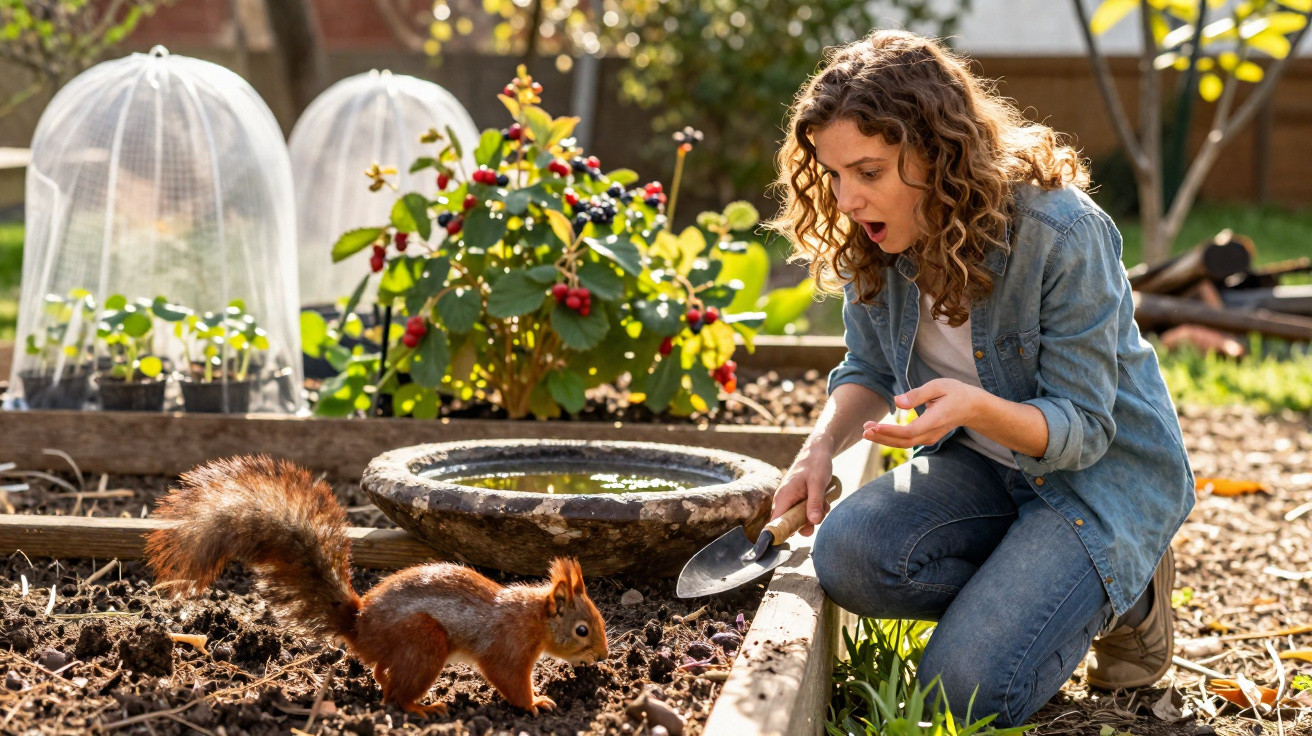
Many amateur gardeners complain about the quick little rodents the moment they appear in a bed. They get blamed for nibbled buds, disturbed sowings and emptied nut stashes. But if you look more closely, you’ll notice something else: squirrels add energy to the garden, help improve the soil and can even take pressure off the vegetable patch-provided you adapt your space in a smart way.
From supposed nuisance to quiet ally
How their digging makes soil more fertile
Squirrels constantly bury stores-nuts, seeds and acorns-and some of those caches are never retrieved. That is precisely what turns them into accidental gardeners. Forgotten hiding places can become new shrubs and trees, which over time provide shade, food and structure.
As they scratch and dig, they loosen the top layer of soil. The ground becomes better aerated, water soaks in more easily, and microorganisms and other soil life spread more readily. The result is a resilient, living soil structure in which vegetables and ornamentals can thrive more successfully without artificial fertiliser or chemicals.
Anyone who tolerates squirrels gets free soil cultivation and new plants – without lifting a spade.
In particular, where soil is heavy and compacted, all those small digging spots can act like a natural mini-tiller. The key is to protect young seedlings at the beginning, so they are not accidentally damaged by scratching.
Why spring is the ideal time to start
From mid-March, wildlife begins to stir after winter. Food is still limited, but activity levels rise sharply. During this period, squirrels actively search for new food sources, drinking spots and safe places to hide.
If you plant food-bearing trees, provide water and create shelter now, you influence how the animals use their territory. They get used to specific areas of the garden-ideally set a little away from the vegetable patch. That helps establish regular routes, so they move about without constantly charging straight through delicate crops.
How to satisfy hunger and thirst without risking your vegetables
A safe drinking spot that draws them in
Water can be scarce, especially in hot springs and dry summers. A shallow bowl or a small, low pond with a gently sloping edge can act like a magnet for squirrels, birds and insects.
- Keep the container shallow so animals cannot drown
- Top up with fresh water regularly
- If possible, place it slightly raised or freestanding to discourage cats
- A stone or branch in the water provides a “lifeboat” for smaller creatures
Positioning the drinking spot within sight of trees or shrubs creates the best set-up: quick escape options, but also a calmer place for the animals to drink.
Using the right trees to steer them away from the vegetable bed
Squirrels are true food lovers. When there is a plentiful spread elsewhere, they often lose interest in lettuce and strawberries quickly. Trees and shrubs that produce nuts or energy-rich, fatty or starchy foods are especially tempting.
Suitable plants include, for example:
- Hazel
- Oak
- Walnut tree
- Chestnut
- Beech
In small gardens, a single hazel and a compact walnut tree can be enough to provide a reliable food supply over time. If there isn’t room for large trees, feeding stations can help: small feeders filled with unsalted sunflower seeds, nuts and collected acorns.
The better the “buffet area” is away from the vegetable patch, the less reason squirrels have to help themselves to your crops.
A wilder corner of the garden as a retreat
Dense hedges instead of a sterile lawn edge
Plenty of gardens look like they’ve come straight from a catalogue: tightly mown lawn, sharply trimmed hedges, no leaves left about, not a twig in sight. For wildlife, that level of tidiness is pure stress. Squirrels need cover and safe pathways.
Letting a hedge grow a little more naturally creates a valuable backbone for the garden. Dense foliage, a few overhanging branches and small gaps near the ground form a network of hiding places. Squirrels and birds can then move along discreetly.
It’s also worth adding a nesting box high up in a tree or on a house wall, ideally between four and six metres above the ground. That gives the animals a secure sleeping place and reduces the need for them to hunt for cover right beside the vegetable beds.
Why dead branches are not a sign of laziness
A garden that is obsessively “tidied up” may look neat, but it removes the very basis of life for countless creatures. A pile of pruned branches or a dedicated corner with dead wood creates a small biotope.
Beetles, spiders, woodlice and many other tiny animals live there. For squirrels, it offers ground-level cover-for instance, when they are caching nuts or escaping cats. At the same time, hedgehogs, birds and insects benefit from this micro-habitat.
A little bit of chaos in the garden creates stability across the whole ecosystem.
Keeping young plants and berries protected
Protecting fresh sowings with clear cloches
Young plants are vulnerable-to drought and wind, but also to curious paws. If you sow in spring, cloches or simple protective covers can prevent a lot of frustration. Transparent material lets light and warmth through while providing a physical barrier.
These cloches work well for:
- lettuce and herb seedlings
- young brassica plants
- delicate spring sowings such as carrots or radishes
Keep the covers on the bed until plants have developed strong roots and sturdy stems. After that, small scrape-holes are far less of a problem.
Covering berry bushes sensibly with netting
In summer, raspberries, strawberries and redcurrants can quickly become a target-not only for squirrels, but for birds too. Fine-mesh netting draped loosely over bushes and beds protects the fruit while still allowing light and air to circulate.
Make sure the netting is fixed securely and installed so animals cannot become trapped. A simple wooden frame with netting laid over it often works better than placing netting directly on the plants.
When balance starts to return to the garden
When drinking spots, food trees, hedges, dead-wood corners and protected vegetable beds come together, a surprisingly stable system can develop. Squirrels use their feeding zones, travel through their “own” retreat areas, and show less interest in carefully maintained beds.
Avoiding chemical sprays strengthens that balance even further. More insects attract more birds, which in turn keep pests under control. The rodents loosen soil and spread seeds. After a few months, the vegetable garden often feels calmer-yet more alive.
Practical tips for getting started and possible pitfalls
What to consider before you make changes
Not every garden has the same starting point. In densely built-up urban areas with lots of cats, you may need to protect water sources more carefully. If anyone in the household has allergies, take care with certain trees such as hazel.
If you offer supplementary nuts and seeds, keep quantities modest so the animals do not become completely dependent. A better approach is a mix of natural food plants and targeted support during lean periods.
Other positive effects that can come as a surprise
Many gardeners say that, over time, they begin to garden more thoughtfully. When you consider squirrels, you often end up thinking about birds, hedgehogs and insects as well. A “tidy garden” can turn into a lively productive garden, with much more to observe for children and adults alike.
| Measure | Benefit for squirrels | Benefit for the garden |
|---|---|---|
| Water source | drinking spot, cooling down | attracts birds and insects |
| Food trees | long-term food supply | shade, structure, humus |
| Hedges + dead wood | hiding places, safe routes | habitat for many species |
| Cloches & netting | clear boundaries around beds | protected harvest |
Anyone who develops their garden step by step in this direction soon realises: these small acrobatic climbers are not the enemies of the vegetable patch. With thoughtful planning, they become partners in a system that runs more steadily and produces more over the long term.
Comments
No comments yet. Be the first to comment!
Leave a Comment