
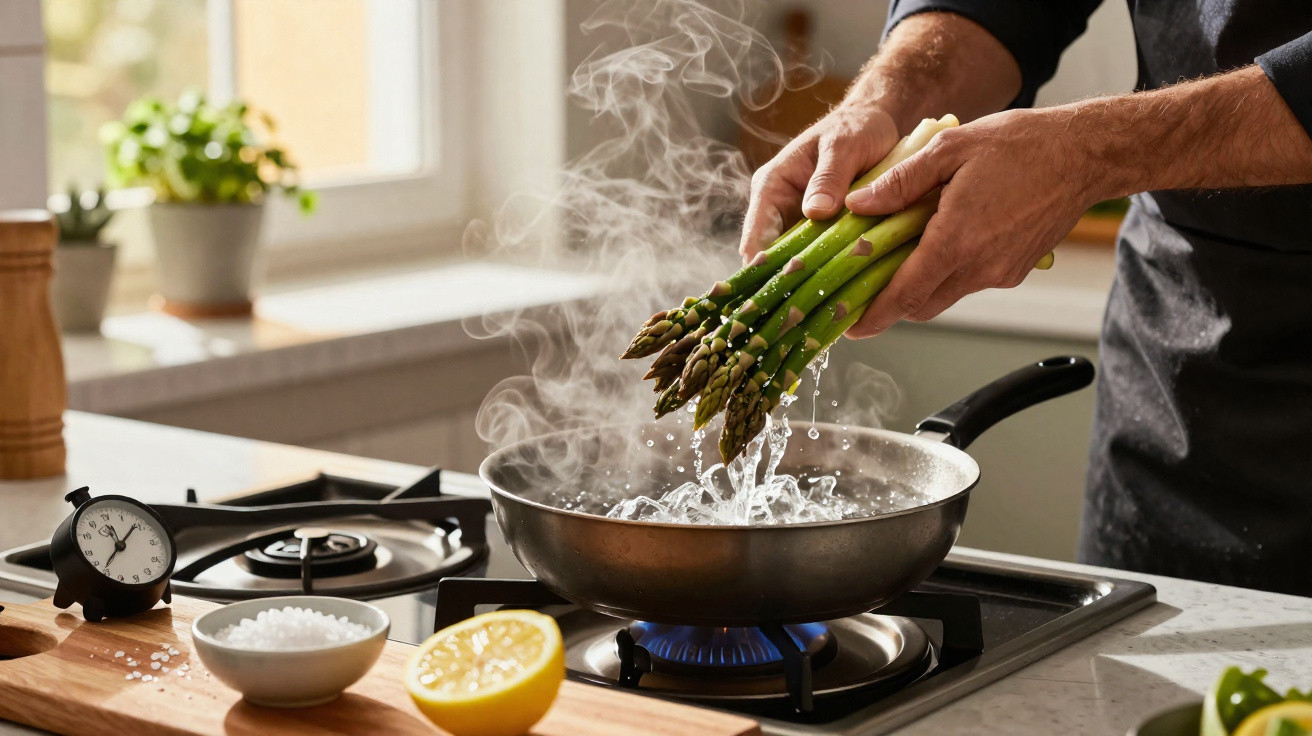
The first time you grow your own asparagus in a bed, it’s hard not to be amazed by how quickly the spears shoot up. Out of sheer pride, many people leave them “just a little longer”. What sounds sensible turns tender delicacies into fibrous, woody sticks - and can rob you of this year’s flavour.
Why we leave asparagus spears in the bed for far too long
The tempting thought: “Tomorrow the spear will be bigger”
In spring, plenty of gardeners check their beds every day. Asparagus, especially, can seem almost magical: in the morning there’s only a small tip, and by evening a decent spear is already pushing out of the ridge. So it feels logical to wait one more day, so the harvest looks really impressive.
That delay is exactly what comes back to bite. Chasing “more yield” encourages the plant to put its energy into height and sturdiness - not tenderness and aroma. If you keep spears back just for a nicer photo, you often pay for it later with chewy fibres on the plate.
“The most common asparagus mistake in the hobby garden: waiting for a few extra centimetres - and pushing the spear into becoming woody.”
Why size tells you very little about asparagus quality
In the veg patch, the rule often seems to be: bigger equals better. With asparagus, that only applies in a very limited way. The plant can gain height extremely quickly. To stop the spear bending or snapping, it lays down extra supporting tissue. That woody structure helps it stand up, but in your mouth it becomes a tough test of patience.
So those visible extra centimetres don’t mean “more tender vegetable” - they mean “more hard fibre”. If you focus on maximum length, you miss the brief window when texture, juiciness and taste line up perfectly.
What happens inside the asparagus spear when you harvest too late
From buttery-tender to woody: the quiet change within
Once asparagus passes a certain height, the plant switches strategy. To cope with wind and weather, it rapidly produces large amounts of lignin - the substance that gives wood its strength. For the person eating it, that means stringy fibres instead of a tender bite that almost melts.
This change happens extremely fast. Half a day of sunshine can be enough for a creamy texture to turn into a stubborn mass of fibres. You’ll notice it at the latest when peeling: you have to remove far more, and hard strings still remain.
How the flavour quite literally disappears
At the same time as the spear becomes woody, a second problem starts: that typical, lightly buttery spring flavour fades. The fine aromas are fleeting, and the plant uses them up as fuel as the spear keeps growing.
What you’re left with when you cut too late is often a watery, slightly bitter impression. The natural sugars that create balance are diverted into shoot growth. The result: more bulk, but far less enjoyment.
- harvested too early: little aroma, thin spears
- perfect moment: tender, aromatic, easy to peel
- harvested too late: woody, bitter, high trimming waste
The golden length rule: when you really need to reach for the harvest knife
About 20 centimetres - the point where everything works
Experienced growers stick to a straightforward rule of thumb: harvest asparagus when the spear is about 20 centimetres long. At this size, the balance of volume, tenderness and flavour is usually at its best.
If you’re unsure, you genuinely can use a small ruler. It may sound fussy, but in practice it’s the difference between a top-class portion and a frustrating meal. At this length, the spear is well formed, but it hasn’t fully shifted into “woody mode”.
“If you cut your asparagus spears at around 20 centimetres, you get the most out of every bed - not in weight, but in enjoyment.”
The tip shows whether it’s already too late
Length isn’t the only clue - the tip shape matters too. The ideal spear has a head that is tightly closed. The scales sit snugly; nothing is opening, and nothing looks loose.
As soon as the tip starts to fan out slightly or tiny side tips appear, the plant is moving towards flowering. That’s the red line: from here, fibre formation increases sharply and tenderness drops fast. A morning walk along the bed usually lets you spot borderline spears in time and act straight away.
How to harvest asparagus without harming the plant
Why technique is almost as important as timing
With asparagus, you’re not only thinking about today’s picking - you’re protecting future seasons too. Below ground sits a strong crown of roots that must not be damaged. It’s what allows the bed to produce for several years.
The cleanest way to harvest is with a dedicated asparagus knife. Slide the narrow blade down the ridge close to the spear until you can feel the base. Then make a precise cut without stabbing into the crown. Fast twisting motions or yanking can tear the underground network and significantly reduce yields in the years ahead.
What needs to happen to the spear after cutting
Freshly cut asparagus doesn’t stay at its best for long. The cells keep working, moisture evaporates, and the spear loses firmness. Even an hour in strong sun can noticeably dull both bite and juiciness.
Right after harvesting, wrap the spears in a damp cloth and keep them cool and out of the light. In the fridge, the classic method of standing them in a little water (much like flowers) works well. That helps the texture stay crisp for longer and keeps the delicate aromas more intense.
Typical beginner mistakes with asparagus - and how to avoid them
- Leaving spears too long: leads to woody fibres and bitterness.
- Storing them in the sun without protection: makes spears limp and dry.
- Cutting too deep into the ridge: damages the crown and weakens the bed for the following years.
- Harvesting unevenly: a few giant spears among many small ones puts the plant under strain.
Keep these points in mind and you’ll quickly realise: asparagus needs less brute force than attention. A brief daily check of the bed achieves far more than going out every other day in “big harvest mode”.
Why harvesting on time is also better for the plant
A balance between enjoyment and plant strength
Asparagus is a perennial crop. The shoots above ground - the bit we eat - are only part of the whole system. If you repeatedly let spears grow far too large, the balance shifts. The plant invests disproportionately in long, heavy shoots and regenerates less effectively through its roots.
Harvesting regularly and at the right moment actually reduces strain on the plant. It can produce new shoots in a controlled way without getting stuck in “gigantism”. That keeps the bed vigorous for longer and helps yields remain steady over multiple years.
How perfect timing pays off in the kitchen
Less peeling, more enjoyment per kilo
If you bring late-cut, woody spears into the kitchen, you pay twice: first with the effort of peeling, then again at the table. A large portion ends up in the food waste bin, and what’s left can still be stringy. With asparagus cut on time, a moderate peel is enough, and almost the whole spear ends up on the plate.
In a pan or saucepan, the difference becomes clearer still. Tender spears cook evenly, keep a slight bite, and take on butter, oil or sauce much better. Woody material stays stubborn, no matter how long you boil it.
Ideal partners on the plate
If you harvest with that much care, you won’t want to bury the flavour under too many supporting acts. These go particularly well:
- simply melted butter or high-quality olive oil
- a lightly whisked Hollandaise sauce
- new potatoes, boiled in salted water only
- a few flakes of coarse salt and freshly ground pepper
The better your timing, the less “show” the plate needs. Anyone who’s eaten asparagus cut at around 20 centimetres and handled properly straight after harvesting quickly understands why timing is everything with this vegetable.
Comments
No comments yet. Be the first to comment!
Leave a Comment