
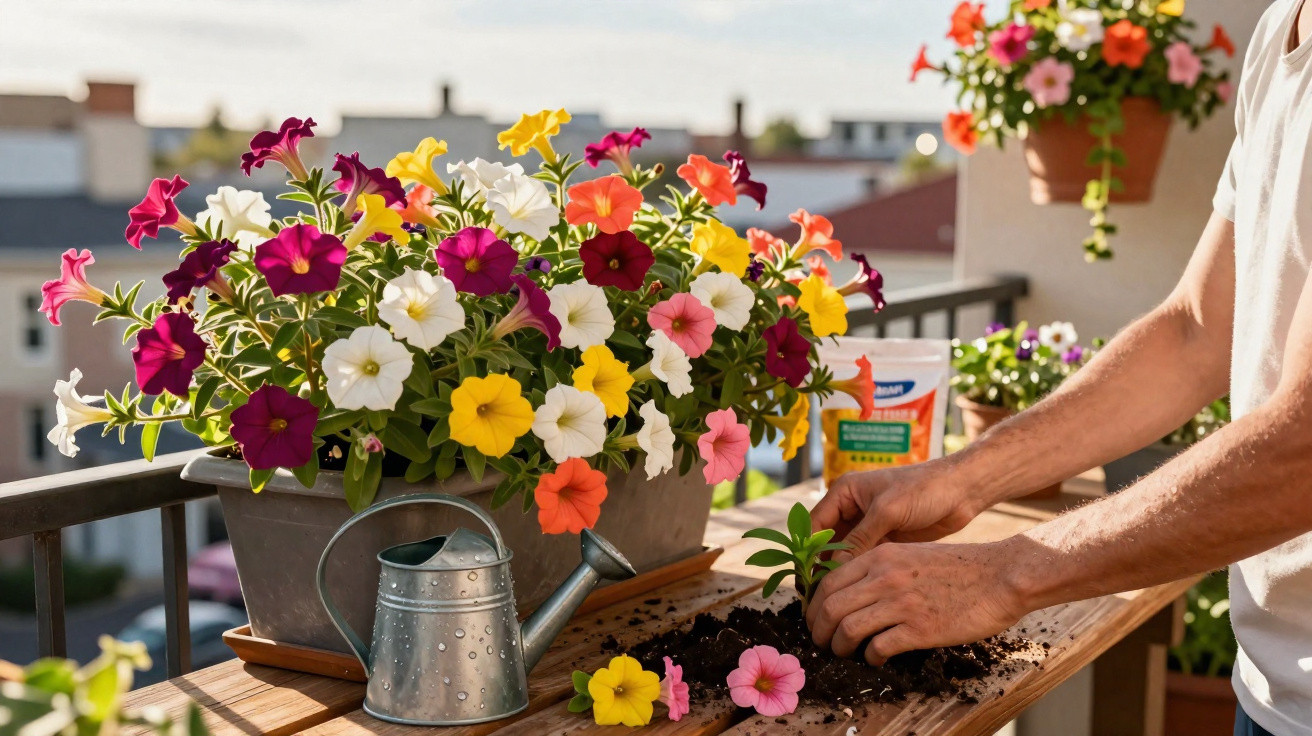
Many people picture their balcony lined with thick, cascading curtains of flowers - and then end up with a few tired-looking shoots. The secret is rarely an expensive designer planter; it’s far more about choosing the right plant and planting at the right time. For the past few years, an unassuming option from the garden centre has been quietly changing what’s possible.
The understated star plant behind those flower cascades
If you spot those rounded, trailing clouds of flowers on balconies and patios in summer, you’re usually looking at the same plant: Calibrachoa, often sold here as the mini petunia. At first glance it resembles an ordinary petunia, but it behaves very differently once planted in a balcony box.
Calibrachoa forms a dense, compact mound about 15–30 cm tall, while spreading 30–60 cm across. Its many stems drape neatly over the edge and carry hundreds of small, bell-shaped blooms - from late spring right through to the first frosts.
“If you want your balcony boxes completely filled and trailing all round, you almost automatically end up with Calibrachoa.”
That makes it a strong choice for:
- balcony boxes fixed to a railing
- hanging baskets and planters
- bowls and pots on a patio when placed slightly raised
- mixed planting with other summer flowers as a “curtain” at the front
Another advantage: among hobby gardeners, this plant is considered “self-cleaning”. Spent bells usually drop off by themselves, so you don’t have to deadhead every day to keep the display looking tidy. This is a real benefit for anyone who doesn’t want to go over the boxes each evening.
Why the right spring planting date determines your summer display
Calibrachoa originates from warmer regions and is sensitive to cold. In Central Europe it’s therefore grown as an annual summer plant. The planting window decides whether, by July, you’ll have a half-filled box - or one that’s overflowing.
A simple rule of thumb for planting into pots or balcony boxes:
- no remaining risk of night frost
- night-time temperatures consistently above 8–10 °C
- depending on the area, roughly mid-April to late May
Plant too early and growth stalls: the roots barely develop and the stems stay short. Plant just after the last frosts, however, and the plant has several weeks to fill the compost with roots. In late spring the stems begin to lengthen; by July they hang well over the sides and form the familiar ball of flowers.
“The box that’s properly prepared in April is usually the one that’s bursting at the seams in high summer.”
For a dense hanging basket or a medium-sized balcony box, trials reported in gardening magazines recommend three to four young plants per container. Fewer plants leave gaps; too many plants compete for water and nutrients.
How to get a balcony box truly full with Calibrachoa
Calibrachoa thrives in sun, but it cannot tolerate waterlogging. If you use a standard long planter with no drainage holes, you’re making life difficult for yourself. Containers with generously sized drainage holes work far better.
The ideal set-up for balcony boxes and hanging baskets
- a container with several large drainage holes
- bottom layer: expanded clay pellets or coarse gravel for drainage
- above that: an airy, good-quality balcony or hanging-basket compost mix
- avoid heavy garden soil and avoid using pure compost
The root zone needs to be very free-draining. Between waterings, the top layer should be allowed to dry. Constant damp quickly leads to root rot in Calibrachoa, often followed by yellowing leaves.
To keep the flowers coming all season, feeding matters hugely. Calibrachoa is often described as a “big eater” among summer bloomers. If you only add a little fertiliser at planting time and then do nothing, you risk the flowering display dropping off sharply in July.
“Regular, small doses of fertiliser keep the box flowering continuously - much better than a one-off ‘full-throttle’ portion.”
Watering and feeding schedule for a flower-filled summer
| Phase | Care |
|---|---|
| Straight after planting | Water in thoroughly, mix slow-release fertiliser or a base fertiliser into the compost |
| Late spring | Water when the surface is dry; apply liquid feed for flowering plants every two weeks |
| High summer | In hot weather, often water daily; avoid waterlogging; continue feeding every two weeks |
| From mid-July | Lightly trim back individual stems; keep the same watering rhythm and feeding routine |
If the plant looks a little tired or sparse in mid-summer, a light trim can help. Snip back the tips of a few stems by about 1 cm. This encourages fresh branching, which typically flowers strongly again in late summer.
Position, colours, varieties: getting the most from Calibrachoa
Calibrachoa prefers a bright, sunny spot. A south-facing balcony usually gives the most abundant blooms, but during heatwaves it demands consistent watering. On east- or west-facing balconies it also flowers well, and often grows a touch more compact.
The range of varieties has expanded greatly in recent years. Alongside classic single colours - yellow, purple, red, white or pink - there are bicolours, star-pattern markings, and double-flowered forms. Some cultivars even shift slightly in colour through the season depending on temperature and light.
- soft pastel shades look refined in modern, pale planters
- bold colours suit darker metal or wooden balconies
- striped blooms create strong accents in otherwise simple displays
If you don’t want to use only Calibrachoa, it pairs well with slower-growing companions. Suitable choices include sweet alyssum, small grasses or compact geraniums. What matters is that partner plants have similar needs for sun, water and nutrients.
Common mistakes people make - and how to avoid them
In everyday care, the same pitfalls come up again and again with Calibrachoa. A few straightforward habits prevent most problems.
- Planting too early: if nights are still cold, keep plants indoors or in a sheltered spot a bit longer.
- Compost that’s too heavy: lighten the mix with expanded clay or perlite before planting; never use pure garden soil.
- Irregular watering: water smaller amounts more often rather than occasional “floods”.
- Forgetting to feed: a calendar reminder for liquid feed every two weeks makes a big difference.
- Deep shade: in shady corners, stems become thin and flower numbers drop - choose part shade to full sun instead.
If you’re unsure whether it’s time to water, simply test the compost with a finger 1–2 cm down. If it still feels moist there, the watering can can wait. In very hot spells, hanging baskets are particularly sensitive to drying out; in that case, a water-storing granule mixed into the compost can be worthwhile.
Who Calibrachoa is especially worth it for
This balcony flower suits anyone who doesn’t want complicated pruning or daily deadheading, but still wants a strong visual impact. If you’ve just moved into a new flat, have little gardening experience, and want quick results, starting the season with one or two boxes planted entirely with Calibrachoa is about as low-risk as it gets.
It’s also an appealing option for renters with a small patio who are only allowed a few containers. One generously planted box or a single hanging basket can define the look of the whole outdoor space - while saving room, effort and money. If you catch the right moment in spring and stick to the simple care routine, you’ll be looking at dense, colourful flower cascades all summer instead of half-empty boxes.
Comments
No comments yet. Be the first to comment!
Leave a Comment