
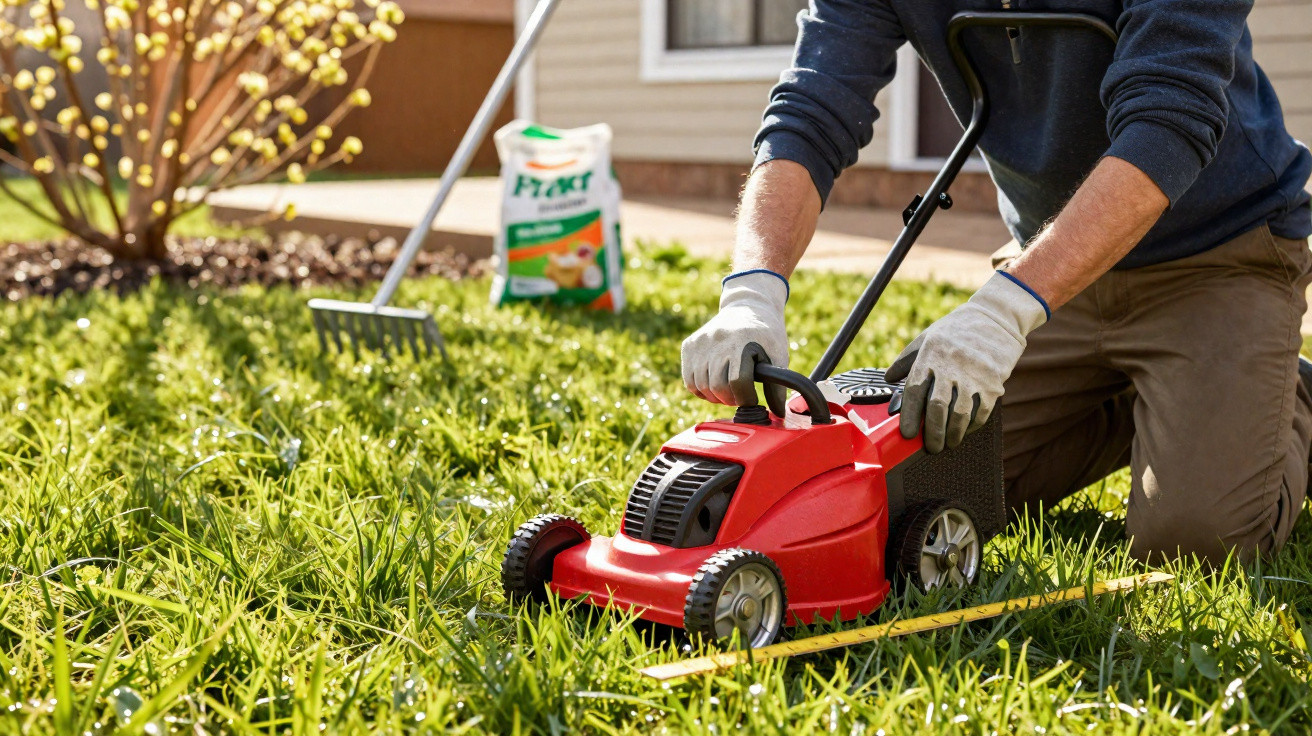
The shift from winter into spring often determines whether your lawn later ends up with gaps, moss and yellow patches - or whether it stays compact and even. Professionals are clear: choose the wrong approach now and you can spend the whole season dealing with damage. Stick to one simple basic rule, and you set yourself up for a noticeably thicker lawn right through to autumn.
Why the first lawn cut in spring makes such a difference
After winter, grass is under strain. Roots have limited reserves, and the soil is frequently cold and wet. The blades may look a bit untidy, but that extra length is doing a protective job.
In effect, grass blades work like tiny solar panels. The more leaf area there is, the more sunlight the plant can capture and turn into growth and stronger roots. In winter, days are short and light levels are low - so every extra millimetre of leaf surface counts.
Anyone who scalps the lawn in March into an “English golf course” is taking away exactly the energy the plant urgently needs for its restart.
Many people mow too early and too low out of habit. The typical results are:
- the blades yellow at the cut tips
- the turf tears open and gaps appear
- moss and weeds take advantage of the bare areas
- the soil dries out faster
A very short lawn can look tidy at first, but the price is thinner growth and more work for the rest of the year.
When in March the first mow is actually due
The date on the calendar is not enough. What matters is temperature, moisture and the current blade height.
Gardeners use a few straightforward checks:
- Most late frosts should have passed.
- The soil should have warmed to at least about 7 °C.
- The unmown lawn is roughly 8 to 10 centimetres high.
- The surface is no longer persistently waterlogged.
In many areas, that means late March or even early April. In very mild locations it may start a little sooner; in shady gardens or at higher elevations, it’s usually later. If you’re unsure, ease into it: check a thermometer and do a simple step test - if you sink in noticeably, the ground is still too soft.
The most important rule: never remove more than a third
Lawn specialists’ key advice can be boiled down to one simple principle: the one-third rule. It reduces stress on the grass while also encouraging healthier growth.
Never cut more than a third of the blade length in one go - that small number determines the lawn’s density, colour and resilience.
For example, if the grass is at 9 centimetres, only reduce it to around 6 centimetres, not lower. That may sound conservative, but it’s plenty to make the area look cared for.
Benefits of keeping the cut height higher include:
- The turf stays shaded, so the soil loses moisture more slowly.
- The plants retain enough leaf area to keep collecting energy.
- Side shoots are encouraged - the lawn thickens rather than simply getting shorter.
- Moss and weeds get less light and less room to establish.
For the first spring mow, experts recommend leaving a remaining height of around 5 to 6 centimetres. Only once the lawn has clearly recovered and filled out should you, if you want to, go slightly lower later in the year - without abandoning that safety margin entirely.
Getting ready properly: what should happen before the first cut
Driving a mower over a wet lawn in March, especially one still affected by frost, can do more harm than you realise. Preparation doesn’t take long, but it makes a noticeable difference.
Don’t compact and damage the ground
Waterlogged soils are easily harmed. Heavier mowers compress the earth, roots get less air, and standing water lingers for longer. So follow these basics:
- Don’t mow when the ground is muddy or frozen.
- On very heavy soils, wait a few extra days.
- Footprints that remain visible are a warning sign: it’s still too early.
Let it breathe once: aerate rather than punish
Before the first cut in March, a brief refresh is worthwhile. If you have time, loosen the ground in spots with a garden fork or a hand aerator. A few deep holes per square metre are enough to help air and water reach the root zone more effectively.
If you notice lots of thatch and dead material, lightly rake through the surface. Aggressive scarifying at this early stage is best reserved for well-established, vigorous lawns - weaker turf should be allowed to regain strength first.
How to set up your lawnmower correctly in spring
Many mowers sit in the shed all winter and then come out in March with dull blades and the wrong cutting height. You’ll see the downside immediately on that first pass.
| Preparation step | Benefit for the lawn |
|---|---|
| Sharpen or check the blade | Cleaner cut edges, less yellowing |
| Set the cutting height to 5–6 cm | Gentler start, thicker growth |
| Clean the mower thoroughly | Better airflow, more even cutting |
| For corded or battery machines: check cable/battery | Safer operation, no unexpected stoppages |
On the first cut of the year, the mower should be more like a “stroke” than a drastic trim. Moving slowly helps prevent blades from bending over or being torn out.
What to do after the March mow
Once the first cut is done, the real build-up phase for a rich green lawn begins. Keep applying the one-third rule consistently: mow a little more often rather than leaving it too long and then cutting hard.
Depending on growth, one cut per week is often enough. During cooler spells, you can leave a longer gap. The key is not letting the grass get so tall that you’d need to remove more than a third again.
If you don’t torture your lawn and instead cut regularly and moderately, you’ll be rewarded with a dense, hard-wearing green that gives weeds very little chance.
Many gardeners deliberately maintain certain sections less strictly. A corner at the edge can be left a bit longer to provide more flowers for insects. The main area around the house can still stay even and comfortable to use.
When feeding, overseeding and watering make sense
The first spring cut is a good moment to inspect the lawn properly: where are the gaps? Which areas look weak? Do nutrients need topping up?
- Feeding: A tailored spring feed supports fresh growth. Specialist lawn fertilisers release nutrients evenly over several weeks.
- Overseeding: Bare patches or thin areas can be filled now using overseeding mixes. Lightly roughen the soil first, then firm in after sowing by rolling or treading.
- Watering: In spring, natural rainfall is usually enough. During longer dry spells, a deep watering early in the morning is worthwhile.
If you fertilise regularly, avoid cutting too low. Nutrient-rich lawns that are kept too short tend to shoot up quickly and then need mowing even more often.
Why patience in March beats perfection
In spring, the urge to “finally tidy up” is strong. A perfectly short lawn looks neat, but the appearance can be misleading. A slightly taller lawn that is stronger and denser will, over time, cope better with heat, drought and wear.
March is when you set the course: give the grass time, work with a higher cutting height, and prepare the first intervention properly - and you’ll spare yourself a lot of worry in summer about brown patches and cushions of moss. A few extra centimetres in spring can translate into thousands of stronger blades by summer.






Comments
No comments yet. Be the first to comment!
Leave a Comment