
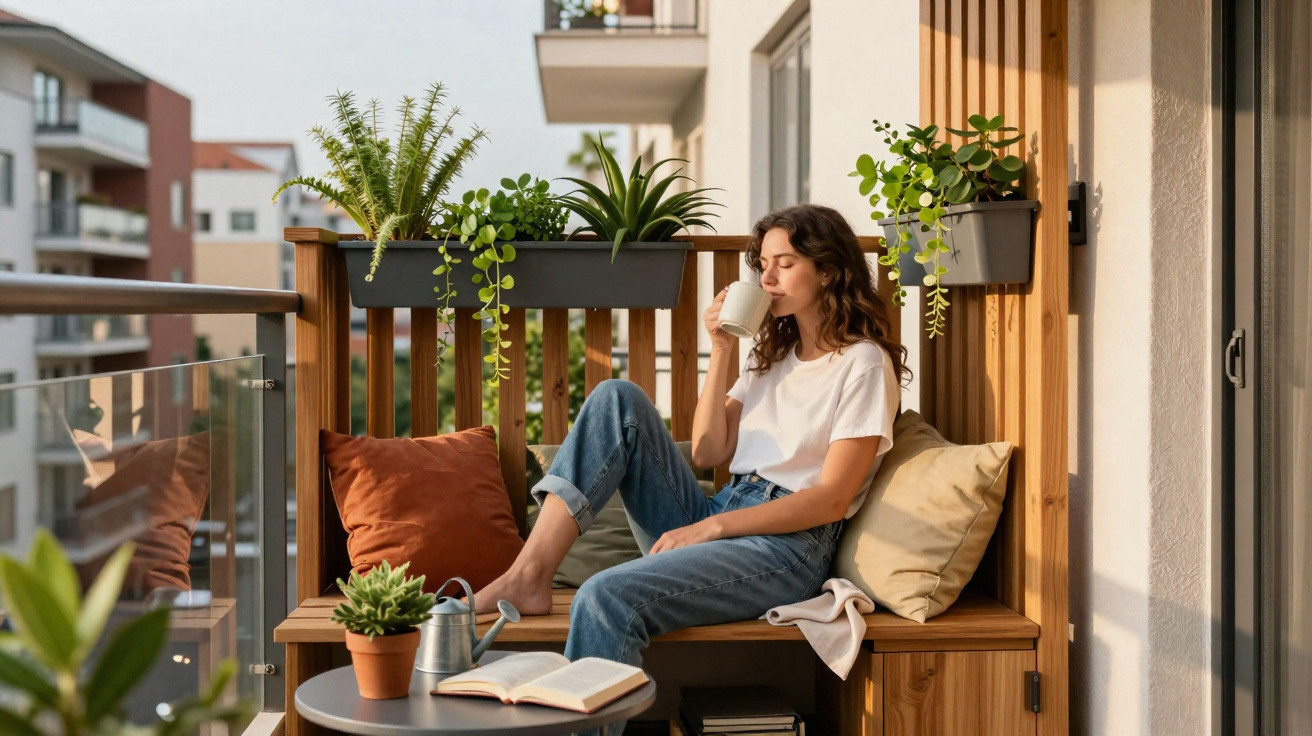
There’s a surprisingly simple fix.
Plenty of city dwellers will recognise the moment: you step outside with a coffee or an after-work beer, and instantly the neighbours are at the window, on the terrace opposite, or leaning on the railing. Suddenly, the outdoor area feels more like a stage than a place to switch off. Rather than splashing out on expensive privacy fences or getting tangled up in complicated alterations, a clever 3-in-1 piece from IKEA tackles exactly this problem - turning even the tiniest balconies and mini-gardens into sheltered, comfortable little zones.
Why privacy screening on a balcony or in a mini-garden is so frustrating - and still essential
In densely built-up cities, balconies are often only a few metres apart. You can hear conversations word for word and see every movement. As a result, many people use their outdoor space far less than they could - simply because it feels uncomfortable.
"Outdoor privacy isn’t created by square metres, but by smartly placed barriers that stop sightlines without blocking light and air."
Market researchers estimate the global market for privacy screening elements and fences is already sitting at just under 19 billion dollars. That underlines a clear trend: the desire for privacy is growing much faster than living space. At the same time, many renters face familiar restrictions: drilling into the façade is prohibited, permanent fences aren’t allowed, and hedges take years before they’re tall enough to do the job.
That’s exactly the gap filled by a solution that doesn’t require planning permission or DIY skills - yet can be adjusted whenever your living situation changes or you rearrange your balcony furniture.
The IKEA NÄMMARÖ element: privacy screen, bench and storage in one
At the heart of this idea is a module from IKEA’s NÄMMARÖ range. At first glance it looks like a straightforward wooden screen, but up close it’s more like a Swiss Army knife for tight outdoor spaces.
Sturdy materials instead of a flimsy budget screen
The frame is made from solid acacia wood. This timber is known for coping well with the elements, is commonly used for garden furniture, and naturally brings a warm, slightly Mediterranean look. The slats are positioned to let light and air through while breaking up direct lines of sight.
- Height of the privacy screen section: approx. 140 cm
- Width: approx. 80 cm
- Footprint: around 50 cm deep
- Suitable for balconies, terraces and small city gardens
That means it doesn’t feel like a heavy wall that makes a balcony claustrophobic - more like a light room divider. For upkeep, it’s usually enough to wipe it down with soapy water and - depending on the weather - re-oil or re-stain it once or twice a year.
The 3-in-1 version: screen, bench and storage chest
The more interesting option is the extended version: here, the screen sits on top of a bench with built-in storage hidden underneath. The dimensions are roughly 80 × 68 × 140 cm. The seat lifts like a chest, giving you a place to stash everything that otherwise ends up scattered around the balcony.
Typical items that finally get a proper home:
- Seat cushions and blankets
- Small garden tools and a watering can
- Children’s toys
- Fairy lights, decorative bits and lanterns
In terms of cost, current information puts the screen on its own at about 75 euros, while the combination with bench and storage tends to sit between around 170 and 220 euros depending on the offer. Compared with a made-to-measure balcony enclosure or a permanent fence, that’s often significantly cheaper - and you can simply take it with you when you move.
"Instead of buying three separate products - privacy screen, bench, garden storage chest - a single module that combines all functions is enough."
Assembly and real-life use: how practical is it, really?
Putting it together is much like many other IKEA pieces: a handful of wooden parts, screws, and an Allen key. Anyone who has assembled a shelving unit before should manage this module too. In user reports, people particularly praise how stable it feels and how straightforward the build is.
For everyday balcony life, one detail matters most: the element isn’t screwed into a wall or the floor. It stands freely and can be moved. That makes it easy to rotate when the sun shifts, or to protect a different corner when you need it.
A typical day-to-day setup might look like this:
- In the morning, it acts as a backrest and a privacy screen from the neighbouring balcony.
- At lunchtime, you slide it slightly to one side to create shade for the dining table.
- In the evening, you move it closer to the railing so you’re not looking straight into someone else’s living room - and vice versa.
Especially on rented balconies, this flexibility is a major advantage: no drilling, no marks on the façade, and no disputes with the property management.
How to turn your balcony into a private retreat with NÄMMARÖ
The screen alone makes a noticeable difference, but it gets far more effective with a few simple styling choices. This piece can do more than block views - it can become the backdrop for a complete mini outdoor living room.
Vertical greenery instead of plant chaos on the floor
The slats are a great base for a lightweight vertical garden. Rather than lining the floor with dozens of pots, you can attach a few narrow planters or hooks. Garden experts have been highlighting for years how efficient vertical growing is when space is limited.
Good plant choices for a “green privacy screen” include:
- Trailing herbs such as thyme or oregano
- Light climbers with a gentler growth habit, such as nasturtiums
- Slim grasses in hanging containers to add height
- Small strawberry plants or tomatoes in balcony planters
The result is a living screen that not only keeps neighbours’ eyes at bay, but can also soften noise a little and either warm up or cool down the microclimate - depending on planting and aspect.
Dividing space: turning three square metres into two zones
In a narrow city garden, the NÄMMARÖ module can work like a small partition wall. Picture dividing the area visually: dining spot at the front, quiet zone at the back. The bench with storage becomes the marker between the two.
Practical examples:
- In a mini-garden, the bench separates the table area from a sun lounger while also hiding bins or an air-conditioning outdoor unit.
- On a ground-floor terrace, two modules arranged in an L-shape create a sheltered corner where you feel far less “on display”.
- On a narrow balcony, you can place the element along the railing to create a semi-transparent privacy screen over the full length.
"People who divide their outdoor space into zones usually use it more often - because each corner has a clear purpose."
What to think about before you buy
As useful as it is, it’s worth pausing before you commit. A few points need attention to make sure it genuinely suits your space.
- Weight and wind: Free-standing elements can wobble in strong winds. Check whether your balcony is exposed and whether you can secure the module if needed.
- Space required: A depth of about 50 cm can feel bulkier than expected on some balconies. Measure carefully beforehand.
- Wood care: If you don’t want to re-treat it occasionally, be prepared for the timber to grey over time.
- Balcony load limit: Bench plus storage plus people plus contents can add up. In most cases this isn’t an issue, but in very old buildings it’s worth a quick look at your tenancy agreement or building documents.
Why modular furniture is becoming the standard solution for city balconies
Many newer balcony furniture designs follow the same idea as this IKEA element: one item does several jobs. The reason is the combination of ever-smaller outdoor areas and higher expectations of what those areas should deliver.
If you only have four or five square metres, you need furniture that:
- provides storage
- creates seating
- adds privacy and structure
- can be rearranged quickly
The NÄMMARÖ module meets those needs in a single product. It’s particularly useful for people who move more often or don’t want to commit to fixed solutions: today it sits on a balcony; in a few years it might be in a small front garden or on a terrace.
There’s another side effect, too. When a balcony is clearly organised and clutter disappears into storage, people tend to use the space noticeably more. Many report they suddenly eat breakfast outside, spend more evenings reading outdoors, or invite friends over for a drink - because they no longer feel watched, and they don’t have to tidy up every time.
That’s how an unassuming piece of wooden furniture becomes a tool for better day-to-day living - with no drill, no tradesperson and no drawn-out renovation.





Comments
No comments yet. Be the first to comment!
Leave a Comment