
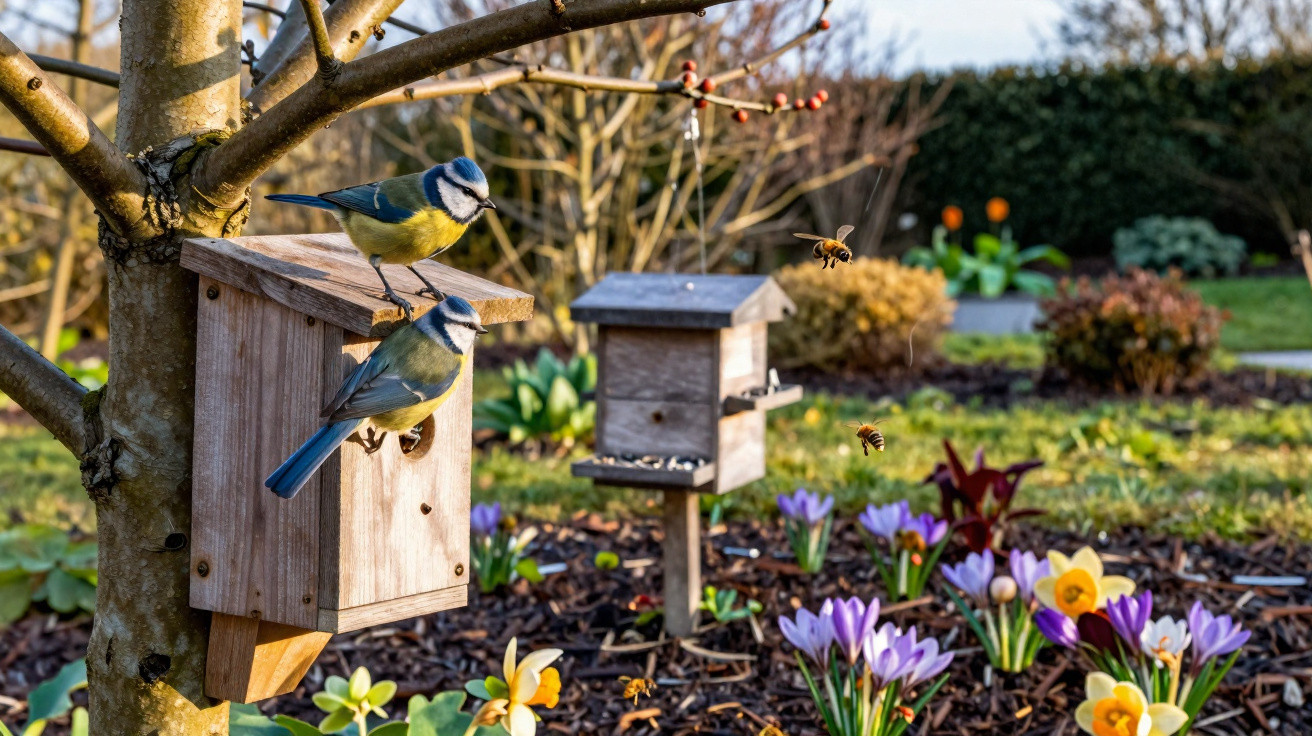
Each spring, a quiet drama unfolds in our gardens well before the first barbecues are lit or sun loungers come out.
As most people are still emerging from winter, an invasive predator is already becoming active, preying on honey bees and other pollinators. One of the most useful allies against it, however, is a familiar small songbird – provided you encourage it into your garden early enough.
Asian hornet: why March is the critical month
Since arriving in France during the early 2000s, probably in an imported consignment, the Asian hornet (Vespa velutina) has spread through much of western Europe. It is now established in several UK areas, where beekeepers and wildlife bodies monitor it closely.
The damage it causes is evident: this large, wasp-like insect preys on honey bees and wild pollinators, catching them outside hives and in orchards. A healthy nest can eat several kilograms of insects annually, increasing the pressure on bee populations that are already under strain.
Timing is important. From around March, in late winter and early spring, Asian hornet queens that have overwintered emerge. Each one looks for a protected place in which to make a small “primary nest” – beneath a roof, inside a shed, high in a hedge or up a tree.
When successful and undisturbed, this modest nest develops into a substantial summer colony. Later in the season, it can house thousands of workers and produce fresh queens to restart the cycle in the following year.
Intervening early, when nests are small and colonies fragile, is far easier and safer than waiting until summer.
Experts are clear that fully eradicating Asian hornets from regions they have invaded is unlikely to be realistic. They spread rapidly, breed effectively and have few natural enemies that specifically target them. Although some birds, including bee-eaters and certain birds of prey, consume hornets, they are too unevenly distributed to control populations by themselves.
For gardeners and small-scale beekeepers, a much smaller and more widespread helper is often the tit – especially the blue tit and great tit commonly seen at garden feeders.
The garden tit: a discreet ally against Asian hornets
Tits are well-known insect-eating birds. Blue tits, great tits and coal tits supply their chicks with an unbroken flow of caterpillars, grubs and small invertebrates. Throughout the breeding season, one pair may bring several hundred food deliveries to its nest each day.
Over several weeks, this results in thousands of insects and larvae being taken from the garden. Hornet larvae may be included in this diet when a hornet nest or abandoned nesting location is close by.
Tits do not “specialise” in Asian hornets, but they add a continuous, low-level pressure on larvae and potential new queens.
Great tits, particularly, appear inclined to investigate cavities and former nests. At the beginning of winter, they may eat hornet larvae as well as dead or weakened adults in, or close to, abandoned nests. This reduces some of a colony’s breeding capacity, lowering the number of queens that could emerge in future.
Ecologists emphasise that such predation is opportunistic. No individual bird, parasite or predator can tackle the hornet issue alone. Nevertheless, in a wildlife-friendly garden, a web of insect-eating birds can make conditions slightly more difficult for hornets and more favourable for bees.
How to attract tits to your garden before spring fully arrives
To have these small birds active in your garden when hornet queens emerge, they need to be established by March. This requires planning for nest boxes and feeding slightly earlier than many people normally would.
Put up nest boxes at the correct time and height
At the end of winter, tits compete intensely for nesting holes. A basic wooden nest box, with a suitable entrance and correctly positioned, can make the difference.
- Choose an enclosed wooden box with a circular entrance hole of around 2.5–3 cm, appropriate for blue tits and great tits.
- Mount it 2–5 metres above ground level on a wall, post or established tree.
- If possible, orientate it away from prevailing winds and intense midday sunshine.
- Keep it beyond the reach of cats and away from straightforward climbing access.
- Install it before the middle of March, allowing birds to inspect and occupy it early.
A box in a good location has a strong likelihood of being used for the season, providing a resident pair of insect hunters that patrol nearby eaves, trees and hedges.
Feed carefully at the end of winter
Winter feeding areas are one reason so many tits are at ease around homes. You can use that familiarity to encourage them to remain nearby at this important time.
From late winter to approximately the end of March, offer energy-rich food such as:
- black sunflower seeds or sunflower hearts;
- unsalted nuts, such as peanuts, in suitable mesh feeders;
- fat balls or blocks containing vegetable fats.
As insects become more plentiful in spring and nesting gets properly under way, slowly reduce high-calorie feeding. The aim is to steer the birds towards natural prey, including caterpillars, beetles and, where they encounter them, hornet larvae.
Turn your garden into a lasting refuge
Feeding is only one part of the equation. Cover, nest-building material and fresh water can help transform a visiting group of tits into permanent residents.
A tit-friendly garden often looks a little untidy: mixed shrubs, leaf litter, old stems and a quiet corner are all assets.
Important features that support tits while also helping pollinators include:
- native shrubs and smaller trees, including hawthorn, elder, hazel and willow, which support abundant insect life;
- areas left a little “wild”, with long grass, brambles or dead wood where insects can flourish;
- a shallow bird bath or small pond, regularly cleaned and topped up;
- a firm pesticide-free approach, ensuring insects are both plentiful and safe for birds to eat.
These changes build a more intricate food web. Bees gain flowers and shelter, while tits have invertebrates with which to feed their young. Asian hornets remain a danger, but they encounter greater competition and predation at different points in their life cycle.
Working with professionals against hornet nests
Tits and other wildlife offer ongoing support rather than a complete solution. Large or active Asian hornet nests, particularly near houses, schools or apiaries, require action by people.
| Situation | Recommended action |
|---|---|
| Suspected hornet spotted in the garden | Take a photograph safely from a distance, then report it to local wildlife or biosecurity authorities. |
| Small early-season nest in a shed or roof | Get in touch with a certified pest controller experienced in Asian hornets; do not try to destroy it yourself. |
| Large nest high in a tree | Do not attempt removal yourself; specialist equipment and protective clothing are required. |
The garden’s role is to encourage biodiversity and lower the number of developing queens or larvae that reach maturity. Professional removal can then focus on the nests that remain and present the greatest risk.
What this means for beekeepers and garden owners
For beekeepers with back-garden hives, attracting tits forms one part of a broader response. This may also involve checking hives, using hornet traps where regulations permit, and working with neighbours.
Gardeners without hives also have an interest in this. When they provide food and nesting opportunities for insect-eating birds, they help protect local bee and pollinator populations. This benefits fruit trees, vegetable gardens and ornamental flowers, which all depend to some extent on insect visits.
There is a subtle educational advantage too. Families that install nest boxes and observe tits rearing chicks often become better at recognising hornets, wasps and bees. Identifying and reporting an unfamiliar insect quickly can stop a nest from becoming fully established.
Extra context: why predators like tits matter against invasive species
In ecological terms, a single predator is rarely able to restrain a firmly established invasive species. The situation changes through a network of natural enemies alongside human intervention. Tits are part of this network because they are resident throughout the year, continually searching foliage, bark and crevices for small prey.
They may be less striking than a bird adapted to eating hornets, but their population size and persistent foraging have a cumulative effect. Every hornet larva or queen removed represents one fewer possible nest founder. Across thousands of gardens managed in similar ways, this low-key pressure begins to make a difference.
There are compromises to weigh up. A garden that avoids pesticides entirely and retains more untidy areas may appear less carefully manicured. In return, it is often richer in birdsong, butterflies and pollinators. For many, this modest change in appearance is worthwhile for a more resilient, living garden where bees have one additional ally in their fight against the Asian hornet.



Comments
No comments yet. Be the first to comment!
Leave a Comment