
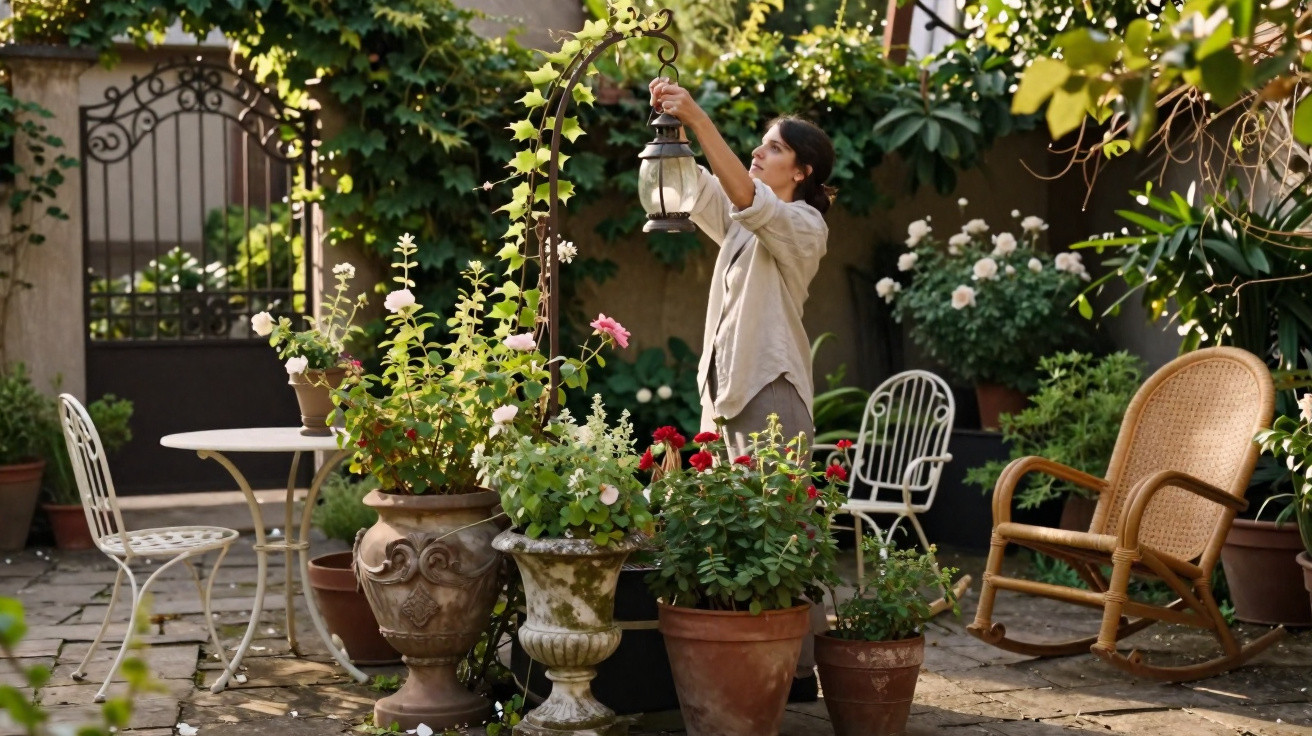
Standfirst: Flea markets, lofts and classified ads: discarded pieces are suddenly finding their way back into the garden, turning outdoor spaces into charming retro settings.
Standard garden furniture from DIY stores is losing its appeal. More and more people are now styling their balcony, terrace or small urban garden as a second living room – with character, history and deliberate contrasts. At the heart of this movement is a trend arriving from France: the Brocante look, which combines second-hand, often gently worn items to give outdoor areas a sense of soul.
Why the Brocante look is so popular in the garden right now
For a long time, the garden was treated mainly as a functional space: barbecue, folding table, stackable chairs – job done. Today, atmosphere matters more. People are looking for pieces that are imperfect yet distinctive. Dents, traces of rust and chipped paint all tell a story.
“The Brocante garden thrives on objects that have already had a life – and that is precisely what makes them interesting.”
Its appeal lies in the contrast: a sleek modern new-build façade, with a weathered iron table in front of it and an old terracotta urn covered in moss beside it. This juxtaposition brings warmth and personality to spaces that could otherwise quickly feel sterile.
Five categories of objects appear time and again, and are now making a strong return to front gardens, backyards and balconies.
1. Vintage lighting: old lamps instead of off-the-shelf string lights
Garden lighting is no longer limited to LED garlands and solar lamps. Anyone searching flea markets or online platforms can find:
- Brass or copper lanterns from the 1960s or 1970s
- Pendant lamps with frosted glass to hang above the garden table
- Wall lights with pronounced patina for an exterior wall or garden wall
Such pieces instantly create a different atmosphere. The light feels softer and the design more individual. Often, fitting a new base, having the wiring checked and choosing a suitable bulb are all it takes to make an old find safe to use again.
Individual accent lights are particularly well suited to small city balconies. A rusty industrial lamp above a tiny bistro table looks far more interesting than an anonymous standard fitting. Anyone who prioritises safety and has the lamps professionally connected will enjoy them for years.
2. Terracotta pots and old urns: patina rather than plastic
Few objects represent the Brocante garden as strongly as an old terracotta pot. Chipped edges, limescale marks, fine cracks and traces of moss immediately make a planter feel authentic.
“A single large, visibly aged pot can make a new garden feel as if it has existed for decades.”
Particularly sought-after pieces include:
- Large terracotta urns used as statement pieces beside the front door
- Heavy ornamental planters
- Old decorative troughs made from stone or clay
They are ideal for structuring entrance areas, dividing up terraces or adding visual weight to an otherwise empty spot. Olive trees, box plants, hydrangeas and herbs look especially high-end in them, even when the plants are still young.
Important: before planting, check that the pot is still sufficiently watertight and has a drainage hole. Small cracks are not a problem as long as the structure remains sound. Many decoration professionals even welcome moss or lichen forming on the surface, as it speeds up the desired ageing effect.
3. Wrought iron: gates, arches and pergolas with history
Wrought iron is enjoying a genuine renaissance in the garden. It is not only classic benches that are in demand, but above all architectural features:
- Old ornamental garden gates
- Climbing arches for roses, vines or sweet peas
- Slim pergolas framing a path
Older wrought-iron pieces are often considerably more substantial than today’s mass-produced versions. They were made to last for decades, rather than just three seasons. With a little rust protection and a fresh coat of paint, they can withstand many more summers.
“A single old iron arch with a climbing rose can turn an entirely unremarkable garden path into a kind of ‘secret passage’.”
Those browsing flea markets or classified ads should check for stability: if the frame wobbles badly or supports have rusted through, restoration will be time-consuming. Light surface rust can be dealt with effectively using a wire brush and paint.
4. Iron garden furniture: delicate, durable and highly sought-after again
Wrought-iron dining sets were long considered old-fashioned. Now they are returning with bold colours and new cushions. Round tables with pierced tops and chairs with curved backs are especially popular.
Their charm comes from the combination of a delicate appearance and genuine sturdiness. Old sets can easily support weight, are heavy enough not to topple over in the wind, and still look airy.
Anyone who picks up a rusty set will usually proceed as follows:
- Remove old paint and rust with a wire brush or sanding attachment
- Apply a rust-inhibiting primer
- Paint with metal paint in the chosen colour, traditionally white, dark green or anthracite
Patterned seat cushions, perhaps even in water-repellent fabric, can quickly create a small “café corner” reminiscent of southern European squares – without needing to buy a single new item.
5. Vintage seating: rocking chairs, loungers and rattan armchairs
When it comes to seating, people are relying less and less on plastic or aluminium folding chairs. Instead, older pieces originally designed for verandas, conservatories or the beach are appearing more frequently:
- Wooden rocking chairs with armrests
- Rattan or bamboo armchairs with curved forms
- Wooden loungers with striped fabric slings
“An old rocking chair on the balcony immediately signals: this is not just a place to sit; it is a place to truly relax.”
Many of these furnishings cost considerably less at flea markets than current designer pieces. However, they need some attention: sand, oil or paint the wood; possibly have rattan re-woven; and replace fabric slings. Those without practical skills can find upholsterers or small workshops to take on this work.
Especially in a confined space, such as a big-city balcony, one characterful piece of furniture is often enough to transform the entire atmosphere. A rattan armchair with a cushion, an old throw and a small side table beside it – and a compact lounge area is complete.
How to combine Brocante and modern style in your own garden
The biggest mistake is usually overdoing it. Filling every free corner with vintage items risks creating a cluttered overall look. A more selective approach is far more effective.
A few simple principles can help:
- Choose one large item for each area, such as an urn, bench or pergola
- Repeat tones: rusty iron, warm terracotta and untreated wood
- Use new products sparingly, for example for cushions, candles and baskets
- Leave enough “breathing space” for each object to make an impact
Anyone who feels uncertain should begin on a small scale: one old pot, a single lamp or a vintage chair. Over time, it becomes clear which direction suits both the house and everyday life.
Practical advice: care, risks and hidden benefits
Used garden pieces bring challenges as well as charm. Metal can rust, wood can warp, and old wiring is not always safe. It is worth taking a critical look before using anything day to day:
- Metal: check its load-bearing capacity, have loose parts welded and apply rust protection
- Wood: remove rotten sections, identify woodworm and replace material where necessary
- Electrics: always have lamps checked and connected by qualified professionals
The effort pays off. Refurbished pieces often last considerably longer than inexpensive new items. Those who oil, paint and inspect them regularly will gradually build a small collection of favourite objects that becomes more beautiful with every season.
There is another advantage: many of these finds are more sustainable than buying new. Saving an existing table instead of ordering a new one reduces resource use and transport distances. There is also emotional value: an item from a grandmother, a find from a village flea market or the first “proper” vintage bargain tells stories that no catalogue furniture can provide.
Over time, this creates a garden that does not look finished but evolved – with corners, memories and finds that do not need to hide their little imperfections. It is exactly this imperfect charm that makes the current Brocante trend so appealing.

Comments
No comments yet. Be the first to comment!
Leave a Comment