
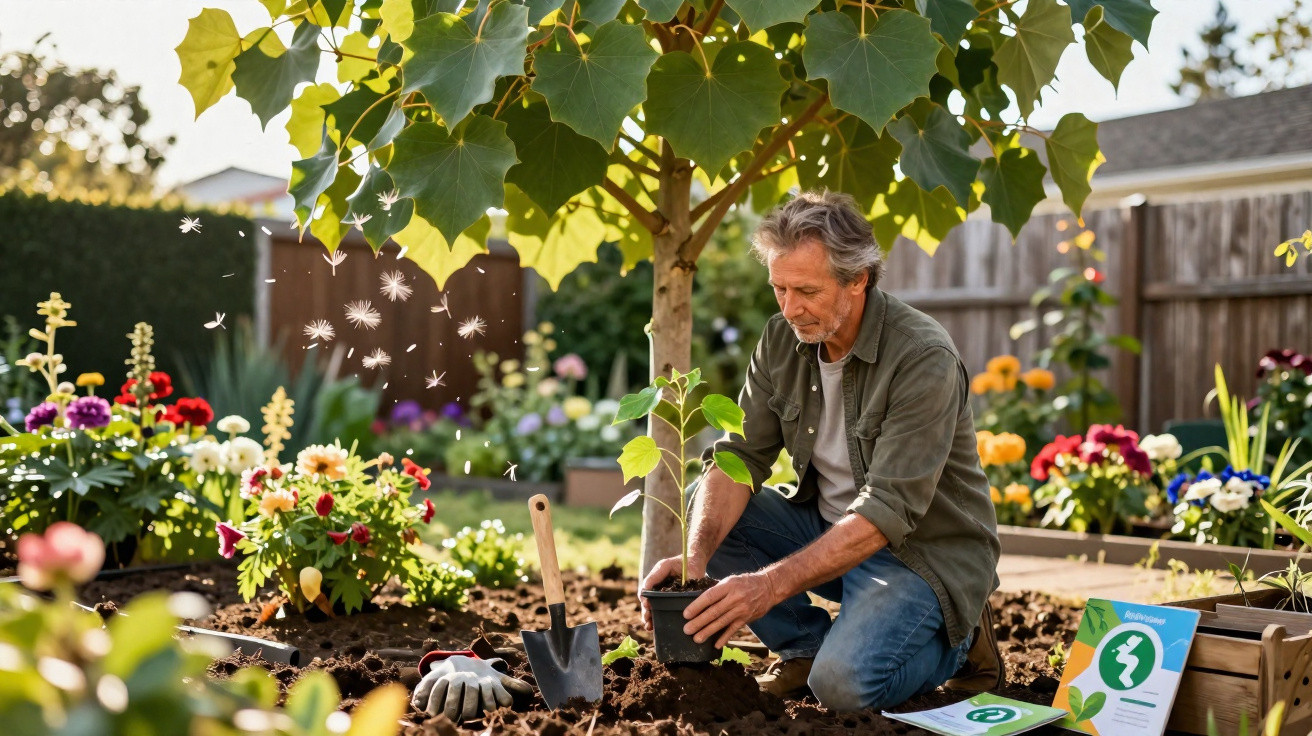
An exotic-looking tree has been popping up in more and more gardens, leaving neighbours amazed and filling gardening forums with questions. Paulownia-often sold as the “miracle tree”-is promoted as a fast-growing showstopper with dramatic flowers and even a role in tackling climate change. Behind those big promises, however, sits a far more complicated reality.
An Asian tree that is turning heads
Paulownia originates in East Asia, particularly China and Japan. There, its timber has long been used for lightweight furniture, musical instruments and storage boxes. In Europe, interest is being driven mainly by two traits: extremely rapid growth and a striking, distinctive look.
Plant a young Paulownia and it can feel as though it changes week by week. Accounts of growth measured in several metres within just a few years are common. In some suburbs, a tree that is only four or five years old already towers above a garage roof and casts a wide canopy of shade-especially appealing in summers that keep breaking heat records.
“Paulownia grows so fast that even bamboo looks sluggish by comparison-a dream for the impatient, a warning sign for ecologists.”
Its appearance adds to the appeal. In spring, the tree produces large, bell-shaped flower panicles-usually violet-often before the leaves emerge. Once summer arrives, the enormous leaves give it an almost tropical feel, making it impossible to miss in any garden.
Why the “miracle tree” is celebrated as a climate helper
The current Paulownia craze is closely tied to climate and environmental concerns. Several species in the genus can build a large amount of biomass in a short time, which also increases the quantity of carbon dioxide locked away in the wood.
Some sellers promote Paulownia plantations as an especially powerful tool against rising CO₂ levels. Online, you will see claims about “climate forests” that supposedly solve several issues at once: timber production, CO₂ storage and rapid greening of barren land.
Experts urge caution. Organisations such as the FAO and the European Environment Agency repeatedly point out that a tree’s climate value is never determined by growth speed alone. Key factors include:
- Soil structure and water balance
- Local biodiversity
- How the timber is used after harvest
- Integration into a wider ecosystem
These considerations largely determine whether a tree delivers a lasting benefit-or creates fresh problems over time.
Real-world experiences: spectacular, but not straightforward
Reports from gardens and trial plots suggest Paulownia can genuinely deliver remarkable results-if the conditions are right. It needs full sun, deep soil and good drainage. In heavy, waterlogged ground it quickly struggles; root rot and frost damage become more common.
Some nurseries also describe disappointed customers who chose the wrong spot: shaded corners, compacted soil, or ground hardened by earlier building works. In those settings, growth can fall well short of the promises made in leaflets and online adverts.
“Without sun, air in the soil and enough space, the ‘turbo tree’ often turns into nothing more than an average shrub.”
One positive point is that Paulownia’s roots are usually far less aggressive than those of many bamboo species. That reduces the risk of underground runners pushing under fences, paths or patios. Anyone who has tried to remove rampant bamboo will appreciate how significant that difference can be.
Seed spread and the risk of wider establishment
Not all species behave equally. Paulownia tomentosa, in particular, produces very large quantities of seed that can be carried considerable distances by wind. In some areas, young plants then appear unexpectedly along verges, embankments or on neglected plots.
Whether this becomes a serious ecological concern depends on climate, soil and existing vegetation. On disturbed or open ground, the species can sometimes take hold and outcompete native plants. For that reason, some ecologists see a risk that the tree could be classed locally as invasive if the current hype continues unchecked.
Monoculture instead of diversity? The experts’ biggest worry
Many specialists are not primarily warning against a single Paulownia in a private garden. Their main concern is the idea of planting vast areas with nothing but Paulownia. When one species is marketed as a universal answer, pressure towards monocultures quickly follows-driven by cost savings and simpler sales.
From an ecological perspective, that is risky. Large single-species areas reduce habitat variety. Birds, insects and soil organisms lose food sources and structures they have relied on for years. Organisations such as the International Union for Conservation of Nature therefore regularly stress that mixed plantings remain far more resilient against pests, disease and climatic extremes.
“A forest made up essentially of just one tree species is like a house standing on a thin leg-it topples faster under strain.”
Especially where plantations promise high returns from timber or biomass, experts call for clear rules covering: where planting stock comes from, how it is propagated, how spread is controlled, and how projects fit into regional nature conservation plans.
What hobby gardeners should check before planting
In a private garden, Paulownia can be a genuine asset-provided it is not planted on impulse. If you are considering one, it is worth answering a few questions first:
- Does the ultimate size suit your plot and your neighbours? A mature tree needs significant space both upward and outward.
- Is the site right? Full sun, loose soil and ground that is not permanently wet are crucial.
- Which species is being sold? Heavy seed-producing types can be more sensitive depending on the region.
- How does it fit the overall planting scheme? A single exotic does not replace diverse planting.
Gardeners who plan carefully often use the tree as a shade provider over seating areas or as a focal point at the edge of larger lawns. It works best alongside native shrubs, flowering perennials and woody plants that provide insects with food throughout the year.
Paulownia as a mirror of our desire for quick fixes
This tree’s rise says a great deal about the moment we are living through. With hotter summers, heavier downpours and constant climate debate, many people want answers that are quick and visible. A tree that becomes huge in a few years and is said to absorb large amounts of CO₂ fits perfectly with that appetite for immediate results.
Nature, though, typically operates on long timescales and finely balanced relationships between plants, animals and soil. One “miracle tree” cannot substitute for these complex processes. In many cases, a blend of well-adapted native species-supported by carefully chosen additions such as Paulownia-offers a more stable approach.
Anyone taking climate action seriously in their own garden looks beyond a single eye-catching tree. Rainwater management, humus-rich soil, avoiding pesticides, flower-rich meadow strips and well-structured hedges often add up to more than one exotic species could deliver on its own.
Practical tip: integrating Paulownia sensibly into the garden
A practical approach is to plant Paulownia deliberately as a specimen tree or shade provider, while building high diversity around it. Shade-tolerant perennials beneath, adjacent hedges of native shrubs, and a section managed as a wildflower area can create a lively, resilient overall design.
If you are unsure, speak to local tree nurseries or environmental advisory services before planting. They understand regional climate patterns, soil types and any restrictions affecting particular species. That makes it easier to judge whether the “turbo tree” truly suits your space-or whether a hardy native tree would be the more grounded choice.
Comments
No comments yet. Be the first to comment!
Leave a Comment