
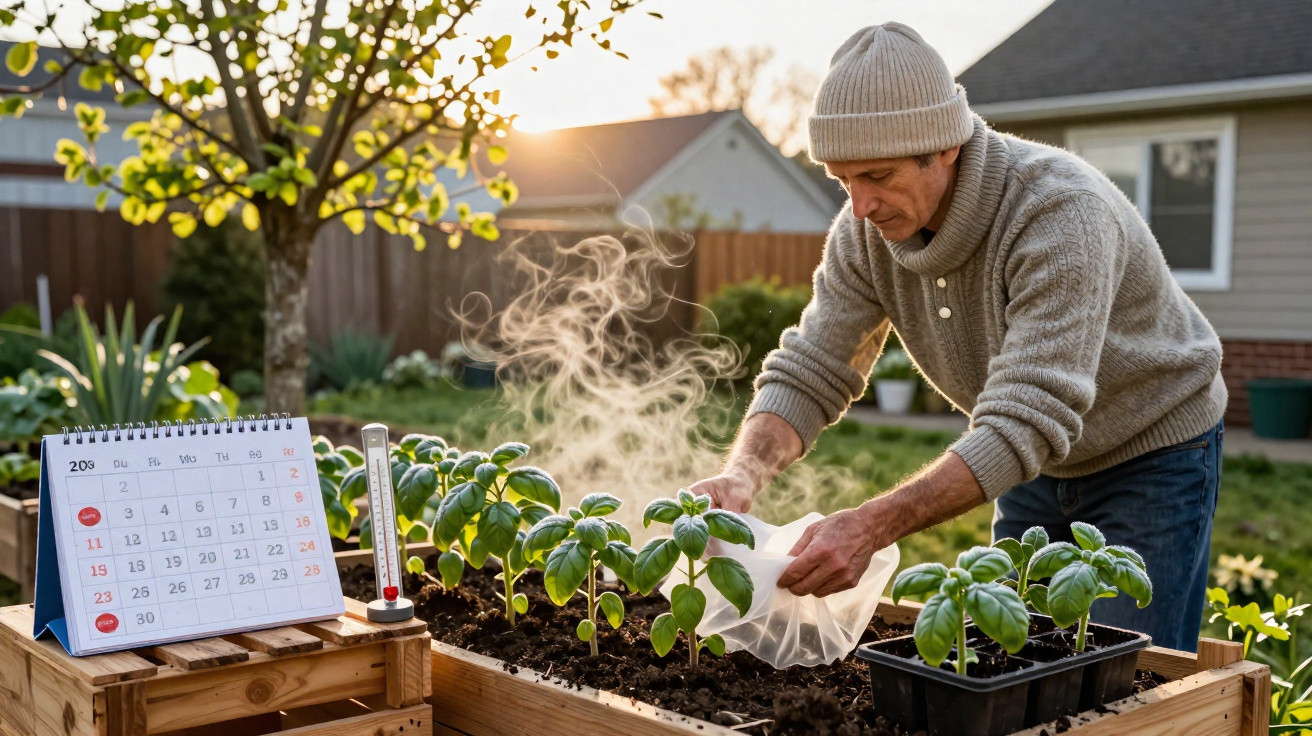
May is widely seen as the heart of spring: the moment to get tomatoes and courgettes going and to fill balcony planters with colour. Yet in some years, a blast of very cold air arrives just when the season feels settled. For centuries, the so-called “Ice Saints” have acted as a warning sign in the calendar. In 2026, this old rural rule is back in the spotlight-not only out of tradition, but also because the climate is changing noticeably and dependable pointers are becoming more valuable.
When the “Ice Saints” actually fall in 2026
The classic three days associated with frost remain the same in 2026. Different countries use different saints’ names, but the underlying idea is identical: a short spell in mid-May is seen as a time with a higher risk of late frosts.
In many parts of Central Europe, the most risky nights are placed in mid-May. In France, they fall on:
- Monday, 11 May 2026
- Tuesday, 12 May 2026
- Wednesday, 13 May 2026
In popular tradition, these dates represent the last serious cold snap of spring. For gardens and vegetable beds, the practical takeaway is simple: up to this point, there is still an increased chance of night-time temperatures hovering just above-or even dropping below-freezing.
In a lot of rural areas, people do not limit themselves to only three days, but watch a broader window that runs into the second half of May. In that extended view, additional “patron days” against late frost are also used as reference points:
- 14 May 2026
- 15 May 2026
- 19 May 2026
- 25 May 2026 – particularly important in wine-growing regions
“What many gardeners do in practice: they only leave delicate plants outside permanently after the second half of May-before then, everything stays protected or remains mobile in a pot.”
Where the “Ice Saints” reputation comes from
Linking certain days in May with cold spells goes back deep into the Middle Ages. Farmers repeatedly noticed a pattern: after a first mild stretch in April and early May, a return of colder weather seemed to occur with striking frequency. The Church then tied that experience to saints’ days-dates that mattered greatly to agricultural life at the time.
Over time, this solidified into a familiar farming rule. The frost-prone days became mental markers in calendars, stories, and sayings. For generations of growers, it served a clear purpose: until those days had passed, sensitive crops were kept under protection.
What modern weather data says
Meteorological analyses from recent decades paint a more nuanced picture. The statistics indicate:
- The final frost night of spring rarely lands exactly on the traditional May dates.
- In many lowland areas, the last frost occurs in two out of three years only after 13 May.
- In some towns and cities, ground frosts have been recorded even at the end of May, and in isolated cases in early June.
Climate change does not make the situation more straightforward. Average temperatures are rising, which reduces the number of clearly frosty nights. At the same time, cold relapses are becoming less regular and harder to judge. Short but sharp frosts can still happen even after longer warm spells.
“The ‘Ice Saints’ are not always accurate, but they still mark a period when caution in the garden makes sense.”
How gardeners should plan for 2026
The main challenge is to act on conditions, not just on a calendar-without having to reinvent your approach every year. A sensible strategy is to combine the old rule of thumb with modern forecasting.
What can safely go into the ground before mid-May
Hardier crops usually cope well with cool nights. If the soil is workable, they can be planted outdoors before 11 May 2026:
- Root vegetables such as carrots, radishes, beetroot, parsnips
- Early staples such as peas, spinach, kohlrabi, lettuce, leeks, potatoes
- Flowers such as pansies, primroses, forget-me-nots
- Hardy herbs such as parsley, chives, thyme, oregano, sage
These plants generally manage brief cold snaps without major trouble. Growth may slow down, but they do not typically die off immediately.
Leave sensitive plants until later
The risk increases significantly with heat-loving species. Some can be harmed even when temperatures are only a few degrees above 0°C. In 2026, they should go outside without protection no earlier than the second half of May:
- Tomatoes and peppers
- Chilli peppers and aubergines
- Courgettes, cucumbers, pumpkins, melons
- Basil and other Mediterranean herbs in pots
Anyone aiming for an early harvest can start these plants earlier-but only in sheltered conditions: a greenhouse, cold frame, polytunnel, or a bright windowsill. If a cold night is forecast, pots can be brought indoors temporarily or moved into a garage.
“Rule for 2026: heat-loving plants should stay under fleece, horticultural fabric, or in a greenhouse until at least mid-May-preferably until after the second half of May.”
Practical ways to protect against late frost
With a few simple aids, even unexpected cold snaps can be softened. Many of these options are inexpensive and can be reused for several years.
Common protection tricks for home gardens
- Horticultural fleece or plastic cover: Lay lightweight fleece directly over plants and weigh down the edges with stones. It can block a few degrees of cold while still letting light through.
- Cloches and covers: Plastic cloches, cut-down water containers, or large preserving jars can shield individual plants, such as young tomatoes.
- Raised beds: They warm up sooner, keep roots warmer, and late frost tends to have less impact.
- Moveable pots: Tender plants in containers can be placed against a house wall in the evening or brought inside when frost is predicted.
- Mulch layer: A covering of leaves, straw, or grass clippings helps stabilise soil temperature around the roots.
What matters most is checking the actual forecast. If you monitor night-time temperatures around mid-May, you can respond in time. A short dip to 2–3°C below 0°C for a few hours can often just about be managed with fleece.
Regional differences and how to judge the risk
Not every garden faces the same frost hazard. Aspect, elevation, and surroundings make a major difference. Cold air pools in hollows and open fields, while city centres and sloped sites are often milder.
As a rough guide:
- Higher ground and frost pockets: Ground frost can still appear late in May, so sensitive plants should go outside particularly late.
- Urban areas: Buildings and roads create a small heat-island effect, reducing frost risk somewhat, though not eliminating it.
- Near water: Large lakes and wide rivers moderate temperatures, so nights are often less cold.
“If you know your garden’s personal ‘frost history’, you will plan better than any general farming rule.”
Why the “Ice Saints” will remain relevant despite climate change
Even if long-term trends point to milder springs, the “Ice Saints” are likely to keep their place in the calendar. They are not a precise forecasting tool, but they are an easy-to-remember warning. Many gardeners now treat them as a flexible guideline rather than a hard cut-off.
Instead of following the dates blindly, it pays to adapt the rule to your own routine: in warmer areas you may plant a little earlier, while frost-prone gardens should wait longer. If you also use a simple weather app and keep a close eye on your own plot, you can make far safer choices in the 2026 season.
Another factor that is often underestimated is that it is not only frost that stresses young plants-cold, wet spells can do real damage too. Tomatoes and cucumbers may not die immediately, but at 12°C with persistent rain they barely grow and can become more prone to disease. A few extra days indoors can therefore produce sturdier, more resilient plants.
If you plan to focus more on self-sufficiency in 2026, it helps to think of May strategically: hardy varieties first, and sensitive stars such as tomatoes and courgettes deliberately later-then with better starting conditions. That way, the old idea of the “Ice Saints” becomes a practical tool, even amid weather swings and a changing climate.



Comments
No comments yet. Be the first to comment!
Leave a Comment