
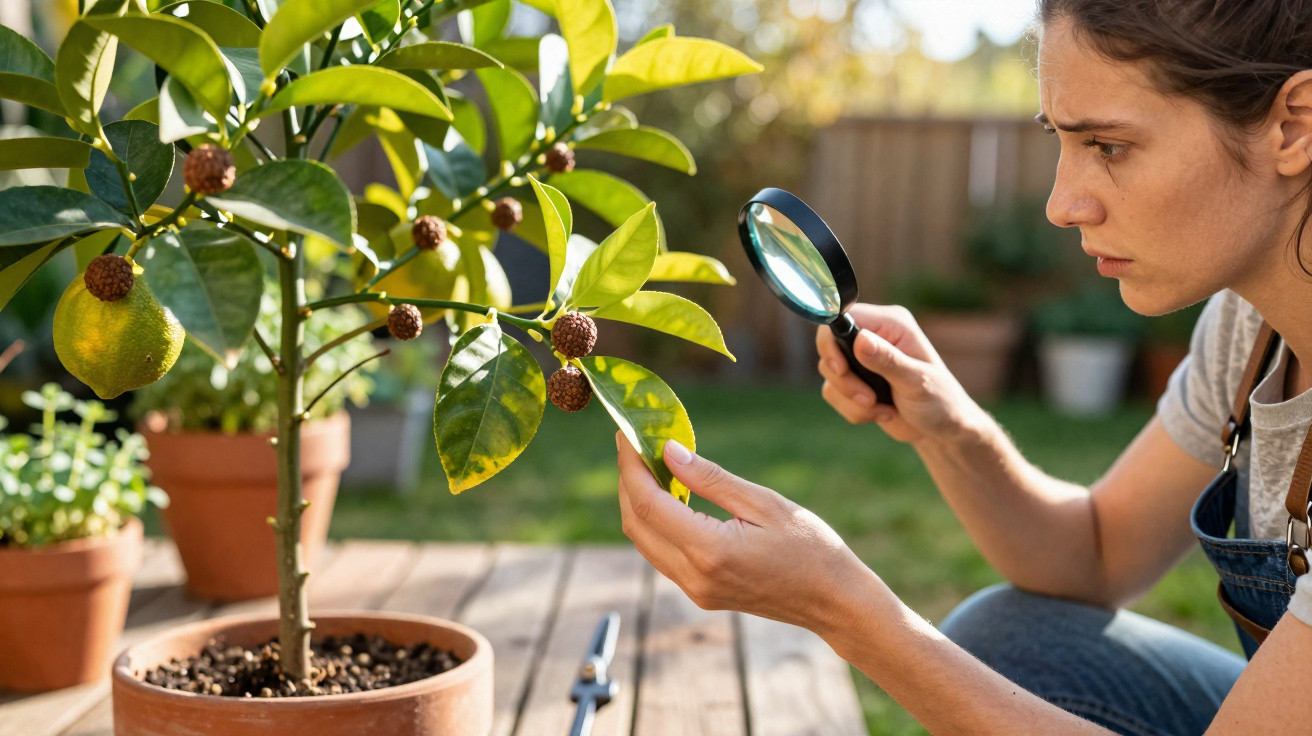
Anyone who moves their lemon tree from indoors to a balcony, patio or the garden in April looks forward to fresh blossom and bright fruit. Yet it’s often at exactly this point that a subtle but serious warning sign appears on the leaves - one that can determine the future of the whole plant.
When the lemon tree suddenly turns sticky in spring
Many people recognise the scenario: at first glance the lemon tree seems perfectly fine. On closer inspection, however, you notice small, rounded brown dots that cling firmly to the underside of the leaves or sit along the leaf veins. The leaves feel tacky, and later a dark coating starts to spread across the green.
It’s easy to blame a fungus or a care mistake - too little water, too much water, the wrong feed. In reality, the culprit is usually a pest insect that has been able to multiply undisturbed in a warm, dry wintering spot and then really takes off in April.
Unremarkable brown beads on a lemon tree are rarely harmless - they are usually scale insects, which systematically drain the tree by sucking sap.
What’s really behind the brown bumps
Those brown marks are scale insects - more specifically, species with a tough protective shell. They appear like tiny raised domes on leaves and shoots, adhere tightly, and can’t simply be wiped away.
These insects pierce the plant tissue and feed on the sap. As they do, they excrete a sugary residue known as honeydew. This film makes the leaves sticky and provides ideal nourishment for sooty mould fungi. The result is the familiar black layer on leaves, which can significantly slow photosynthesis.
Typical signs of scale insects on a lemon tree
- small, hard, brown raised bumps on the underside of leaves or on young shoots
- a sticky feel on the leaves and sometimes on nearby surfaces (windowsill, floor)
- dark, soot-like deposits on leaves and twigs
- weak growth, yellowing leaves, more leaf drop than usual
- in some cases, curled or misshapen young leaves
If you overlook these signs in April, you risk the tree becoming severely weakened just a few weeks later. As temperatures rise, the pests benefit and can multiply extremely quickly.
Why April is such a critical month
Experts have noted for years that scale insects on citrus plants often surge in late winter and early spring. Heated conservatories, living spaces or enclosed terraces provide exactly what they need: dry air, little airflow, and few natural predators.
April also marks the start of the active growth phase for most lemon trees. They push new shoots, set buds, and require lots of energy. That’s precisely when thousands of tiny insects may be attached to leaves and stems, drawing out sap. Females can lay large numbers of eggs in a short time - and a heavily infested tree can become practically covered within a single season.
If you don’t respond in April, by May or June you often end up with a noticeably weakened tree, bare shoots and hardly any new leaves.
What makes this especially deceptive is that many owners reach for fungicides at this stage because they assume the black deposits are a straightforward fungal disease. But such products don’t solve the real problem: scale insects sit protected beneath a hard covering, and contact treatments often struggle to reach them.
Immediate action: how to get rid of the pests
As soon as you spot the brown bumps, time matters - every week counts. Start by isolating the lemon tree from other plants so the insects can’t spread.
A tried-and-tested mixture against scale insects
A simple but highly effective option is a homemade spray that works in several ways at once. For 1 litre of lukewarm water, you will need:
- 1 tablespoon of liquid soft soap or so-called black soap cleaner
- 1 tablespoon of vegetable oil (for example rapeseed or sunflower oil)
- 1 tablespoon of 70% alcohol (from the chemist)
Mix thoroughly, pour into a spray bottle, and apply directly to the undersides of the leaves and the shoots. The aim is to wet the scale insects completely.
| Ingredient | Purpose |
|---|---|
| Vegetable oil | blocks the breathing pores of the scale insects, causing them to suffocate |
| Alcohol | dissolves the waxy protective layer and weakens the shell |
| Soap | helps the mixture cling and spread evenly |
Treat the tree on an overcast day or in the evening so the leaves don’t scorch in direct sun with the solution on them. Water the plant well beforehand so it copes better with the stress.
You’ll need repeat applications: plan two more sprays at intervals of about eight days. This helps you catch newly hatched young insects that were still inside eggs during the first treatment.
Targeted treatment for a light infestation
If only a few areas are affected, manual control is often enough. Use a cotton bud dipped in alcohol and dab each individual brown bump briefly - the alcohol penetrates under the shell and kills the insect.
For heavily infested branches, it’s usually best to remove them entirely. Prune them back and dispose of the cuttings in the general waste, not the compost. That way you reduce the chance of the insects establishing themselves again nearby.
Sooty mould and honeydew: what causes the black coating
The black film on leaves is usually not a disease in its own right, but a consequence of a scale infestation. The insects’ sugary secretions create a sticky layer on which various fungi settle and darken.
Once you’ve reduced the scale insects, remove the coating as soon as possible. A soft, damp cloth is often sufficient to wipe the leaves gently. This allows more light to reach the leaf surface and helps the tree function better.
Prevention: keeping the lemon tree low in pests over the long term
Regular checks in April and May can save a lot of hassle later. A small routine is enough to keep pressure low.
Checklist for healthy citrus plants
- every one to two weeks, inspect the undersides of leaves for brown bumps
- wipe away honeydew and dark deposits with a damp cloth
- choose an airy position and avoid pressing the plant directly against window panes
- use nitrogen feed sparingly so new growth doesn’t become too soft
- keep new plants separate at first before placing them with your citrus trees
In winter quarters, it’s also worth paying attention to humidity. Very dry air from central heating weakens the plant and gives scale insects an advantage. A bowl of water nearby, occasional misting of the surrounding area, or choosing a spot with slightly higher baseline humidity can help keep conditions more stable.
Biological helpers and their limits
If you keep a larger collection of citrus plants in a conservatory, you may want to consider beneficial insects. Ladybird relatives that specialise in aphid- and scale-type pests can consume large quantities. However, these helpers work best in enclosed setups with steady temperatures.
In a home setting or out on a balcony, this approach is often harder because the insects can escape or fail to find the right conditions. There, the most practical option remains a combination of frequent visual checks and the spray mixture described above.
Why many lemon trees fail due to care mistakes
Scale insects tend to target plants that are already under strain. A well-cared-for lemon tree isn’t automatically immune, but it has a much better chance of coping with a minor infestation. Incorrect watering, nutrient deficiency, or extreme heat in a south-facing window can weaken the plant’s natural resilience.
Another common issue is a pot that has been too small for years: roots fill the entire space and waterlogging becomes more likely. A modern, free-draining citrus compost mix and repotting every few years creates better conditions, reduces stress, and therefore lowers susceptibility to pests.
If you spot the brown bumps in April and act decisively, you can usually prevent the lemon tree from unexpectedly declining in summer. Taking a minute to look under the leaves is often the difference between a tree that’s thriving in June and one that slowly struggles along.

Comments
No comments yet. Be the first to comment!
Leave a Comment