
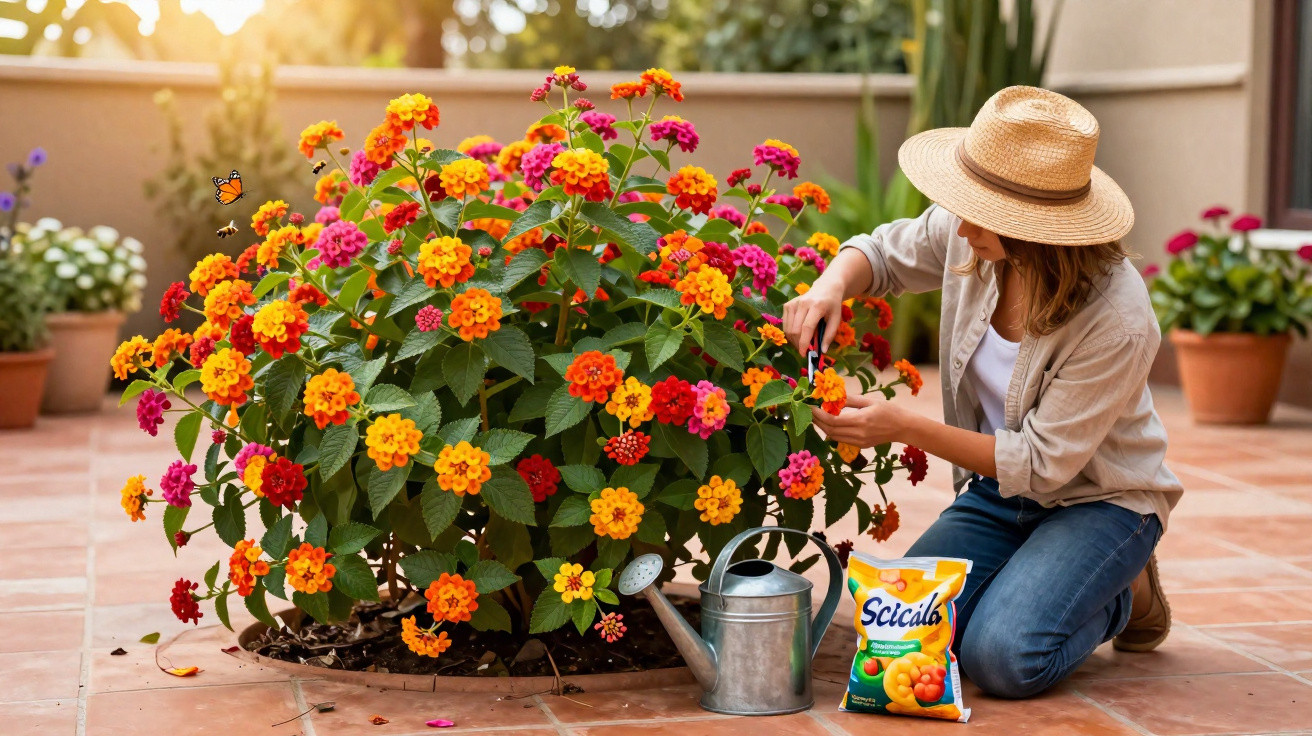
When late autumn arrives and you still want bright flowers in the garden or on the balcony, the choice quickly narrows. Many perennials die back, container plants start to look tired, and even hardy favourites lose their sparkle. That is exactly where a plant with huge potential earns its place: the lantana shrub.
A shrub that changes colour like a chameleon
In the UK climate, lantana usually grows into a neat, compact bush around 40–80 cm tall. In particularly mild spots it can become noticeably larger, taking on the look of a small flowering tree.
Its foliage is dark green and slightly rough to the touch, and if you brush against it it releases a distinctive, lightly peppery scent.
The real show, though, is in the flower heads. Dozens of tiny individual flowers sit tightly together in rounded clusters. What makes lantana so unusual is that the colours shift as the flowers mature: a cluster that looks mostly yellow in the morning may gradually move through orange and on into pink or violet.
"A single shrub can carry yellow, orange and pink flower heads at the same time – like a mini firework display in the border."
Depending on the variety, the palette runs from soft pastel yellow through to strong red and deep violet. The result is that even one plant can look like a whole mixed bed of flowers.
Where the lantana shrub looks best
Because it stays relatively compact, lantana is easy to use in different parts of the garden. Typical places it works well include:
- Window boxes and pots on sunny patios
- Border edges along paths or driveways
- Low hedging or informal edging
- Wall tops and dry-stone walls in full sun
- Gap filler in perennial beds where colour is missing
It looks especially striking when several varieties with different colour combinations are planted side by side. A sunny seating area can feel almost tropical this way-without needing to plant palms.
Flowers from spring into winter - with a bit of help
A major reason gardeners value lantana is its exceptionally long flowering period. In a typical garden climate it begins in spring and then keeps producing for months. While many ornamental plants fade in late summer, lantana often still looks fresh and continues pushing out new buds.
In very mild locations-such as sheltered, south-facing walls or warmer microclimates-it may hold on to its leaves and even some flowers well into winter. If you grow lantana in a pot and overwinter it frost-free, you have a good chance of seeing at least a few blooms for almost the entire year.
"With the right position, the shrub behaves almost like a machine for continuous flowering – from the first warm days to the first serious frosts."
Position: sun, sun, sun
To get the best from lantana, there is one non-negotiable: plenty of light. Partial shade rarely delivers great results; it really rewards full sun.
Key position factors at a glance
| Factor | Requirement |
|---|---|
| Light | At least six hours of direct sun per day |
| Soil | Free-draining, fairly lean to sandy, no waterlogging |
| Water | Water moderately; allow the compost/soil to dry slightly between waterings |
| Nutrients | Liquid feed for flowering plants during the growing season |
| Temperature | Warmth and heat are tolerated well; frost is not |
In the garden, a sandy or gravelly area is ideal-such as at the base of a wall or in a rock garden. In containers, make sure excess water can drain away freely; a layer of expanded clay pellets or gravel at the bottom of the pot helps prevent waterlogging.
Care: little effort, big impact
Despite its exotic origins, lantana is straightforward to look after. Follow a handful of basics and you can enjoy months of colour with minimal fuss.
Watering and feeding
Its roots cope far better with short dry spells than with constantly wet compost. During hot periods it is usually enough to water thoroughly-but not every day. In pots, an extra top-up may be needed on particularly scorching days.
For abundant flowering, a regular liquid feed for flowering plants from spring through to late summer is worthwhile. If the soil is very nutrient-rich, keep feeding on the lighter side; otherwise the shrub can put too much energy into leaves instead of flowers.
Removing spent flowers - why it pays off
If you routinely pinch or snip off the faded flower clusters, you encourage the plant to set new buds. It is quick to do with fingers or small secateurs. At the same time, you reduce fruit formation, which would otherwise draw off some of the plant’s energy.
"With a few minutes’ work each week, you can noticeably extend and thicken the display of flowers."
Frost protection and pruning: helping the shrub through winter
Lantana has very limited tolerance for frost. In areas that experience real sub-zero temperatures, it has little chance of surviving long term outdoors in the ground. That is why many gardeners choose to grow it in a pot.
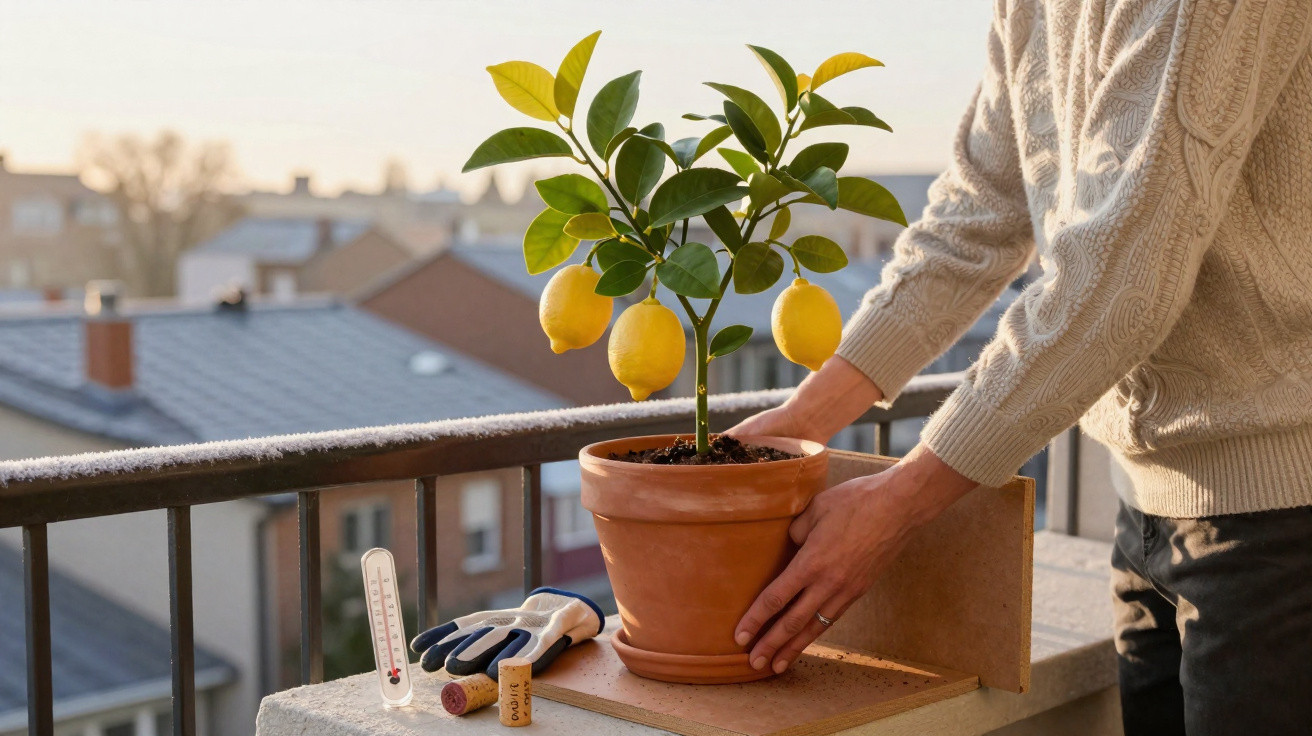
In autumn, move it into bright, cool winter quarters before the first hard frosts-such as an unheated stairwell, a conservatory, or a light cellar room with a window. It needs far less water there, but the root ball should not be allowed to dry out completely.
When spring arrives, give it a strong prune. Cut the shoots back well to promote a compact, densely branched shape. If you are hesitant, be brave with the secateurs: the plant regrows vigorously.
A nectar plant for insects - with a catch
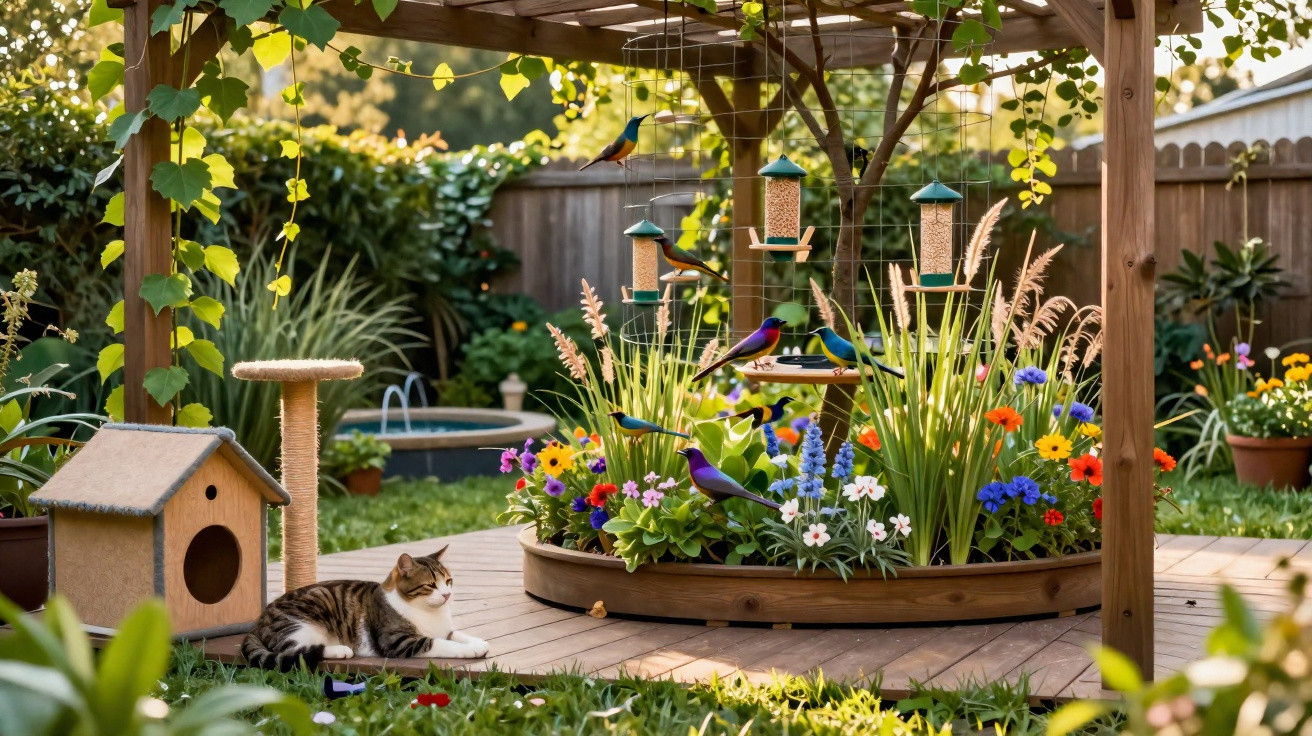
Lantana is considered a valuable nectar source for butterflies and wild bees. On warm days, the flower heads are often buzzing and fluttering with activity. Its berries are also eaten by various bird species, adding even more life to the garden.
However, there is one point that needs care: parts of the plant, including the berries, are poisonous. If you have small children or pets, choose the position thoughtfully. A raised pot on a balcony or a spot dogs cannot reach helps reduce the risk.
How to combine the shrub successfully
Visually, lantana pairs particularly well with other plants that enjoy sun and drier soils. Suitable companions include:
- Lavender and sage
- Blue or purple catmint
- Lemon thyme and other Mediterranean herbs
- Low ornamental grasses
- White or cream border perennials as a calmer counterpoint
If you have a south-facing balcony, you can create a small oasis with lantana, scented herbs and a few grasses-an arrangement that barely flinches in hot weather.
Who this plant suits best
This shrub is a strong choice for people who:
- want flowers for as much of the gardening season as possible,
- have a sunny balcony or a warm patio,
- like attracting butterflies and bees,
- are comfortable with container plants and can provide winter shelter.
If you do not have the time for high-maintenance borders, lantana offers a surprisingly low-effort design feature. Because the flower colours shift as they develop, the planting feels lively-even though you are not constantly replanting.
In garden centres, you will most often find it sold simply as lantana. Different varieties mainly vary in height and colour combinations, so it is worth checking the plant label carefully to make sure it fits the spot you have in mind.

Comments
No comments yet. Be the first to comment!
Leave a Comment