
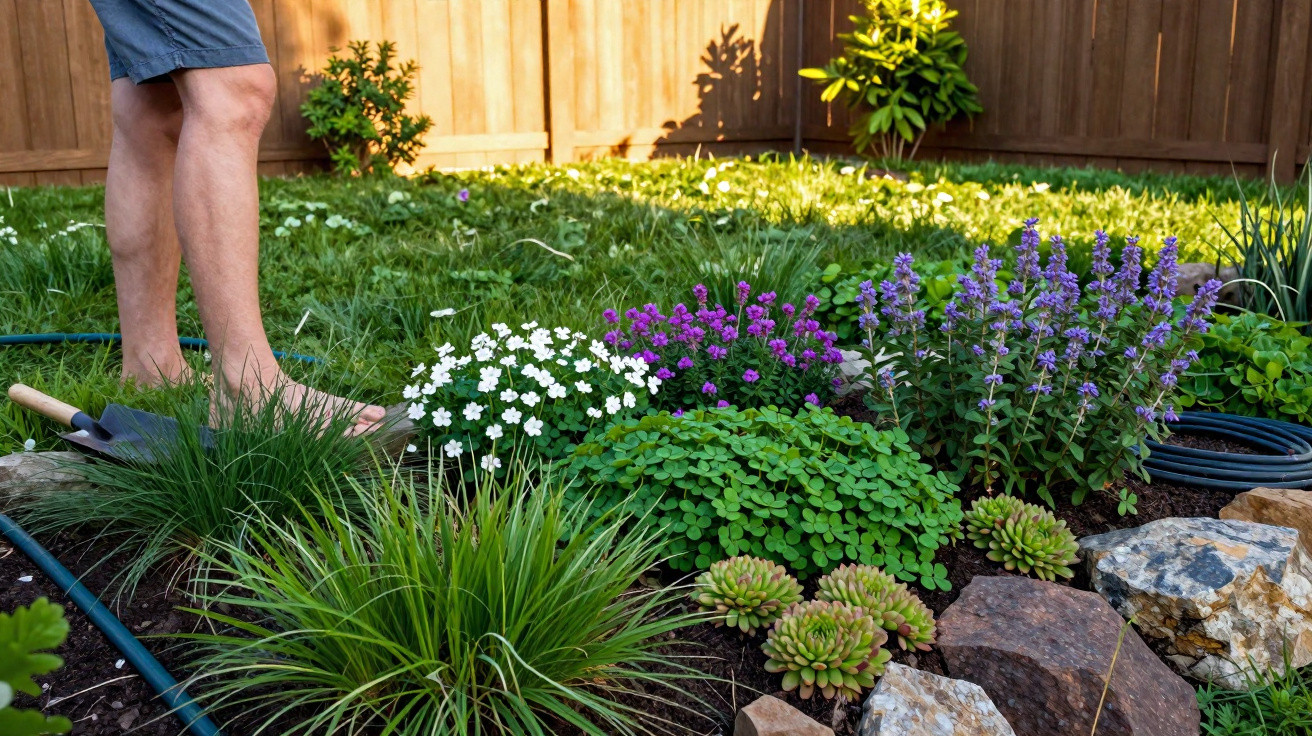
As summers become drier and water bills climb, the traditional lush, emerald lawn is starting to look like an expensive pastime. Constant mowing, watering and feeding-only to end up with yellow patches anyway-leaves many gardeners fed up. That is why tougher, tread-tolerant ground covers that cope with foot traffic and need far less water are attracting attention. Five options stand out in particular.
Why a tread-tolerant ground cover can replace a lawn
A classic ornamental lawn demands a surprising amount of upkeep: frequent mowing, regular summer watering, fertiliser, and sometimes even scarifying. It all adds up in time, cost and hassle-while extended dry spells make water an increasingly precious resource.
Tread-resistant ground covers work differently. Once established, they knit into a dense living carpet that covers the soil, keeps weeds largely at bay and typically requires much less water. Some only need the occasional trim; others do not need a mower at all.
"Replacing lawn areas with robust ground covers saves water, fertiliser and fuel-and significantly cuts down on garden work."
Before planting anything, it helps to do a quick reality check:
- Sun exposure: full sun, partial shade, or mostly shade?
- Soil type: heavy and slow to dry, or sandy and quick-draining?
- Wear and tear: occasional walking, or daily use with children playing?
A fragrant thyme carpet can handle light passing foot traffic, but it will not stand up to football matches. For heavily used areas, other species perform far better-or you may be better with mixed solutions using woodchip and hard-wearing grasses.
The top 5 tread-resistant ground covers
1. Zoysia tenuifolia – the lawn alternative for heavy footfall
Known as Mascarene grass (botanically Zoysia tenuifolia), this is often seen as a front-runner for areas that get used a lot. It forms an exceptionally dense, soft mat that tolerates repeated walking for a long time. Compared with standard turf, it typically needs just one or two cuts per year.
- very wear-tolerant with frequent use
- far less cutting than a conventional lawn
- moderate water needs, and relatively frugal once rooted in
It suits paths between beds, play areas with moderate use, or smart front gardens where you want a lot of green but minimal effort.
2. Lippia (Phyla nodiflora) – a low carpet with a flowering bonus
Lippia, also called frogfruit, stays extremely low and quickly fills gaps. Because it copes well with frequent foot traffic, it works nicely by front doors, around seating areas, or anywhere you walk across every day.
Once it has settled in, Lippia manages on markedly less water and will often get through around two to three months of dry weather without irrigation-provided the soil is not extremely shallow. Small summer flowers attract pollinators, which is a plus for anyone looking out for insects.
3. Micro-clover – the clever mixing partner
Micro-clover (a very small-leaved clover) can be grown as a stand-alone ground cover or used alongside grasses. It copes surprisingly well with foot traffic and children at play, and it can quickly patch up minor damage thanks to its vigorous growth.
"Micro-clover fixes nitrogen from the air and feeds it into the soil-so you can cut fertiliser use significantly."
Compared with standard clover, the leaves are finer and the surface looks more even and less ‘meadow-like’. If you prefer a more natural style, micro-clover can be deliberately mixed with wildflowers and low grasses.
4. Creeping thyme – a scented carpet for dry areas
Species such as Thymus serpyllum (wild thyme) or woolly thyme form low, aromatic mats. They thrive in sun and in lean, dry soils-exactly the sort of tricky spots where grass often struggles, such as south-facing banks or gaps between stones.
- releases a pleasant scent when walked on
- highly attractive to bees and other insects
- tolerates only light to moderate treading
Thyme is not suitable for high-intensity play lawns, but it is ideal for seating areas, terrace edges, rock gardens, or paths that are used only now and then. If you enjoy going barefoot in the garden, thyme can be a joy-as long as the wear is not too heavy.
5. Turquette and tread-tolerant sedum – minimalists for harsh sites
For very poor, dry soils, Herniaria glabra is a strong candidate and is often sold under the name “Turquette”. This low plant forms a dense, fresh green carpet and looks particularly good between stepping stones, on banks, or in nutrient-poor areas.
Low-growing, foot-tolerant sedum (stonecrop) types also manage with very little water, as long as the soil drains freely. They store moisture in their leaves, which makes them well suited to sunny spots that dry out quickly.
"Turquette and certain sedum types are classic choices for areas where grass repeatedly fails-such as steep slopes or cracks between stones."
How to switch from lawn to ground cover successfully
Soil preparation: the most important step
To get the full low-maintenance benefit from these plants, it pays not to cut corners with the groundwork. First, remove the existing lawn completely-either by lifting it mechanically, taking it out with a digging fork, or smothering it with cardboard for several weeks until the turf dies back.
Next, loosen the soil to a depth of 15 to 20 centimetres and work in well-rotted compost. This helps heavy clay soils and also improves sandy soils by increasing moisture retention. With easier root penetration, plants become less dependent on watering later on.
Timing and the first few months
Spring and autumn are the best planting windows. Regular rainfall supports establishment, and temperatures are less extreme. After planting, the rule of thumb is to water less often but more thoroughly. Deep watering encourages roots to grow downwards rather than staying near the surface.
During the first season you will still need to be hands-on: remove any weeds that emerge between plants, ideally when the ground is damp. That allows the ground cover to knit together uninterrupted. Each year, the area generally becomes easier to look after.
Where tread-resistant ground covers reach their limits
Some spaces are demanding even for tough ground covers. Areas where children play football every day, trampolines sit permanently, or bikes constantly cut across the same line can overwhelm many living carpets over time.
In those cases, a combined approach often works best:
- micro-clover plus resilient grasses for a play-lawn feel
- woodchip under play equipment for impact cushioning
- stepping stones or paving in narrow, high-traffic pinch points
These mixes reduce stress on plants while still creating a natural-looking garden where not every corner has to be uniformly green and immaculate.
How much money and water you can realistically save
Savings depend on what you are starting with. Someone maintaining a heavily irrigated show lawn will notice a bigger difference than someone with a simple strip of grass. In broad terms, though, three cost areas tend to drop noticeably:
| Item | conventional lawn | tread-resistant ground covers |
|---|---|---|
| Mowing | weekly during the season | 1–2 cuts per year, or none |
| Water | frequent in dry spells | often only during extreme drought once established |
| Fertiliser | several applications per year are common | low to none, especially with micro-clover |
The knock-on effort also falls: less noise from mowing, no carrying petrol, and fewer tools that need servicing. Many gardeners simply get more time to use the space rather than constantly maintain it.
What else to consider before choosing
Ground covers often bring more life into the garden. Thyme, Lippia and flowering micro-clover attract bees and other insects. That supports biodiversity, but along terrace edges it may be sensitive for people with severe insect allergies. In those spots, less flower-heavy choices such as Turquette or Zoysia may be the better option.
Visual preference matters too. Some people want a smooth, almost golf-lawn look; others prefer a more varied, natural feel with flowers and changing textures. Tread-resistant ground covers combine well-for instance, thyme in sunny edges, Lippia or micro-clover through the middle, and sedum along the driest borders.
If you assess your garden conditions honestly and plan for how much wear the area will get, these five groups of ground covers can provide a remarkably robust, low-maintenance alternative to a traditional lawn-saving not only money, but also a great deal of frustration.




Comments
No comments yet. Be the first to comment!
Leave a Comment