
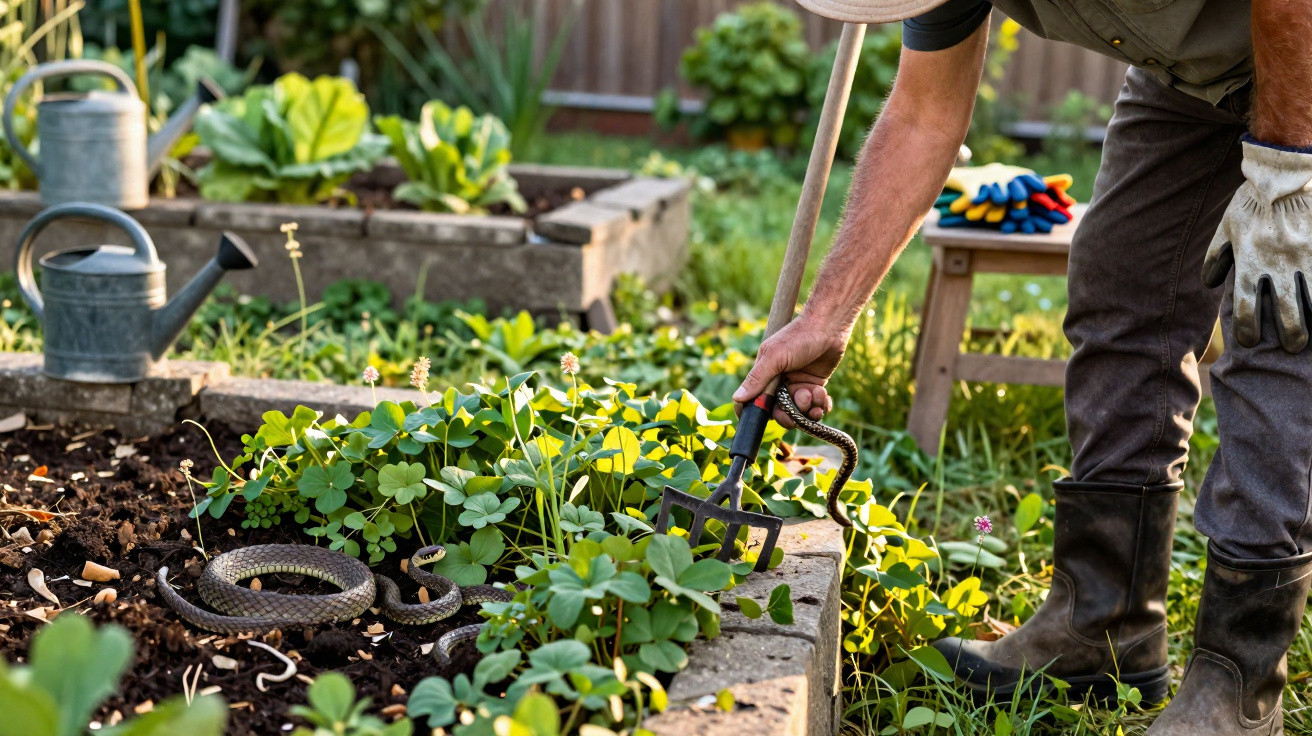
The trigger can seem utterly ordinary.
Plenty of keen gardeners know the moment: you pull a bit of weed from your favourite bed, thinking nothing of it - and, in the worst case, end up in A&E with a snake-bite wound. One unconscious movement while weeding can bring you too close to an adder or another venomous snake. With a few small tweaks to your routine, these frightening incidents can almost always be avoided.
The careless reach that makes everything more dangerous
The same pattern plays out in countless gardens: a plant is leaning, weeds are taking over, and instead of using a tool, a hand goes in blind - into a dense clump of perennials or into long grass. That quick, sweeping grab is precisely what increases the risk of a snake-bite injury.
From spring through to early autumn, native snakes look for sunny, sheltered spots to warm themselves. Those are exactly the areas people like to work in: along bed edges, beneath shrubs, among perennials, or by the compost. If you reach into vegetation without being able to see what’s there, you’re entering the animal’s “safe zone”. When an adder feels crowded or trapped, it stops retreating - and it bites.
"No reaching where your eyes can’t see: this simple rule drastically lowers the risk of bites in the garden."
European statistics show that a large share of snake bites affect hands and feet - the very body parts gardeners tend to use most carelessly. Adder venom is rarely life-threatening, but it can cause severe pain, swelling and, in isolated cases, serious complications.
Where snakes genuinely like to settle in the garden
Snakes are drawn to warmth, cover and peace and quiet. Many gardens provide these hiding places in abundance - often in the very spots where people like to “quickly” tidy up or do a bit of weeding.
Typical snake hotspots in the garden
- dense perennial beds, for example lavender, low roses or lush ground cover
- shaded bed edges and the transition to the lawn
- dry-stone walls, loose piles of stones, rock gardens
- wood stacks, thick layers of mulch, heaps of leaves
- the edges of compost piles and stored grass cuttings
- old boards, tarpaulins, upturned buckets or sheets of metal lying on the ground
In these areas, several factors come together: warmth, mice or other prey animals, plenty of places to hide - and human hands that like to grab decisively. If you seize something in these spots without looking, you can quickly end up right in a snake’s retreat.
Change your weeding habits - and keep all your fingers
The good news: nobody needs to give up gardening. A handful of simple routines is enough to take the fear out of adders and the like.
Protective kit: small, but effective
- Sturdy gloves: thick leather or robust gardening gloves help protect against bites and thorns.
- Closed shoes: no sandals in long grass; choose solid shoes or boots.
- Long trousers: especially when working on banks or in undergrowth.
These basics don’t just reduce the impact if a bite occurs - they also guard against thorns, splinters and insect stings.
Tools instead of bare hands
Anything that extends your reach keeps distance between the animal and your skin. Useful helpers include:
- a hoe or cultivator with a long handle for weeds between perennials
- a narrow hoe or weeding claw for tight spaces
- a leaf rake to “comb through” soil and mulch first
- a grabber or spade for lifting boards, stones or pots
"If you tap and probe with a tool first, you give the snake a chance to escape before your hand comes anywhere near."
The right working order
Working methodically lowers the risk automatically. This sequence has proved its worth:
- Start with bright, open areas, then work slowly towards darker, densely overgrown corners.
- Always pull or bend plant growth towards you or to the side first, and only then reach in.
- Before any reach, disturb the ground with a tool; light taps or scratching movements are enough.
- Never lift containers, boards or stones by hooking your fingers underneath; raise them with a tool and only grab after a visual check.
What to do if a snake does bite anyway?
Even with care, it can happen. If you stay calm, you reduce the chance of further harm. The key steps, short and clear:
- immediately move away from the snake; don’t try to catch or kill it
- keep calm; sit or lie down
- call 112 and say you suspect a venomous snake bite
- remove jewellery and tight clothing near the bite site before swelling starts
- clean the bite with soap and water and cover it with a clean cloth
- keep the affected body part still and rest it slightly raised
- for pain, take only paracetamol - nothing else without medical advice
Several “classic” measures from old adventure stories cause more harm than help. They belong on the do-not-do list:
- no tourniquets using a belt, rope or hose
- no cold packs or ice placed directly on the wound
- no cutting, no sucking, no suction pumps
- no alcohol, no coffee, no energy drinks
- no blood thinners or anti-inflammatory painkillers on your own initiative
How big is the risk in German-speaking countries, really?
In Germany, Austria and Switzerland, the adder and the asp viper are regarded as the most important native venomous snakes. They avoid contact with people and almost always flee if they have time. Most bites happen because someone steps on an animal or reaches directly into its hiding place.
Fatal outcomes are extremely rare; serious envenomation mainly affects children, older people or those with pre-existing conditions. Even so, a bite can mean a hospital stay, intense pain and longer periods out of action. If you live in rural areas, spend a lot of time working in the garden or outdoors, and wear thin footwear or no gloves, you fit the typical risk profile.
Designing a wildlife-friendly garden - while still staying sensible
Many garden owners opt for wilder corners, deadwood piles and stone walls to attract insects, lizards and birds. That boosts biodiversity - and makes the garden more appealing to snakes. That isn’t inherently a bad thing, but it does call for some planning.
- Move cover-rich areas to the edge of the property, away from seating areas and heavily used paths.
- Don’t place leaf and twig heaps right next to play areas or vegetable beds.
- Keep grass paths between dense perennial beds regularly short to reduce unpleasant surprises.
- Explain to children that they shouldn’t rummage in piles and walls.
If you accept snakes as part of nature, your perspective changes: they eat mice, young rats and other pests. They can genuinely contribute to a healthy garden ecosystem. The crucial point remains distance - respectful, with clear boundaries.
Practical memory aids for your next day in the garden
To finish, here’s a simple rule of thumb that’s easy to remember:
| Situation | Safer reflex |
|---|---|
| Weeds in a dense clump of perennials | loosen with a hoe first, pull the plant aside, then reach in |
| Heap of leaves or a mulch layer | loosen with a rake, wait briefly, then continue |
| Rearranging a wood pile | put gloves on, lift each piece at a distance |
| Board or tarpaulin on the ground | lift with a tool, look first, then grab |
If you internalise this routine, you significantly reduce the risk of snake bites while gardening. That way, garden work stays what it should be: grounding, relaxing - and not fuelled by adrenaline.
Comments
No comments yet. Be the first to comment!
Leave a Comment