
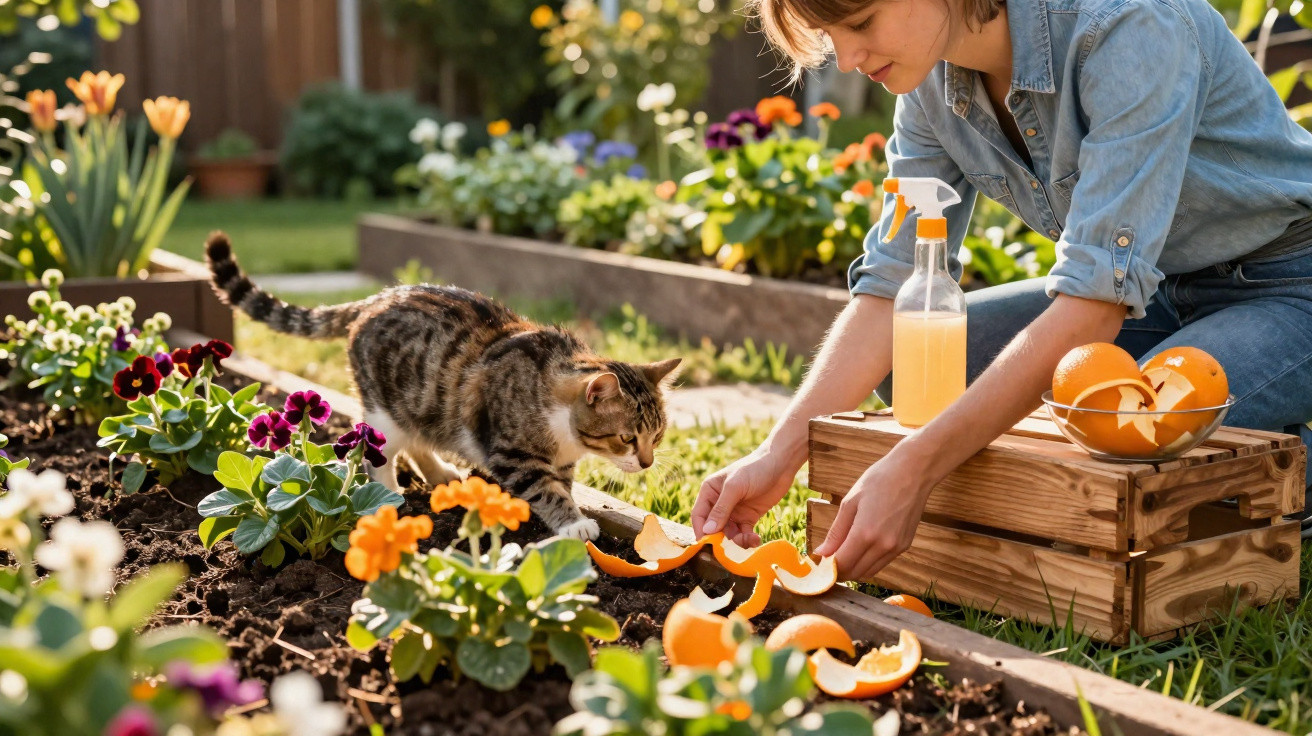
Anyone who plants tulips, crocuses and other signs of spring with a sense of anticipation will recognise the problem: the moment the first green shoots appear, the neighbour’s cats are up and down the beds, digging holes, disturbing bulbs and using carefully planned borders as a litter tray. A straightforward answer is hiding in your food waste - more specifically, in orange peel.
Why orange peel is suddenly turning up in the garden
At first glance it can look like someone has dropped rubbish: pieces of orange peel, lemon peel or other citrus skins scattered among flowers, on beds or along the lawn edge. In many gardens, though, there’s a deliberate reason behind it.
"Orange peel can keep cats away from flower beds - without poison, without chemicals and without complicated contraptions."
Cats have an exceptionally sensitive sense of smell. They pick up scents far more intensely than people do. Citrus aromas are among the smells that many cats find genuinely off-putting. The essential oils in orange, lemon and grapefruit can seem sharp and unpleasant to them - and that’s exactly what savvy gardeners take advantage of.
The quiet enemy in the flower bed: when cats become a nuisance
Cats may be beloved family members. Indoors on the sofa they’re welcome; outdoors in a newly planted bed, much less so. That’s because they can cause surprising damage in a short space of time:
- They dig up bulbs and damage root balls.
- They loosen soil in places where young plants need stability.
- They use beds as a toilet, which smells unpleasant and looks unappetising.
- They can snap or trample young seedlings.
It becomes particularly problematic in late winter and early spring, when the first flowers - such as snowdrops, crocuses, primroses or pansies - start to emerge. Plants are still delicate and the soil is loose, making it an ideal “play-and-dig zone” for cats.
How orange peel works against cats in the garden
Citrus peel contains plenty of essential oils. These oils release a strong scent, especially when the peel is freshly cut or lightly scored. People usually associate that smell with freshness, cleanliness and summer. For cats, the same scent can act like a clear warning: “I don’t want to stay here.”
In many cases, cats avoid areas where the citrus smell is noticeable. That’s why gardeners place peel in the exact spots where cats typically dig or leave their “calling cards”.
Option 1: lay orange peel directly on the bed
The simplest approach uses what’s left over anyway after eating or juicing citrus fruit. Here’s how to do it, step by step:
- Peel oranges, lemons or other citrus fruit, then cut or break the peel into smaller pieces.
- Scatter the pieces around vulnerable areas, for example:
- along the edge of flower beds,
- between young plants in the veg patch,
- on spots where cats have previously had their “favourite places”.
- Press the peel lightly into the soil so it doesn’t blow away straight away.
- Top up about once a week, as the scent fades over time.
The key is that you don’t have to put everything out at once. If you eat citrus regularly, you can “top up” the garden little by little. The important part is replacing the peel while you still want cats to keep away.
Option 2: a spray bottle of citrus scent as natural protection
If you’d rather not have peel visible in the bed, or you want to protect specific areas more precisely, a homemade citrus spray can do the job. You only need basic kitchen equipment that most households already have.
How gardeners mix their own citrus spray
- Put a handful of orange peel (optionally mixed with lemon or grapefruit peel) into a saucepan.
- Pour in about 1 litre of water.
- Simmer gently for around 15 minutes so the essential oils can release.
- Take the pan off the hob and let the liquid cool completely.
- Strain out the peel and pour the scented water into a spray bottle.
You can spray this citrus water onto different surfaces:
- along bed edges and garden paths,
- onto planters and pots on the balcony or terrace,
- onto garden furniture that often gets used as a scratching spot.
If you use the spray, reapply at regular intervals - especially after heavy rain or strong sunshine - because the scent otherwise dissipates fairly quickly.
Extra benefit: orange peel as a small helper for the soil
Orange peel isn’t just a source of scent; it’s also organic matter. Over time, microorganisms in the soil break it down. As it decomposes, it can release nutrients that help improve the soil.
"Citrus peel rots down in the bed and provides the soil with fresh organic material over the long term."
If you want to use the peel not only as a scent barrier but deliberately as a soil improver, chop it into smaller pieces or snip it up with garden scissors. Smaller bits rot down more quickly and are less noticeable.
Where orange peel makes sense - and where it doesn’t
This citrus trick is particularly suitable for gardeners who:
- want to protect beds from cats without chemicals,
- already use plenty of citrus fruit in the kitchen,
- would like to enrich the soil with organic material.
It’s less suitable in areas where young children regularly play in the garden. They may be tempted to pick up the bright peel and suck or chew it. In that case, it’s better to use orange peel only in a back section of the garden or to rely on the spray method instead.
Risks and limits of the trick
Even though orange peel is considered a gentle option, there are a few points gardeners should be aware of:
- Not every cat reacts equally strongly to citrus scent; some barely seem bothered.
- In very large gardens, you may need quite a lot of peel to get a noticeable effect.
- In persistently damp weather, check the peel regularly so it doesn’t go mouldy.
- If you have a compost heap, you can move old peel with little scent there once it no longer serves a purpose in the bed.
Important: the essential oils sit mainly in the fresh, colourful outer layer. Dry, faded peel that has been outside for weeks smells much weaker and does little to deter cats. That’s why it pays to check beds occasionally and add more when needed.
How to combine orange peel with other measures
If cats visit your garden frequently, you’ll often get the best results by combining several gentle methods. Possible options include:
- Orange peel in the short term on particularly vulnerable spots.
- Adding slightly prickly plants such as barberry or roses along bed boundaries.
- Creating more structure in the garden - for example with small fences or trellises - so cats can’t wander everywhere unchecked.
Combinations like these make certain areas less attractive to cats without harming or injuring them.
Why simple household remedies are back in fashion in the garden
Many gardeners are now reaching more consciously for straightforward remedies from the kitchen and utility cupboard. Coffee grounds get used as feed for roses, eggshells as a source of lime, and nettles are made into a brew to tackle aphids. Orange peel fits neatly into that list: it’s a by-product you already have, it costs nothing extra, and it can serve more than one purpose.
So the next time you peel an orange, you don’t have to put the skin straight into the food waste caddy. A quick walk into the garden is enough to turn it into a handy helper against uninvited furry visitors - with a small bonus for the soil at the same time.



Comments
No comments yet. Be the first to comment!
Leave a Comment