
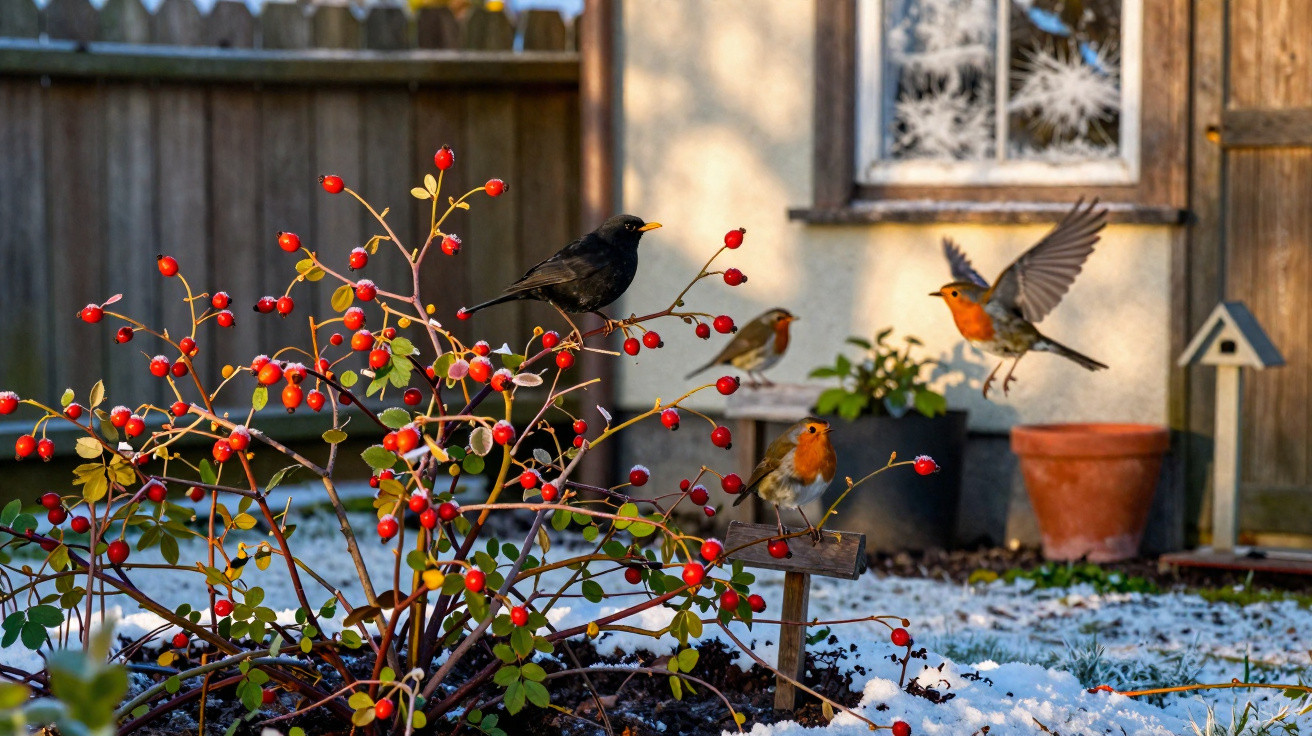
While plenty of hobby gardeners buy bird seed by the kilo, others create a genuine haven for blackbirds, robins and their neighbours with one simple planting trick. The secret is not pricey specialist feed, but two modest rose varieties that turn a garden into a year-round bird buffet with built-in shelter.
Why some gardens are full of birds in winter - and others aren’t
In many gardens, winter winds strip the trees bare; feeders may be well stocked, yet the place still feels quiet. Birds drop in, peck at a few grains, and then move on. The explanation is straightforward: a garden that relies only on feeders becomes a stopover, not a home.
"If you want to attract birds for the long term, you must offer more than just seeds - you need a complete environment: food, cover, nesting sites."
That is where the most common misconception sits. Catalogue roses with enormous, tightly double blooms might look impressive in photos, but they offer very little in practice. The flowers are packed so densely that insects can barely reach pollen and nectar. On top of that, many of these varieties produce no fruit at all. For wildlife, that means: no food and no habitat.
By contrast, tough, simple species like those found along field edges and in hedgerows work in a completely different way. They have co-evolved with native animals over thousands of years. They flower and set fruit, provide cover, and generally cope without chemical help.
The quiet stars: dog rose and potato rose
If you want to turn your garden into a lively meeting point for birds, two names matter: the dog rose (Rosa canina) and the potato rose (Rosa rugosa). To birds, both are genuinely prime addresses.
Dog rose: understated, but essential
The dog rose is the classic hedgerow rose of the wider landscape. Its delicate, single blooms in pale pink sit naturally in wildlife-friendly gardens and mixed hedges. It is not trying to impress with extravagant flowers - its strength is what it does.
- single flowers with five petals
- plenty of pollen and nectar for bees and other insects
- lots of small, elongated red rose hips in autumn
- dense, twiggy growth that acts as a refuge for small birds
In spring, the dog rose hums with insect life; later, the branches hang heavy with fruit. That mix - insect forage followed by an autumn harvest - makes it a key building block of a living garden.
Potato rose: a northern powerhouse with giant rose hips
The potato rose originates from cooler regions and is considered exceptionally hardy. It pushes out strong new shoots, forms thick foliage, and carries striking, richly scented blooms ranging from white to deep pink.
The real headline, though, is its large, round rose hips that resemble miniature tomatoes. They glow from late summer onwards and often remain on the plant well into winter.
"Where hybrid tea roses become diseased and struggle, the potato rose usually grows into a dense, well-defended hedge with virtually no effort."
For anyone short on time, it is a great fit: minimal upkeep, no spraying, and a maximum ecological payoff.
Rose hips: an energy store for blackbird, thrush and robin
The real performance starts once the flowers are long gone. That is when the rose hips take over. In late autumn they turn bright red or orange and often stay on the branches throughout the winter.
Especially when insects are scarce and many seed sources have run out, these fruits provide crucial energy. They are full of vitamins and sugars - exactly what birds need on cold days.
Typical visitors to the rose-hip buffet include:
- blackbird
- robin
- various thrush species
- finches and sparrows, interested in the seeds
"A shrub loaded with rose hips can become a regular landing spot for whole flocks of hungry birds for days at a time in late winter."
If you watch closely, you can see birds pluck the fruit, eat the flesh, and then sort out or spit out the seeds. In doing so, they quietly help spread the plants.
A thorny fortress: perfect protection from cats and birds of prey
Birds need more than food: they also require safe places where they can feed, sleep and nest without stress. One cat in the garden or a sparrowhawk overhead can be enough to empty a feeding station in moments.
This is where dog rose and potato rose reveal their second major advantage: their thorns. When planted as a loose hedge or along the back of a border, these roses create a natural barrier that few cats will willingly force their way through.
For birds, however, the shrubs are ideal. They slip easily between the branches, perch securely within the plant, and keep an eye on the surroundings from cover. Many species choose such spots for nesting because predators find it difficult to reach them.
Another benefit is that both species are regarded as very resistant to classic rose diseases such as black spot and powdery mildew. Sprays become unnecessary, making the whole garden noticeably healthier for insects, birds - and children too.
How to integrate wild roses cleverly in your garden
If you are picturing dull, spiky hedging, you are underestimating how flexible these plants can be. With a bit of planning, dog rose and potato rose can be incorporated in a way that looks good as well as working hard for wildlife.
| Location | Benefit | Note |
|---|---|---|
| Property boundary | natural screening and cat deterrent | ideal base for a mixed hedge with other shrubs |
| Back of a border | calm backdrop, excellent refuge for birds | keep at least 1.5–2 metres from paths because of the thorns |
| Near a window or patio | you can watch birds from indoors | do not plant too close to glass so birds do not fly into it |
Planting is best in late autumn or early spring, as long as the ground is open and frost-free. A free-draining soil that is not too dry is perfectly sufficient. Both species handle lean conditions better than many ornamental roses.
More life in the garden: the knock-on effect of birds
These two wild roses do not only change bird activity; they influence the whole garden ecosystem. More birds in spring means more hungry beaks hunting for protein - and they find it in caterpillars, aphids and other pest insects.
"If you attract birds, you are bringing perhaps the most effective form of biological pest control right to your doorstep."
Many gardeners report that, after a few years of wildlife-friendly planting, they have noticeably fewer issues with aphids and certain caterpillars. Birds keep populations in check without leaving insecticide residues behind.
There is also a visual reward: a wild-rose hedge changes character constantly. Spring brings fresh green growth and the first buds. Early summer delivers buzzing flowers. Late summer shows fruit slowly ripening. Winter offers red rose hips against bare branches - with the steady comings and goings of birds right through it all.
Practical tips for greater biodiversity with wild roses
To strengthen the effect even further, combine dog rose and potato rose with other native shrubs such as blackthorn, hawthorn or privet. That creates a layered hedge with different flowering and fruiting times.
Useful additions include, for example:
- a small strip where fallen leaves are left in place so insects can overwinter
- an area that is not mown constantly
- a shallow water dish positioned where cats cannot ambush
For many people, “planting a wild rose” initially sounds like giving up perfect flower forms. In reality, it produces the opposite: a garden with more movement, more sound, and a stronger sense of the seasons. Anyone who has watched several blackbirds working through rose hips on a frosty February morning quickly wonders why they relied on purely ornamental plants for so long.
Terms like “single-flowering” can seem unimpressive in a catalogue, but they matter enormously in practice: only open blooms allow insects to reach the stamens, only then do fruits form later on. And only those fruits supply the winter energy many birds urgently need. Wild roses therefore fill a gap that no feeder alone can close.
Comments
No comments yet. Be the first to comment!
Leave a Comment