
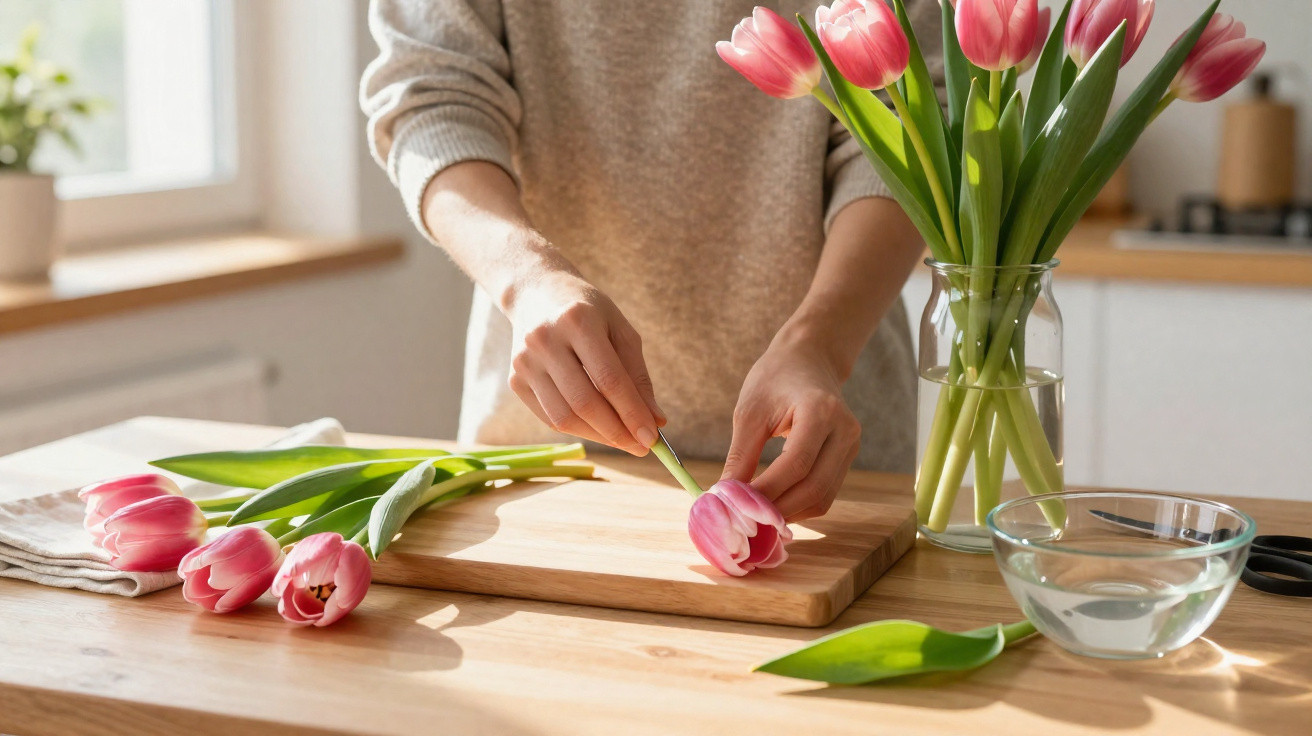
A tiny needle trick is said to solve the problem in seconds.
Social media is full of household remedies that supposedly rescue drooping tulips: vodka, coins and hot water among them. A British amateur gardener put these tips head to head in her kitchen – and arrived at a remarkably simple answer requiring just one prick and three seconds.
Why tulips bend so quickly in a vase
Anyone who buys tulips regularly will recognise the pattern: they are upright and firm on the first day, then suddenly look soft and limp on the second. This is not simply down to poor-quality flowers, but mainly to the plant’s particular structure.
- Tulips continue to grow after being cut. They stretch towards the light, turn slightly and therefore become longer with each passing day.
- Their stems are hollow and soft inside. The weighty flower head can quickly unbalance this construction.
- Warm central-heating air dehydrates the flowers. This is especially likely on windowsills above radiators, where wilting happens faster.
- Fruit bowls nearby release ethylene. This ripening gas stresses cut flowers and shortens their vase life.
Florists also point to another issue within the stem: tiny air bubbles or bacterial deposits can develop in the hollow channel. This “air lock” stops water from travelling upwards, leaving the flower insufficiently hydrated and causing it to lose its firmness – even when the vase still appears to contain plenty of water.
A hollow stem, warm air and restricted water flow – these are exactly the issues targeted by the needle trick.
The needle trick: from drooping flower heads to upright tulips in three seconds
The British amateur gardener carried out a small experiment using four small vases, each containing two tulips, placed side by side in the same spot in her kitchen for six days. Her aim was to find out which tip genuinely kept the stems upright for longer.
How the kitchen test was carried out
Every tulip was given the same initial treatment:
- stems were freshly recut diagonally under water
- all flowers were kept in the same position with identical light
- clean, small vases were used
Only the contents and treatment of the vases varied:
- a vase containing water with a splash of vodka
- a vase with several coins at the bottom
- a vase filled only with tap water, serving as the control group
- a vase with ordinary water, with each stem pricked by a needle just below the bloom
After six days, the result was clear. The tulips in the alcohol-and-water mixture looked the most battered: soft stems, tired leaves and barely any ability to stand. The group with coins fared marginally better, but still bent conspicuously over the vase rim. The control vase performed similarly – the flowers were not completely spent, but were far from looking like a crisp spring display.
The vase containing the pricked stems, however, looked very different. These tulips stood noticeably straighter, appeared fuller and supported their flower heads much more effectively. According to the gardener, this method was the clear winner over every other trick.
A tiny prick just below the flower releases the air bubble in the stem – allowing water to rise upwards freely again.
Step by step: how to use the needle trick at home
The appeal is that no specialist equipment or floristry training is needed. An ordinary sewing needle and a little care are enough.
1. Remove the tulips from the vase and recut them
Lift the tulips out carefully. Cut 1 to 3 centimetres from every stem, ideally under running water or in a bowl so that air is not drawn inside. Make the cut at an angle to increase the area available for water uptake.
2. Use fresh water and a clean vase
Rinse the vase thoroughly so that no bacterial film remains. Fill it with cool, fresh water and add the supplied cut-flower food if you have it. Such nutrients slow bacterial growth in the water and help nourish the stems more effectively.
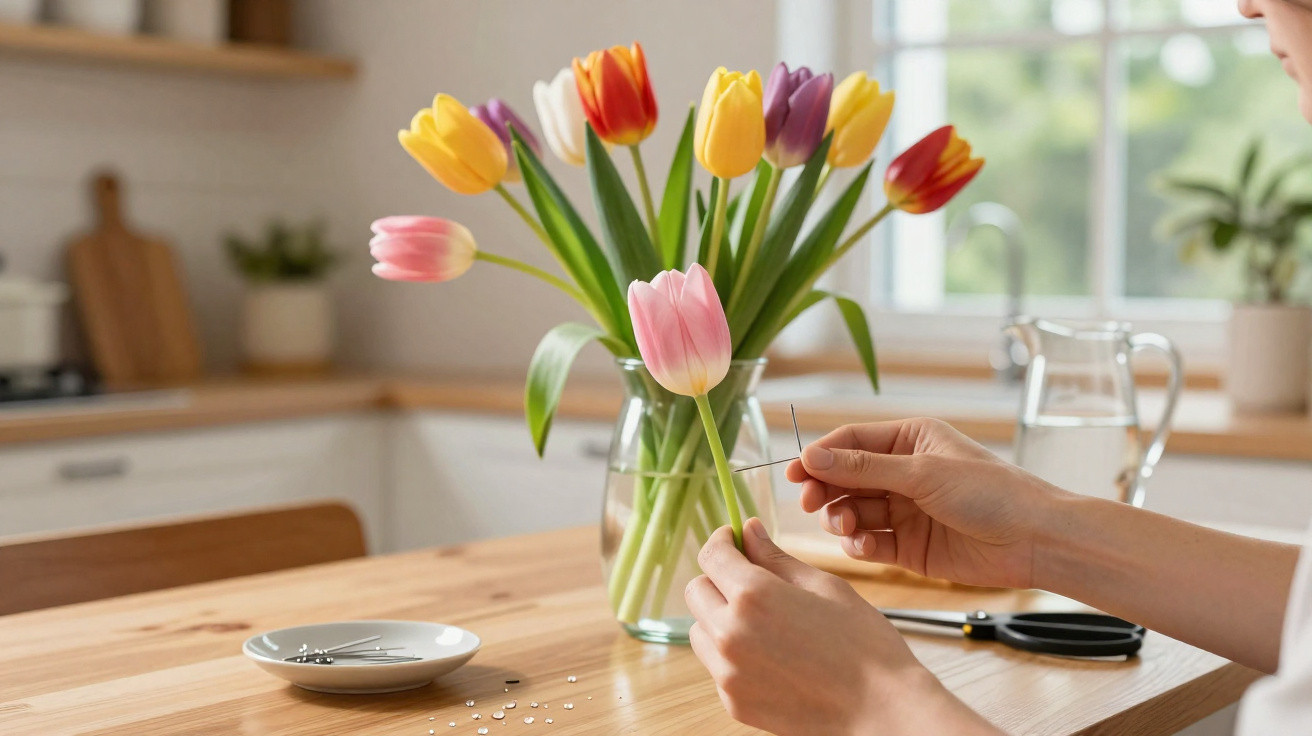
3. Make the needle prick
Briefly disinfect the needle, using boiling water or a drop of disinfectant that is wiped off afterwards. Then proceed as follows:
- Hold the stem between two fingers just beneath the flower.
- Push the needle cleanly through the side of the green stem once, making only a small hole.
- Remove the needle straight away, without drilling into the stem or moving it back and forth.
There is no need to touch the bloom: the puncture belongs directly below the base of the flower, in the green section. At this point, the channel in the stem opens, the air bubble can escape and water can then rise back up into the flower head.
4. Choose the right location for longer-lasting flowers
Avoid placing the vase on the sunniest windowsill above a hot radiator. A cooler spot in the room can extend the life of tulips surprisingly well. Keep the flowers away from fruit bowls, particularly those containing apples and bananas, as they produce a great deal of ripening gas.
Anyone who also recuts the stems and changes the water every two days can often get a whole extra week from a bunch of tulips.
More ways to stop tulips becoming limp in the first place
The needle prick is mainly useful for tulips that have already bent over. A few habits can help prevent the issue when arranging them in the vase:
- Remove the wrapping immediately: Paper and plastic restrict the stems’ movement and encourage them to become misshapen.
- Arrange stems loosely: When tulips are packed too tightly together, they push one another down.
- Use only a few centimetres of water: Tulips prefer relatively shallow water. Too much makes the lower parts of the stems soften more quickly.
- Match the vase to the stem length: The flower head should sit clearly above the rim, while at least one third of the stem should be inside the vase – this provides stability.
- Do not mix them with strongly scented flowers: Some heavily perfumed varieties, including certain lilies, can negatively affect how long tulips last.
Which household remedies work – and which are better left for the bar
Myths about cut flowers have circulated for decades. The kitchen experiment from Britain supports some of them, while challenging others, at least in the case of tulips.
| Household remedy | Effect on tulips |
|---|---|
| Vodka or other alcohol | In the test, stems appeared especially limp and the blooms held up poorly |
| Coins in the water | Hardly any benefit; comparable with plain water |
| Tap water only | A sound basic option, although tulips still bend over in time |
| Needle prick in the stem | Noticeably more upright stems and a better overall result in the long-term test |
Sugar, aspirin and a splash of lemon juice are also frequently mentioned in online forums. They may affect water quality, but they are no substitute for a clean vase, freshly cut stems or the necessary space in a cooler part of the home.
When it is better not to use the needle trick
Useful as the needle trick may be, it is not entirely risk-free. Using a needle that is too thick, or pricking the same stem repeatedly, can weaken its structure. In that case, the tulip may bend even sooner. A fine sewing needle and one clean puncture are entirely sufficient.
Very short-stemmed tulips or varieties with exceptionally soft stems benefit less from this hack. In these cases, a taller vase that supports the stems over a larger area, or a tied bouquet that provides additional stability, is more likely to help.
Why the tulip needle trick is proving so popular now
The trend for cut flowers has grown noticeably across German-speaking countries in recent years. Many people now treat themselves to an impromptu bunch from the supermarket or market stall at the weekend. In late winter and spring, tulips are among the best-selling flowers of all.
Against this backdrop, it is hardly surprising that simple techniques which visibly improve vase life go viral. A quick needle prick may look unremarkable, but it has a clear physical basis: air escapes, water flows better and the cells in the flower remain plump for longer. Once people understand this mechanism, they can reach for a needle far more calmly when faced with their next drooping bunch.
Comments
No comments yet. Be the first to comment!
Leave a Comment