

With one simple kitchen trick, that no longer needs to happen.
Many people put a bouquet of roses in plain tap water, hope it will look lovely for a few days, then feel disappointed when the display fades far too soon. This rapid wilting is not a sign of poor-quality flowers, but of biology. Adding one surprisingly simple ingredient to the vase water can extend the life of the blooms by up to a week.
Why roses wilt so quickly in plain water
The moment a rose is cut, it is separated from its roots. It can no longer receive nutrients, minerals or sugar from the soil. Tap water in the living room can replace this supply system only to a very limited extent.
At first, everything appears fine: the flower takes up water, the leaves feel firm and the bloom remains upright. Inside the plant, however, a race against time has already begun.
"Plain water keeps the rose hydrated, but provides virtually no energy. The flower survives on its remaining reserves – as if it were on a diet."
Gradually, the rose uses up its stored sugars. Without a fresh supply, the stem bends, while the petals become soft and lose their colour. At the same time, a second, invisible issue begins developing in the water.
Bacteria attack the water-conducting vessels
Standing water at room temperature provides ideal breeding conditions for bacteria and fungi. They multiply especially quickly in centrally heated homes. They settle at the cut ends of the stems, enter the water-conducting vessels and clog them.
Known in botany as "xylem", these vessels are the tubes that carry water upwards to the flower head. Once blocked, the flower dries out from within despite standing in water.
For roses to last longer, they therefore need two things at the same time:
- Energy in the form of sugar
- Water in which bacteria are much less able to multiply
The surprising helper from the fridge: Sprite or 7Up
What sounds like an expensive florist's secret is already close at hand in many kitchens: clear lemon-lime fizzy drinks such as Sprite or 7Up. These drinks are not intended for plants, but their composition is remarkably well suited to the needs of cut flowers.
"The combination of sugar and acid in clear lemon-lime fizzy drink supplies energy while also slowing bacteria in the vase water."
Why the sugar in fizzy drink benefits roses
In nature, roses make sugar in their leaves through photosynthesis. Once cut, this source of energy is largely lost. The high sugar content of standard lemon-lime fizzy drink helps fill that gap.
The sucrose in the fizzy drink acts as fuel for the flower:
- Buds open more fully.
- Petals stay firm for longer.
- Colours retain a fresh, vivid appearance for longer.
Simply adding household sugar to the water, however, would be more likely to have a negative effect. Pure sugar water makes bacteria grow even faster: the water turns, starts to smell and the stems rot.
Acid as natural protection for vase water
This is precisely where the acidity of the fizzy drink becomes valuable. Clear lemon-lime soda has a pH of around 3.3, making it considerably more acidic than tap water. This acidity slows the growth of many bacteria and fungi in vase water.
Citric acid is particularly important. It helps ensure that:
- the water remains clear for longer;
- less slime forms on the stems;
- the water-conducting vessels in the stem stay open and able to absorb water.
"The rose receives sugar as an energy source – while also standing in water where pathogens are far less able to thrive."
The right mix: how roses gain up to seven days
For this trick to work properly, the mixing ratio matters. Too much acid or sugar puts the plant under stress, while too little produces hardly any noticeable benefit.
Recommended water-to-fizzy-drink ratio
| Component | Amount |
|---|---|
| Clear tap water | approx. 75 % |
| Sprite or 7Up (not light, not zero) | approx. 25 % |
In practical terms, use one part fizzy drink to three parts water. For example, add 250 millilitres of lemon-lime fizzy drink to 750 millilitres of water. Importantly, use only the standard version, not sugar-free products, as these contain sweetener rather than real sugar.
Step-by-step guide to ideal vase water
- Rinse the vase thoroughly with hot water to remove old germs.
- Fill it with tap water at room temperature.
- Add lemon-lime fizzy drink in a 1:3 ratio and stir briefly.
- Remove any leaves that would sit below the water line, as they otherwise rot quickly.
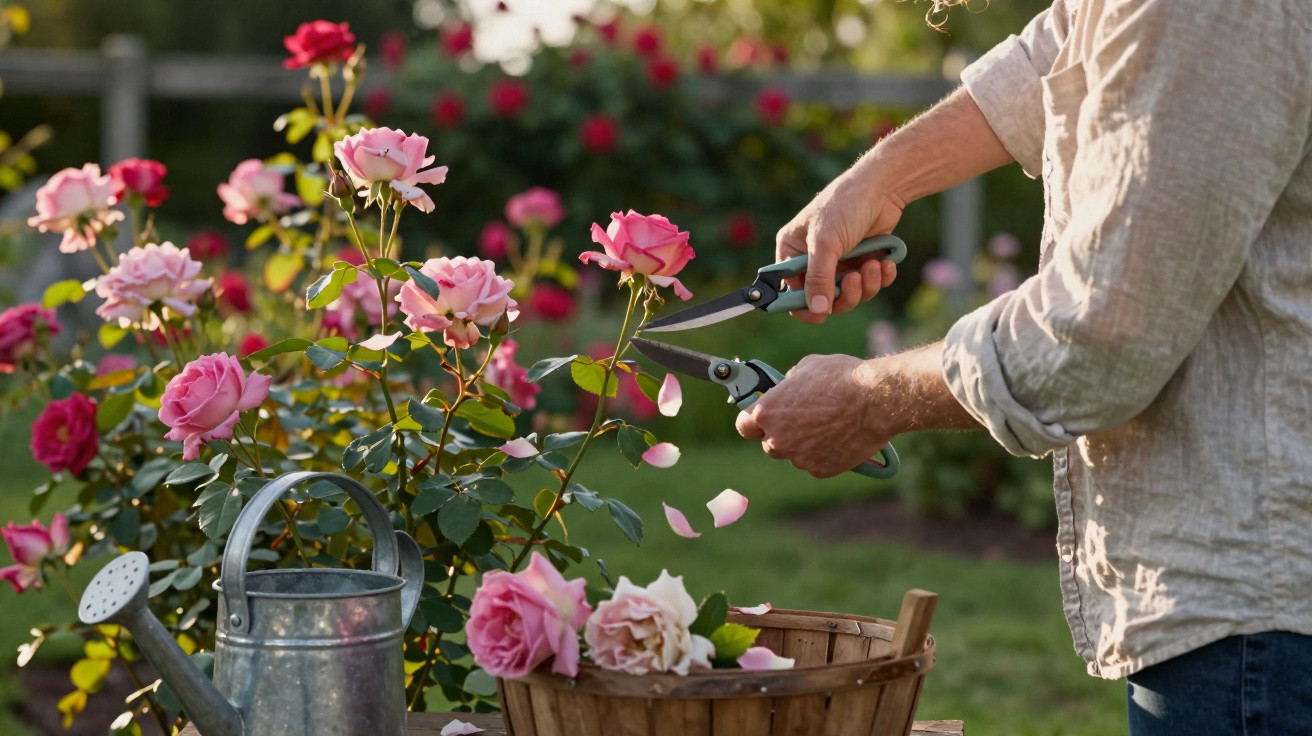
- Trim the rose stems diagonally by around two centimetres using a sharp knife or garden secateurs.
- Put the stems straight into the prepared vase water.
- Replace the water every two to three days and make a fresh mixture.
"Anyone who follows this process consistently can gain five to seven additional days of enjoyment from the flowers in many rose bouquets."
How to tell the method is working
Differences can often be seen after only a few days. Many users report that their roses remain noticeably more upright and are less likely to droop early. Buds that might otherwise have stayed closed also open visibly wider.
The water provides another sign: it stays clear for longer and has a neutral smell. In ordinary vases, the water often discolours after a short time, small particles become visible and the stem ends turn slimy. With the fizzy-drink mixture, this happens much more slowly.
Does the trick work for other flowers too?
The method is not suitable only for roses. Many other cut flowers respond similarly well to the combination of sugar and acid, including:
- varieties of carnation;
- gerberas;
- lilies;
- some wildflowers in mixed bouquets.
You should avoid experimenting with sensitive varieties, such as certain orchids or very delicate spring flowers, as the acidity may be too strong for them. If unsure, first try the method with a single stem before placing the entire bouquet in soda water.
Tips to boost the effect further
Even the best mixture offers limited benefit if the basics are wrong. A few simple habits can extend the life of roses even more:
- Do not place the vase in direct sunlight.
- Keep it away from radiators, as dry warm air stresses the blooms.
- Do not keep roses beside fruit; ripening fruit releases ethylene, a gas that makes flowers age faster.
- Trim the stems slightly with every water change to reopen blocked water-conducting vessels.
For anyone aiming for a more sustainable household, this method is easy to incorporate into everyday life. An already opened bottle of fizzy drink that would otherwise go flat is often enough. This gives the drink a useful second purpose.
What the terms mean – briefly explained
Many guides mention pH value and bacteria without explaining what they mean in everyday terms. The pH value indicates whether a liquid is acidic or alkaline. Tap water is usually neutral to slightly alkaline, whereas lemon-lime fizzy drink is distinctly acidic. Many germs are uncomfortable in acidic conditions, so their reproduction slows down.
The water-conducting vessels mentioned in the stem are tiny tubes that work like drinking straws. They move water from the bottom to the top. If bacteria enter them or cells die, these tubes become clogged. Cutting the stem diagonally creates a larger surface through which water can be absorbed and reduces the risk of a complete blockage.
Once these connections are understood, it becomes easier to see your own bouquet differently. Cut flowers are not a disposable product that is simply "finished" after three days. A few targeted steps and a quarter glass of lemon-lime soda can significantly extend their life – so their appearance on the dining table can be enjoyed for much longer.

Comments
No comments yet. Be the first to comment!
Leave a Comment