
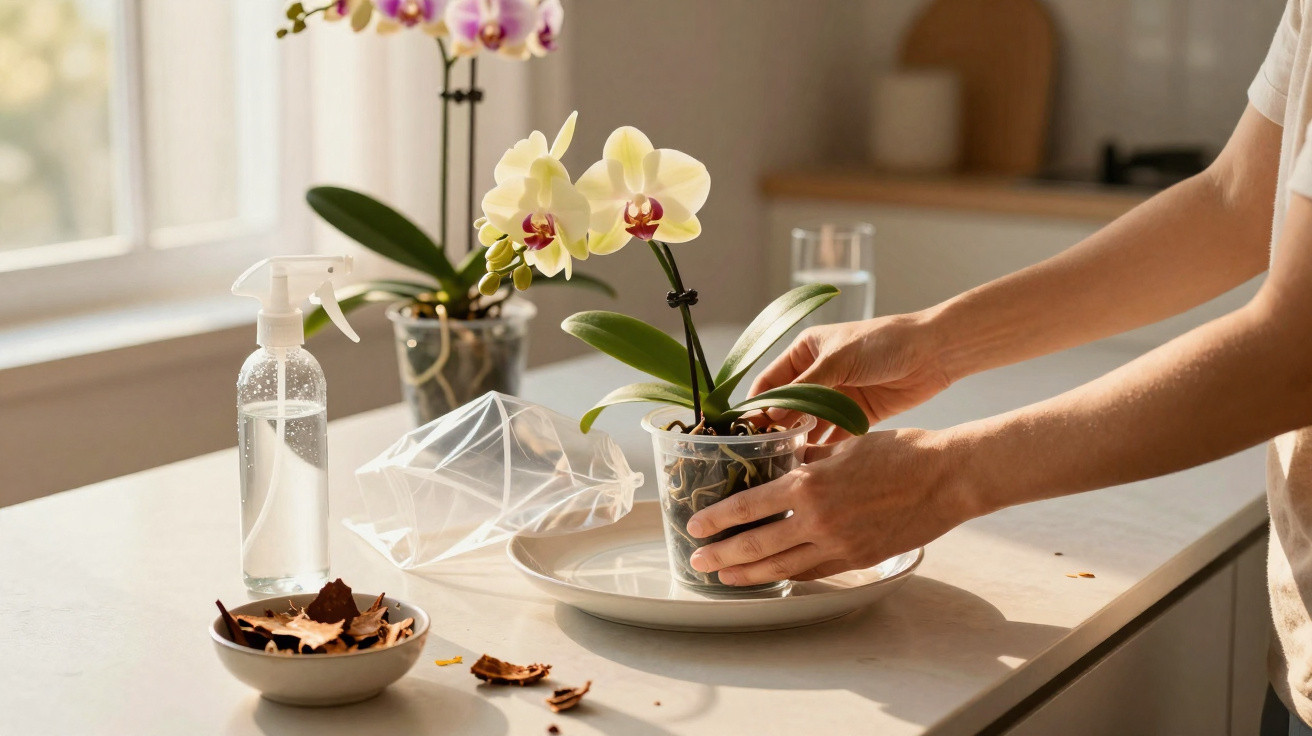
If you own a Phalaenopsis orchid, you may know the situation: one day its leaves are firm and glossy; the next, they are limp and draped wearily over the edge of the pot. Many people assume the plant simply needs “more water” – and, by doing so, make the situation even worse. In most cases, however, there is a specific emergency behind it, one that can still be halted with the right rescue plan.
How to recognise a serious problem with your orchid
Soft, wrinkled leaves are not merely a cosmetic issue; they are a warning sign. The plant is not receiving sufficient water in its cells, even though the pot may often feel soaking wet. Although this seems contradictory, the reason is straightforward: damaged roots can no longer transport water.
Soft, shrivelled leaves nearly always mean that the orchid’s water transport system is disrupted – either dried out or rotten.
Common signs of this serious issue include:
- Leaves droop and feel soft, leathery or rubbery.
- The surface looks crumpled, as if it has been scrunched up.
- New leaves remain small, grow slowly or fail to grow at all.
- Flower buds drop off before opening.
The order in which you act now matters. Watering or feeding blindly could result in the complete loss of the plant.
Check the roots, growing medium and position quickly
Before taking any action, carry out a quick assessment. With the usual transparent pots, this takes only seconds.
How to read orchid roots correctly
Hold the pot up to the light and examine the roots’ colour and firmness:
- Healthy roots: firm; green when wet, and pale or silvery once dry.
- Rotting roots: brown, black, spongy or slimy, sometimes with a musty smell.
- Dried-out roots: grey, straw-like, hard and brittle, breaking easily.
Gently move the plant at its base. If the whole cluster of leaves wobbles like a loose tooth, the base is often already affected. The only solution then is careful repotting with root surgery.
Check the environment and watering water
Phalaenopsis orchids need a bright position away from direct midday sun. Around 15 to 20 °C is ideal, although a slightly warmer living room is also suitable, with humidity between 50 and 70 per cent. Dry central-heating air and draughts place additional strain on the plant.
Use soft water for watering, ideally low in limescale and not ice-cold straight from the tap. Hard, heavily chlorinated water and a permanently damp root ball cause many problems.
For straightforward thirst problems: a gentle water soak
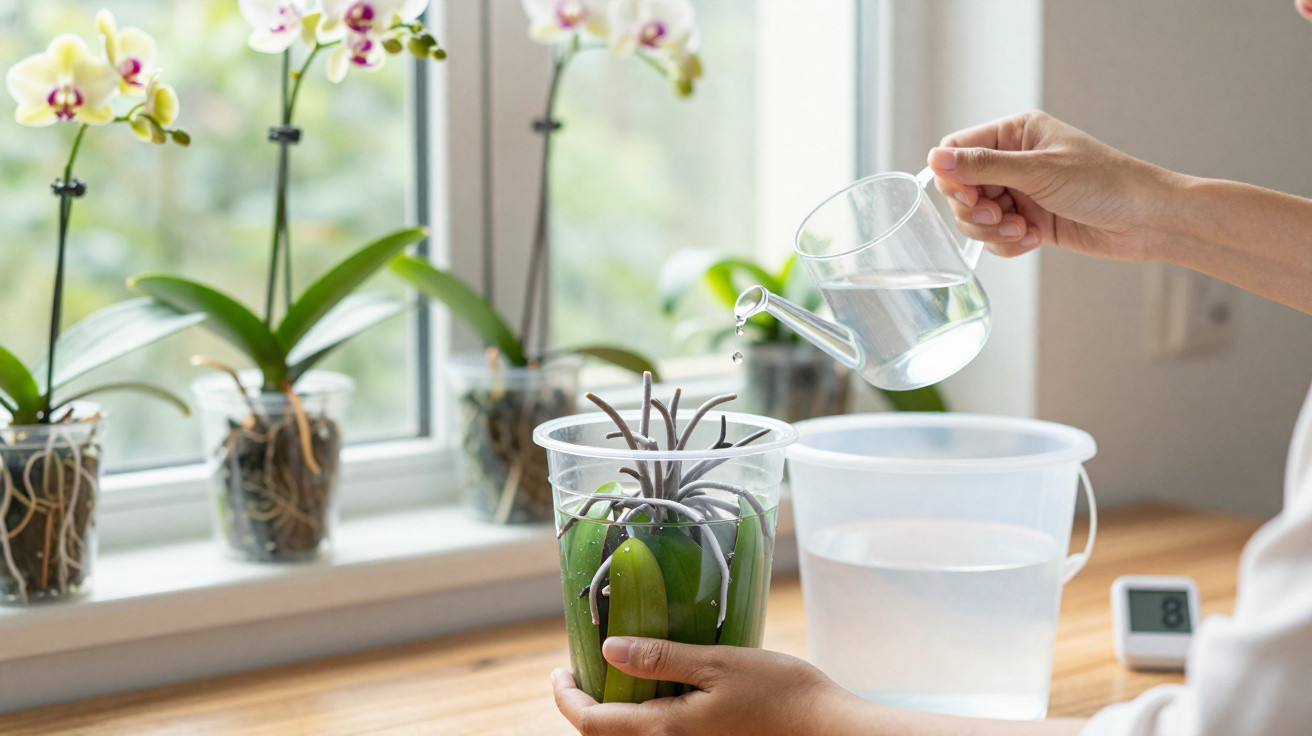
If most roots still look healthy inside the pot, the plant is usually simply thirsty. A targeted soak should be enough:
- Place the pot in lukewarm, soft water; do not use hot water.
- Leave it for 10 to 30 minutes, allowing the roots to absorb water fully.
- Let the pot drain thoroughly and remove surplus water from the outer pot.
- Do not water again until the growing medium is almost completely dry.
A suitable routine is generally every 7 to 10 days, depending on room temperature, humidity and pot size. Do not water according to the calendar; judge by feel and weight instead. When the pot feels light, it is time to water.
When roots are rotting: rescue surgery in the pot
If numerous roots are brown, mushy or unpleasant-smelling, waterlogging is usually to blame. Decisive action is now essential.
Step-by-step root rescue procedure
- Carefully lift the plant from the pot and remove all of the old growing medium.
- Rinse the roots under gently running water to clean them completely.
- Using a sharp, disinfected tool, cut away every soft, black or hollow root.
- Dust the cut surfaces with a little cinnamon powder, which has a mild antifungal effect.
- Leave the plant to dry in the air for several hours.
- Then place it in fresh orchid growing medium that is coarse, loose and air-permeable.
Only healthy, firm roots should remain in the pot. Anything mushy attracts rot and fungi – and with them, the certain death of the plant.
Following this emergency operation, the orchid needs time to recover. Water very sparingly during the first few weeks; too little is better than too much. If the pot smells musty again, ventilation is inadequate or the medium is staying wet for too long.
When hardly any roots remain: intensive care in a plastic bag
The situation is especially severe when the orchid is almost rootless and its leaves already feel like leather. Ordinary watering will no longer help. In this case, a method known to many amateur gardeners as the “plastic bag treatment” can be effective.
How the bag treatment works
This creates a type of mini greenhouse with exceptionally high humidity:
- Remove all damaged roots and clean the base of the plant thoroughly.
- Put a small amount of moistened sphagnum moss, or a similarly loose and damp material, into a transparent plastic bag.
- Position the orchid on top without pressing it too deeply into the moisture.
- Seal the bag airtight, blowing a little air into it first so that it inflates.
- Place or lay it in a bright location out of full sun, at around 20 to 22 °C.
This sealed environment produces humidity of almost 100 per cent. The plant can take up water through its leaves while new roots are encouraged to form at the base. After three to four weeks, the first fresh root tips often appear. Do not open the bag suddenly at that point; instead, air it for a little longer each day until the plant has adjusted to normal room air. Only then should it be repotted carefully into growing medium.
How to prevent permanently limp leaves
Anyone who has rescued an orchid will not want to experience the same drama again. A simple routine will keep the plant much more stable.
- Water only when the bark growing medium is almost fully dry.
- Always allow it to drain well, with no standing water in the outer pot.
- Avoid heavy misting directly onto the leaves, as this encourages fungal growth.
- To raise humidity, place the pot on a tray of pebbles and water instead.
- Choose a bright spot without direct midday sun or icy draughts.
Important: do not cut off limp leaves while they are still green. The plant uses them as a final energy reserve to produce new roots and fresh leaves. Yellow, mushy leaves can be removed carefully later.
Important terms and practical everyday tips
Many people struggle with small day-to-day details. A few rules of thumb can help prevent uncertainty:
| Problem | Likely cause | First action |
|---|---|---|
| Soft, shrivelled leaves | Root rot or drought stress | Inspect roots; if needed, soak or repot |
| Grey, hard roots | A prolonged dry period | Lukewarm water soak; adjust the watering routine |
| Brown, slimy roots | Waterlogging and rot | Remove old growing medium, perform root surgery and use a fresh pot |
| Flowers drop while still in bud | Stress, draughts or temperature fluctuations | Move the plant to a calmer, more stable position |
As a broad guide, a well-maintained Phalaenopsis can remain in the same pot for many years, receives fresh growing medium every one to two years and regularly produces new aerial roots. If every root is hidden inside the pot and looks unhappy there, something has gone wrong.
If you keep several plants at home, basic tools can also help: a small hygrometer measures humidity, while an inexpensive spray bottle moistens the growing medium precisely without flooding the leaf axils. In dry homes, a room humidifier is worthwhile, particularly in winter beside central heating.
With this knowledge, a limp orchid no longer seems like a hopeless case but rather a clear care task. By reading the signals and responding in good time, you can save not only the current plant but also enjoy robust flowering stars on the windowsill in the long term.
Comments
No comments yet. Be the first to comment!
Leave a Comment