
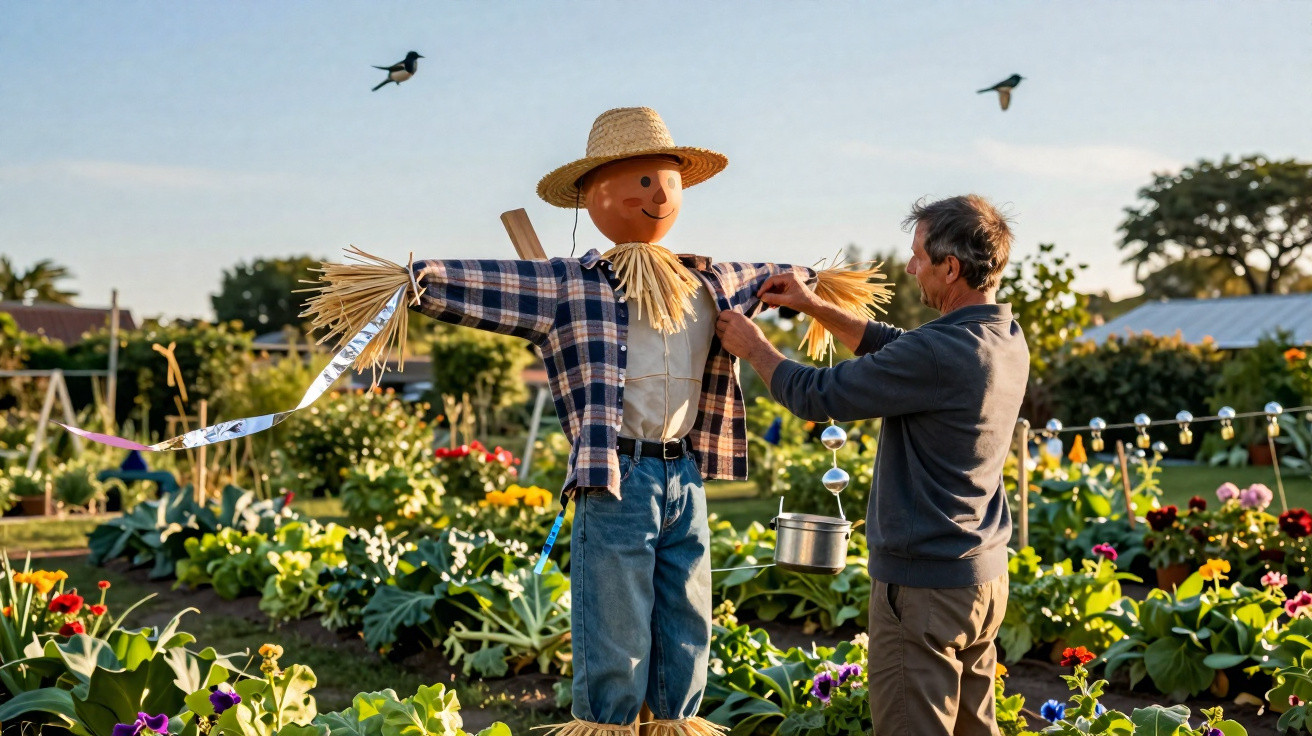
An old-fashioned trick can work surprisingly well.
Anyone with fruit trees or a carefully tended vegetable patch will know the issue: the moment cherries, redcurrants or strawberries start to colour up, sparrows, blackbirds and thrushes can shrink your crop to a token handful. Many hobby gardeners don’t want to use chemicals. So what you need is something that actually works, costs very little and doesn’t harm wildlife - which is where the classic scarecrow still earns its keep.
Why a scarecrow is so effective in the garden
The idea is as old as gardening itself: put a human-shaped figure among your beds and it unsettles birds, suggesting that someone is keeping watch. Many will choose an easier target elsewhere.
"The principle works because birds react to movement, silhouette and sound - not to high-tech, but to simple deception."
This approach tends to be particularly effective in smaller gardens and family plots. It doesn’t just deter birds from cherries, plums and apples, but can also help protect:
- berry bushes such as redcurrants, gooseberries and raspberries
- strawberry plants
- young lettuces and delicate seedlings in the veg patch
- newly sown areas, for example when sowing peas or beans
The big advantage is clear: birds are scared off rather than injured. For many gardeners that matters - they enjoy seeing birds around, they just don’t want them helping themselves from the harvest basket.
How to build a scarecrow in under an hour
The method is almost laughably simple. You won’t need specialist tools or pricey supplies - most of what you need is usually already in a shed or garage.
Basic frame: two slats make a “body”
Start with a sturdy structure. Two wooden slats or strong branches are ideal.
- One slat should be at least 1.5 metres long - taller is even better so the figure “stands” above bushes and beds.
- The second slat is shorter and will form the “arms”.
- Fix the shorter slat across the longer one at roughly one third of the total height. You’ll end up with a cross: the basic body frame.
You can secure it with screws, wire or strong cord. The key point is that nothing should twist when the wind picks up.
Reuse old clothes in a practical way
Next, dress your figure - this is where you can get a bit inventive.
- Use old, worn-out clothing: shirts, T-shirts, jackets, long trousers or dungarees.
- Light colours and bold patterns tend to catch birds’ attention more than dark, understated fabrics.
- A scarf, waistcoat or an old hi-vis vest adds extra visibility.
Pull the clothes over the wooden cross as if you were dressing a person. After that, it’s time to stuff it.
Filling gives the figure some “shape”
To stop the clothing hanging limply, the scarecrow needs volume. Choose fairly tough materials that can cope with damp conditions.
- straw or hay
- wood shavings or sawdust (let it dry thoroughly)
- old fabric scraps, towels, rags
- scrunched-up newspaper or packing paper (only if it won’t be left out in constant rain)
Pack out the sleeves, trouser legs and torso until you get a rough human outline. Tie off the ends with cord or wire. At the “hands”, it’s fine if a bit of straw or cloth sticks out - that movement in the breeze helps sell the illusion.
The head: anything from a plant pot to an old ball works
Gardeners often debate whether a face is necessary. In practice, birds usually respond to the overall shape.
Good options include:
- a plant pot turned upside down on the top of the upright slat
- an old, lightly inflated ball or a punctured balloon wrapped in fabric
- a hessian sack or cloth bag stuffed with filling and tied securely
If you fancy it, draw eyes and a mouth using a waterproof marker. Finish it off with an old hat, beanie or baseball cap - it looks amusing and makes the figure feel more “present” in the garden.
The best spot for your bird scarer
Placement makes a huge difference to how well this works. A “bloke” slumped into a hedge at the edge of the plot won’t worry a seasoned male blackbird.
"The more open the position and the more wind the figure catches, the more realistic its movement appears."
Wind, visibility and closeness to the crop
An ideal position is:
- in the centre of the garden or the bed
- where there’s usually a light breeze
- with a clear line of sight to vulnerable crops such as berries, fruit trees and strawberries
You want the wind to lift and flutter the shirt and sleeves slightly, making the figure look as if it’s moving. That hint of “life” is exactly what unsettles birds and keeps them at a distance.
Add shine and noise to increase the effect
Many gardeners improve results with reflective and rustling extras. Flashes of light combined with sound can make the area feel unsafe and unpleasant for birds.
Popular add-ons include:
- old CDs dangling from the “arms” to catch sunlight
- empty metal tins that clatter in the wind
- bright ribbons or strips of fabric that wave about
- strips of aluminium foil to create light reflections
What matters is that these pieces can move. A gentle breeze is often enough to create plenty of disturbance.
Birds learn quickly: why the figure needs to move
If you’ve gardened for any length of time, you’ll know blackbirds and their friends aren’t stupid. They watch to see whether a figure is actually dangerous. If your “guard” stays in the same spot for days on end without changing, they eventually clock that it’s harmless.
That’s why a small rotation plan pays off:
| Measure | Interval |
|---|---|
| Slightly change the location (move it a few metres) | every 5–7 days |
| Swap or add clothing (hat, scarf, waistcoat) | every 1–2 weeks |
| Rearrange reflectors or tins | when the effect starts to fade |
Small tweaks like these make the scarecrow feel new and less predictable. For birds, that’s often enough reason to avoid the area.
Don’t forget maintenance: your “guard” lives outdoors
Rain, wind and sunshine all take their toll on wood, fabric and stuffing. If you want your figure to last beyond a single season, it’s worth giving it an occasional check.
Pay particular attention to:
- secure fixings on the slats so nothing topples
- mould or rot in the wood
- stuffing that’s become soaked and may start to decay
- holes where mice or other animals could nest
Once a year, a simple “service” helps: replace the filling, swap out clothing that’s too far gone, and tighten any loose cords. With a little upkeep, the figure can last through several harvest seasons.
Wildlife-friendly alternatives and sensible combinations
A scarecrow doesn’t have to work alone. If bird pressure is heavy, combining methods creates a useful safety net for your crop.
Possible additions:
- fine netting over berry bushes and strawberries, pulled taut
- reflective tape in fruit-tree canopies
- small wind spinners or bright flags in the beds
- dedicated bird-deterrent spirals in exposed spots
At the same time, it can help to leave a few shrubs or wild plants around the edge of the garden. They offer food and shelter - and that often reduces the pressure on the productive area.
Why the effort is especially worth it in family gardens
Beyond the practical benefit, there’s a pleasing side effect: children tend to love the project. Planning, building, painting and dressing the figure together makes the garden more engaging, while also teaching how food is grown - and why it sometimes needs protecting.
Many families even give their “guard” a name, shift it around with the seasons and change its outfit. In spring it might wear a rain jacket, in midsummer a light shirt, and in autumn a scarf. That way, the protection stays effective while also becoming part of everyday garden life.
For anyone who wants to avoid poisons and expensive specialist products, the traditional scarecrow turns out to be a surprisingly modern solution: it costs next to nothing, makes use of what you already have, respects wildlife - and, at best, saves most of your harvest.
Comments
No comments yet. Be the first to comment!
Leave a Comment