
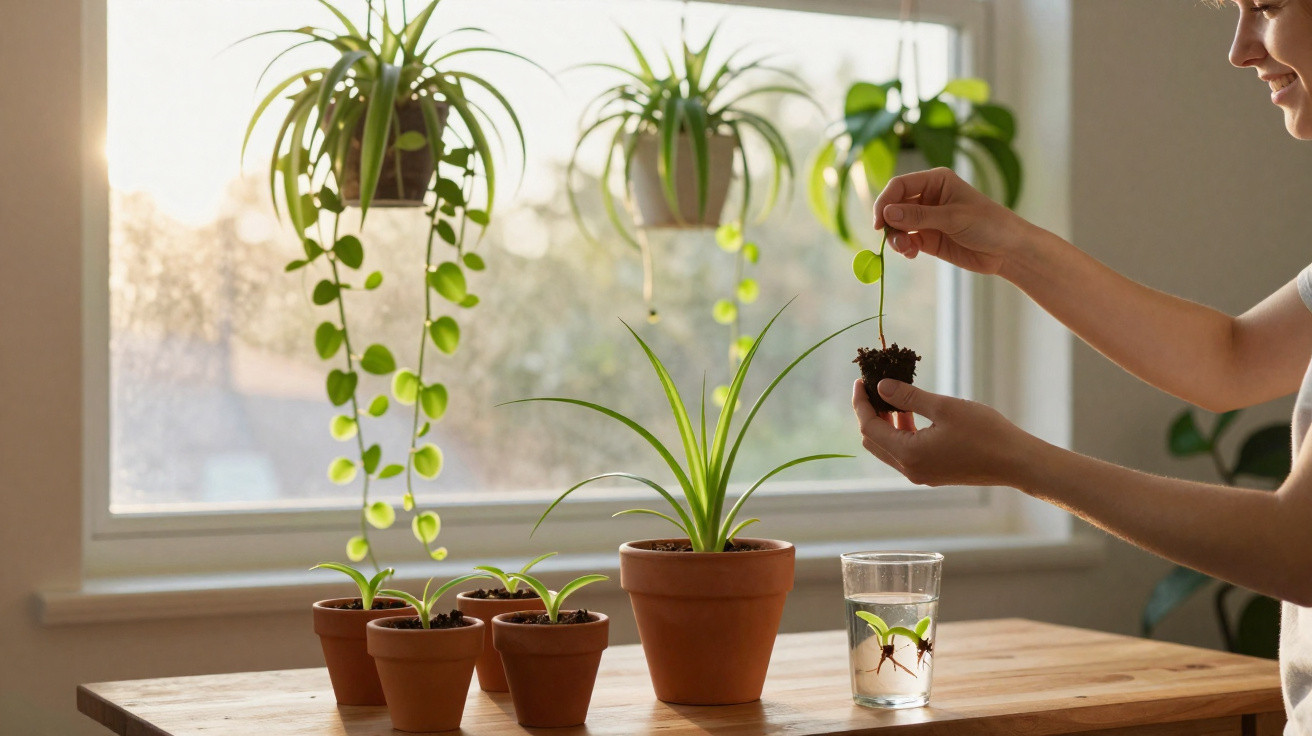
With a few tweaks to light, pot choice and your watering rhythm, things can suddenly change - and the plant ends up covered in baby shoots.
If you’ve got a lush spider plant on the windowsill but you’re still waiting in vain for those familiar dangling plantlets, you’re usually just missing a few simple cues the plant needs. With the right balance of day length, pot size and a small touch of “stress”, this houseplant can turn into a surprisingly efficient plantlet factory in a short time.
How the spider plant decides when to produce offsets
The spider plant’s botanical name is Chlorophytum comosum. It’s one of those houseplants that allocates its energy carefully: first it builds foliage and roots, and only later does it put effort into offspring.
During the first one to two years, the plant typically channels almost everything into growth and root development. Below the compost are thick, fleshy roots that store water and nutrients like a battery. Only once that store is well stocked and the plant is growing steadily does it start to form so‑called stolons - long, arching, trailing shoots.
Small, rather plain white flowers tend to appear on these shoots first. From them, tiny rosettes develop - the classic baby spider plants. If you separate them and root them, they become independent plants.
"The spider plant only switches into ‘family mode’ once it feels safe and strong enough - and the environmental conditions signal: now it’s worth producing offspring."
The key levers: light, pot and a little stress
Three factors have the biggest impact on whether a spider plant produces offsets: brightness, day length, and how comfortable (or cramped) it is in its pot.
The right amount of light and day length
Spider plants like plenty of bright light, but not harsh, scorching sun. The sweet spot is a position:
- close to an east‑facing window (morning sun) or west‑facing window (evening sun),
- with bright, indirect light,
- away from intense midday sun that could scorch the leaves.
Where it gets interesting is the duration of light. The plant responds to day length, and shorter days can noticeably help trigger plantlets:
- fewer than 12 hours of light per day,
- for at least three consecutive weeks,
- with genuinely dark nights - no constant glow from lamps or the television.
If your spider plant lives in the sitting room, you can manage this quite precisely: switch lights off at a consistent time each evening, or move the plant to a room that isn’t lit at night. Giving it “proper nights” often nudges it towards reproduction.
Why a snug pot can work wonders
The second major lever is the pot. Many plant owners are too generous and regularly move a spider plant into a much larger container. That can seriously slow offset production.
Spider plants tend to do better when their roots fill the pot well. A slightly undersized, snug pot creates a gentle stress. It’s exactly this mild pressure that can push the plant to invest energy in offspring instead of producing even more leaf mass.
"A pot that already looks well‑rooted is often better for lots of plantlets than a freshly upsized, oversized pot with lots of empty compost."
Only when roots start coming out of the drainage holes, or the pot visibly bulges, is it truly time to repot - and even then, go up by just one pot size rather than jumping straight to an extra‑large container.
Watering and feeding: less pampering, more cues
Spider plants are known for being tough, which often leads to overwatering. If your goal is offsets, a more measured approach to water and fertiliser usually works better.
- Watering: water thoroughly, then let the top layer of compost dry out, rather than giving small amounts little and often.
- Feeding: in spring and summer, feed about once a month with a mild houseplant fertiliser.
- Winter: water much more sparingly and usually don’t feed.
If the plant is constantly over‑provided for, it tends to stay in a “comfort mode” and focuses on leaves. Slightly reduced watering and modest nutrients send a different message: it’s a good moment to invest in the future - meaning offspring.
What you should never do to a spider plant
Certain care mistakes can effectively stop offsets from forming. Common pitfalls include:
- moving it into a huge new pot with lots of fresh compost,
- keeping the root area continually wet,
- frequent, heavy feeding during the growing season,
- leaving lights on late into the night, every night.
These keep the plant locked into “leaf mode”. It may look green and full, but it will produce very few plantlets.
Taking offsets correctly and rooting them
As soon as the trailing shoots carry small plantlets with their own tiny roots, the most satisfying part begins: propagation.
The best time is usually spring or early summer, when young plants establish quickly. There are two common methods, and both work well.
Method 1: Rooting in a pot while still attached to the mother plant
- Prepare a small pot with loose, free‑draining compost.
- Rest the plantlet on the compost so its base makes good contact with the surface.
- Don’t cut the runner back to the mother plant yet.
- Water lightly and keep the compost evenly moist, but not wet.
The connection to the mother plant acts like an umbilical cord, supporting the plantlet while it forms its own roots in the new pot. After a few weeks - once it’s anchored firmly - you can cut the stolon cleanly.
Method 2: Rooting in a glass of water
- Carefully separate the plantlet from the runner.
- Place the base in a glass of room‑temperature water; the leaves shouldn’t sit in the water.
- Put the glass somewhere bright, but out of direct midday sun.
- Change the water every few days to prevent anything turning foul.
Within one to three weeks, roots typically reach around 2–3 cm. At that point, pot the young plant into a small container with well‑drained compost and place it somewhere bright at about 20 °C. Once established, a single mother plant can easily produce a whole chain of new spider plants to keep, swap or give away.
How many offsets are realistic - and what’s behind it
In the right conditions, established plants can reach surprisingly high numbers. Depending on size and age, well over ten offsets per year are possible. Many hobby growers report genuine garlands of young plants hanging from the runners.
| Plant condition | Expected offsets per year |
|---|---|
| young (under 1 year) | often none yet, or only a few |
| established (1–2 years, good position) | several runners with a handful of plantlets |
| strong, older plant | into double figures and beyond |
The physiology is straightforward: those root stores act as the energy reserve. When they’re full, days aren’t too long, and the plant feels a slight squeeze in its pot, it shifts priorities. Instead of directing resources into more leaves, it channels stored energy into runners and offsets.
Common questions: placement, winter rest, risks
Many people wonder whether they should treat the plant the same way in winter as in summer. The answer is no. In winter, spider plants grow more slowly. Long stretches without fertiliser won’t harm them, and they need far less water. They don’t cope well with cold draughts, but they handle dry central‑heating air reasonably well - as long as the rootball isn’t allowed to dry out completely for extended periods.
As with any houseplant, the main risk is waterlogging. If water sits in the outer pot or saucer, the fleshy roots can rot quickly. Then, even with the right day length and a snug pot, the plant has little energy left for offsets. So always empty the saucer after watering.
If you have small children or pets, there’s some reassurance: spider plants are considered relatively non‑toxic. The occasional nibble by a cat usually doesn’t cause dramatic issues, but it still shouldn’t become a habit, as large amounts can irritate the stomach.
Bonus tips for a proper offset cascade
If you want lots of young plants, stack the factors together:
- a bright spot by an east‑ or west‑facing window,
- consistently fewer than 12 hours of light,
- only repot when it’s genuinely pot‑bound,
- build in watering gaps so the top layer dries out,
- feed regularly but lightly in spring and summer.
With this combination, a modest houseplant can turn into a small production line for spider plant offspring. Once you’ve got the balance of light, pot and minimal stress right, you’ll barely need to think about topping up your own indoor jungle.

Comments
No comments yet. Be the first to comment!
Leave a Comment