
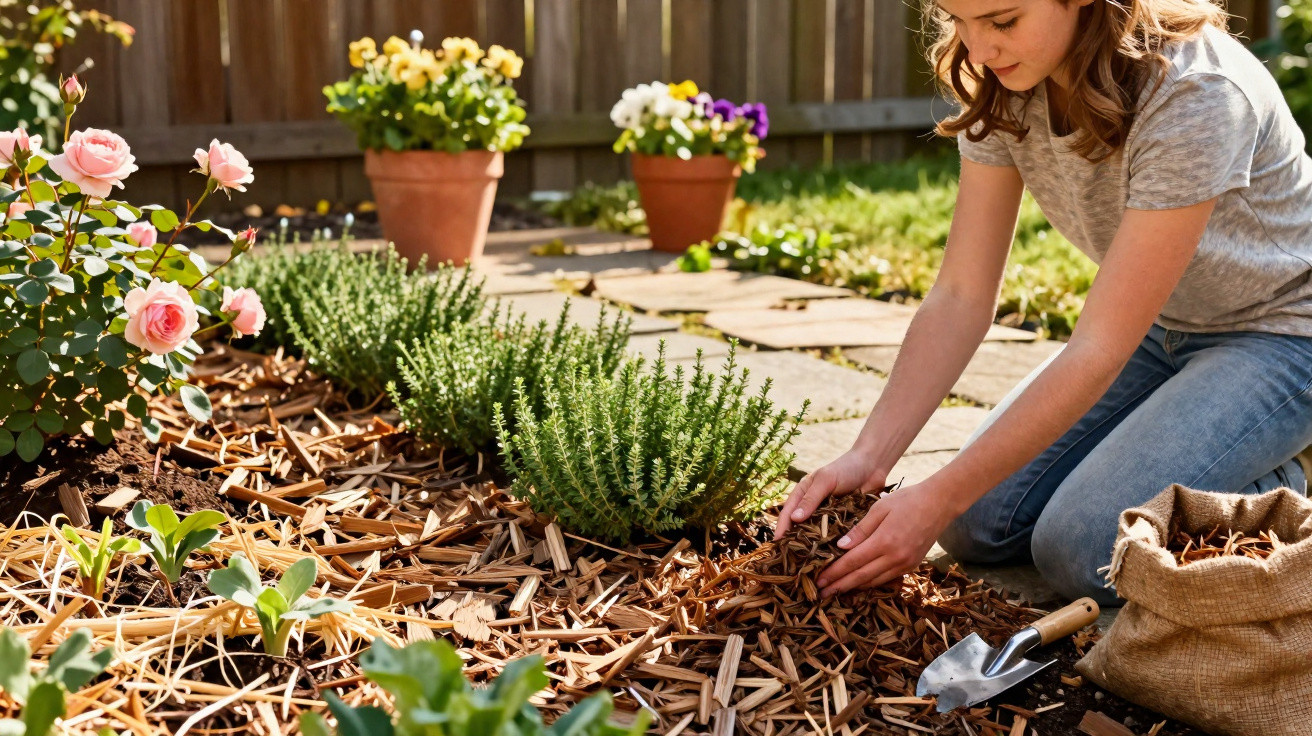
Many amateur gardeners spend a small fortune every spring on fresh perennials-then wonder why the garden looks bleak in autumn or winter. In reality, a well-planned blend of three tough ground-cover plants is enough to keep a border colourful for the long term, with almost no ongoing effort.
Why a trio of ground cover plants keeps colour in the garden all year
Rather than replanting year after year, more and more experienced gardeners are relying on perennial plants that settle in and stay put. Low, creeping ground covers are particularly useful: they fill gaps, suppress weeds and-when chosen thoughtfully-can work in shifts. While one variety is in flower, the next is gearing up, and the third is quietly building strength in the background.
"With just three well-chosen ground-cover plants, you can create a permanently flowering carpet that slows weeds down and needs hardly any care."
The principle is simple: three hardy, low-growing perennials with different flowering periods and different root depths share the same patch of soil. Because they draw on different “layers” underground and take turns through the seasons, they compete less than you might expect. The result is a bed that stays covered, looks lively and is surprisingly low-maintenance.
The 3-plant formula: 5 pots per square metre for 365 days of colour
For the idea to work reliably, two things need to be right: the choice of the three plants and the planting density. A proven rule of thumb is to use three different ground covers, adding up to roughly five young plants per square metre.
The three key plants at a glance
- Winter heath (Erica carnea) – flowers from around January to April, adding soft splashes of colour during the dullest months.
- Moss phlox (Phlox subulata) – flowers from around May to August, forming thick, abundant mats of strong colour.
- Leadwort (Ceratostigma plumbaginoides) – flowers from around September to December, with vivid blue blooms and, towards the end of the season, striking red-tinged foliage.
This sequence closes the notorious “flowering gaps”, when borders can feel like nothing is happening. Winter heath sets the tone early in the year; moss phlox then takes over through spring and summer. As it begins to fade, leadwort steps in and carries the colour into late autumn-complete with decorative leaf colour as the year draws to a close.
Correct planting density: why five pots per square metre is ideal
Plant too sparsely and you’ll be staring at bare patches for years. Pack plants in too tightly and you can end up with a chaotic tangle where individual plants struggle. Around five small perennials per square metre is widely considered a dependable guideline. At that spacing, the mats usually knit together within two to three years.
| Parameter | Recommendation |
|---|---|
| Number of species | 3 ground-cover plants |
| Planting density | 5 young plants per m² |
| Planting time | mid-October or early spring |
| Suitable locations | slopes, borders, small beds, front gardens |
No turf war: how the three perennials complement each other perfectly
A common worry is: "If I mix several creeping perennials, one will smother the rest." With some combinations, that can happen. Here, however, two factors work in your favour: different rooting depths and staggered flowering times.
Layering in the soil: each plant has its own level
These three ground covers occupy the soil in slightly different ways. One tends to root nearer the surface, another goes a bit deeper, and the third spreads more strongly across the top layer. This means each plant draws most of its moisture and nutrients from a different zone, using different reserves within the ground.
On top of that, their main growth phases are offset through the year. As winter heath starts to wind down in spring, moss phlox surges forward. While phlox is putting on its main display, leadwort is quietly stockpiling energy before hitting its stride in late summer. Above ground it reads as one continuous flowering carpet; below ground, the roots largely avoid conflict.
The triangle trick: how to plant without leaving bare patches
Planting in straight rows can look artificial and often creates visible bands where, at times, little is in flower. A far more natural look comes from an interlocking triangle pattern. In practice, you imagine small triangles within each square metre and place a different one of the three perennials in each triangle.
The finished effect is like an organic mosaic. Colour transitions appear softer, and when one plant is less noticeable for a while, the others still carry the visual weight. It creates a meadow-like impression, but with flowering times that are much easier to plan.
A calendar for the time-poor: when to plant, how much to maintain?
If you’re short on time, this approach is particularly rewarding. Nearly all the work happens at the beginning; after that, the trio does most of the heavy lifting.
Planting time and the year’s rhythm
There are two ideal windows:
- mid-October – the soil is still warm, so young plants can root in well before the real cold arrives.
- early spring – as soon as the ground is free of frost, you can plant the pots and the perennials can use the whole growing season.
After that, the year in the bed typically looks like this:
- January to April: winter heath with pink, white or purple bell-shaped flowers.
- May to August: moss phlox in rich pink, purple, white or blue as a dense flowering mat.
- September to December: leadwort with bright blue flowers and later foliage that turns reddish.
The density of about five plants per square metre stays the same. Adding extra species can sound tempting, but it quickly disrupts the fine balance created by this sequence.
Day-to-day care: what actually still needs doing
Because the ground is covered continuously, weeds have far fewer opportunities. That can save hours of weeding. Only during the establishment phase is it worth keeping a close eye on things until the plants settle in. Later on, it’s often enough to remove the odd stray shoot now and again.
Another advantage is that you usually don’t need to replant. The plants remain in place for years, spread slowly and close any remaining gaps. If individual cushions become too tall after a few years, a light trim is enough to bring them back into line.
Choosing the right spot, risks and smart combinations in the garden
Even hardy ground covers perform best with suitable conditions. Winter heath prefers lighter soils that aren’t too chalky, and it will cope from full sun to light shade. Moss phlox does best in sunny, fairly dry positions with free-draining ground-excellent on slopes or along the tops of walls. Leadwort is happy in sun to partial shade and does well in warm, heat-retaining spots, such as in front of a wall.
If you have heavy soil that holds water, work in coarse sand or gravel beforehand to prevent waterlogging. Prolonged winter wet can cause losses, particularly with moss phlox. In colder areas, a thin layer of brushwood over newly planted patches can help during the first winter.
Things get especially interesting when you pair this trio with taller plants. Rising through the flowering carpet, these work well:
- small ornamental grasses to add vertical accents,
- early-flowering bulbs such as crocuses or daffodils,
- compact shrubs to give the bed structure.
In this setup, the ground covers act as living mulch. They keep the soil cooler, hold moisture, reduce erosion on slopes and add colour at the same time. Anyone who has felt the difference on hot days between bare soil and a dense planting mat will quickly notice that a living ground layer can make the garden’s microclimate feel noticeably better.
For people with limited time but a desire for a neat, varied garden, this 3-plant strategy is a highly practical solution. Set it up properly once, and it will run almost on its own for many years-so the view from the window is pleasing not only in May, but from January through to December.




Comments
No comments yet. Be the first to comment!
Leave a Comment