
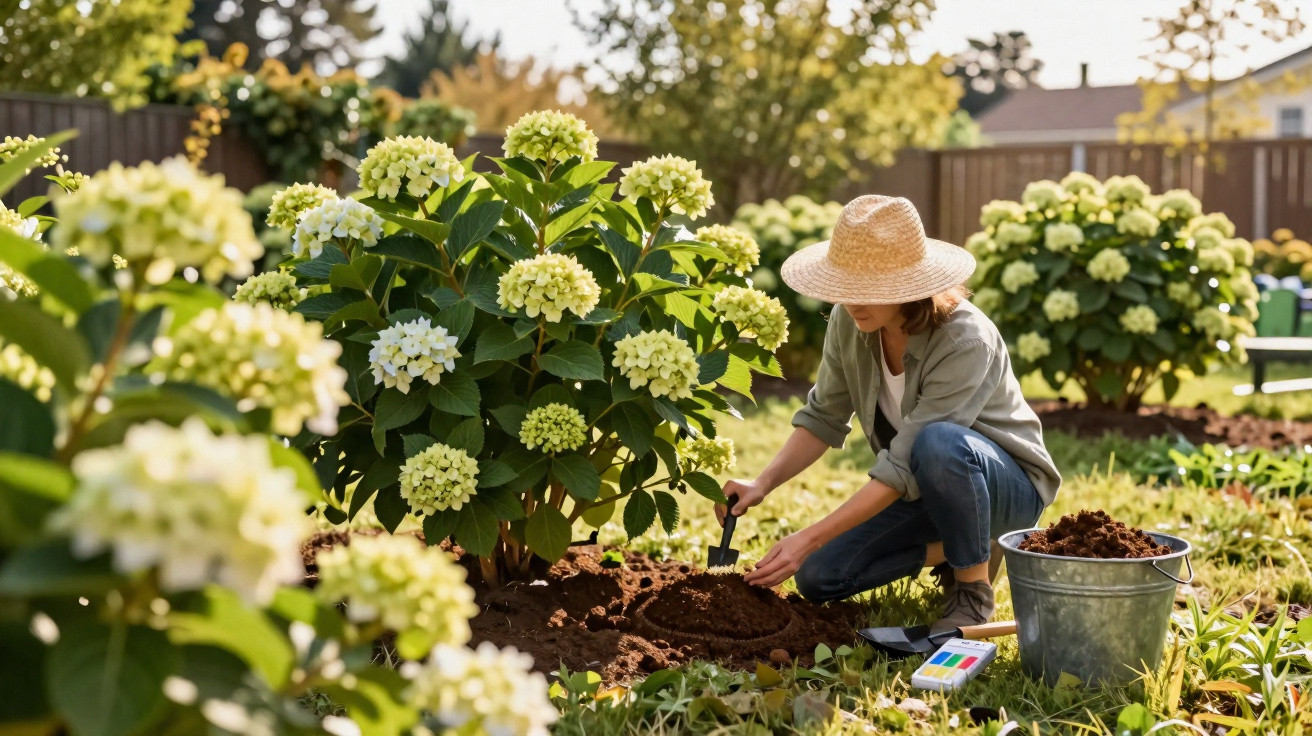
If you want your hydrangeas to carry full, colourful pom‑pom flower heads in July, the work starts in February. After winter, these shrubs wake up ready to grow. In a short window, the plant effectively chooses where to spend its energy: on leaves or on flower buds. With the right nutrient boost before March, you can tip that balance in favour of blooms.
Why hydrangeas should be “fed” before March
Hydrangeas are often seen as easy, generous flowering shrubs - but only when their nutrient supply is right. Many gardeners recognise the frustration: a thick, healthy-looking bush with deep green leaves, yet only a handful of flowers. In plenty of cases, the cause sits months earlier.
Between late February and early March, it’s decided how many flower buds hydrangeas will set in the first place.
As the plant comes out of dormancy, sap begins to rise, roots start working again, and the shrub pulls from the soil whatever it can to launch the season. If the ground is too poor, the hydrangea responds in the most practical way: it puts its effort into leaf growth, because that supports survival more than a show of flowers.
Hydrangeas growing in loose, acidic soil are among the “hungry” plants in the garden. Their root systems are relatively shallow, so they rely on a steady, dependable supply of nutrients. If that push is missing at the tail end of winter, the shrub cannot fully make up for it later in summer - and the chance of a true firework of flowers is largely lost.
The ideal feed for hydrangeas: gentle, organic and slow-release
For a strong start to the season, hydrangeas don’t need an aggressive high-speed fertiliser. What works best is a mild, even source of nutrients. One of the simplest options is often already at home: well-rotted compost.
Compost as a natural powerhouse
Mature compost acts like an all-you-can-eat buffet for hydrangeas. It provides the key nutrients nitrogen, phosphorus and potassium, alongside trace elements and plenty of organic matter that improves soil structure and helps it hold moisture.
It’s best applied as a thick “coat” around the plant:
- Layer thickness: about 7 to 10 centimetres
- Area: roughly 40 to 50 centimetres in a ring around the stem
- Timing: from late February to no later than early March
When it rains or you water, small amounts of nutrients are released from the compost and gradually move into the root zone. This avoids a one-off overload and instead gives the hydrangea a steady, gentle supply for weeks.
Suitable hydrangea fertilisers from the garden centre
Not everyone has enough homemade compost available. In that case, choosing a dedicated hydrangea fertiliser from the garden centre can be worthwhile - as long as you pay attention to the formulation and the type.
Good options include:
- organic or organo-mineral fertilisers
- long-lasting products with slow release
- a balanced NPK ratio, such as 7‑4‑5 or 8‑3‑9
The first application should still be made between February and March. The critical part is the dose. Many gardeners are tempted to exceed the recommended amount “just to be safe”. With hydrangeas, that approach backfires.
For hydrangeas, the rule is: less, but applied regularly, produces stronger plants and more flowers than a single high-dose feed.
Too much granulate - particularly when it is high in nitrogen - pushes shrubs into leaf production. The result is lots of greenery and very few flowers.
How gardeners should apply fertiliser correctly
To make sure the plant truly benefits, it’s not only the fertiliser you choose that matters - the way you apply it does too.
A ring, not a pile: the right distribution
Hydrangea roots don’t sit right against the stem; they spread in a ring around the plant. That’s why dumping fertiliser at the base achieves little. A “crown” around the shrub is far more effective.
A practical method:
- Clear away old leaves and rough debris from around the plant.
- Spread compost or fertiliser in a ring around the shrub, keeping a little distance from the shoots.
- Work it in lightly with a hand rake - loosen only the top layer of soil.
- Water thoroughly afterwards so nutrients move into the root area.
In beds, a single feed in late winter is usually enough. If you grow hydrangeas in pots, it helps to top up with a light feed once or twice during the season, because nutrients are washed out of containers more quickly.
Common mistakes when feeding hydrangeas
Many issues can be avoided with a few simple rules:
- Don’t use all-purpose fertilisers with very high nitrogen levels.
- Never mound fertiliser directly against the stem, as this can cause scorch.
- Don’t fertilise during dry, hot spells unless you water deeply afterwards.
- Avoid late summer and autumn feeding, otherwise the plant produces soft growth that is more likely to be damaged by winter cold.
All-purpose fertilisers rich in nitrogen create spectacular foliage, but leave hydrangeas with a poor flower yield.
What hydrangeas need besides fertiliser
Nutrients alone won’t produce a sea of flowers. Location and care play a major role in bud formation as well. Hydrangeas do best in a semi-shaded, sheltered spot with evenly moist, humus-rich soil. Strong midday sun combined with a lack of nutrients puts the plants under heavy stress.
Adding a thick layer of mulch - for example leaf mould or composted bark - helps the ground retain moisture and protects the fine root network. Used alongside feeding, it supports the plant and stabilises the microclimate around the roots.
Flower colour and soil: a quick look at pH
With blue hydrangeas in particular, soil pH matters. Slightly acidic soil encourages blue colouring, while more neutral ground tends to shift flowers towards pink tones. Specialist hydrangea fertilisers often include aluminium and are formulated to be mildly acidic so the blue shade remains stable.
If you want a specific colour, it helps to:
- check soil pH with a simple test kit,
- adjust if needed using rhododendron compost or acidifying feeds,
- avoid applying lime if you want blue flowers.
Why February feeding pays off in the long run
A well-nourished hydrangea doesn’t only reward you with more flowers in the current year. It also develops stronger, sturdier shoots that set up better bud sites for the following season. By feeding deliberately in late winter year after year, you build a kind of “flower account” that keeps growing.
At the same time, balanced feeding improves resilience. Strong hydrangeas cope far better with late frosts, windy spells or sudden heat than exhausted plants. There’s another benefit too: soil enriched with compost supports a lively soil ecosystem - earthworms and microorganisms continue improving structure, helping the plant root more deeply and stand more securely.
So if you’re standing in front of your still-bare hydrangeas in February, the leafless stems can look deceptively empty. Inside the plant, preparation for summer is already under way. Gardeners who support it now with the right feed set the stage for a shrub that is not only richly green in July, but also packed with rounded flower heads.

Comments
No comments yet. Be the first to comment!
Leave a Comment