
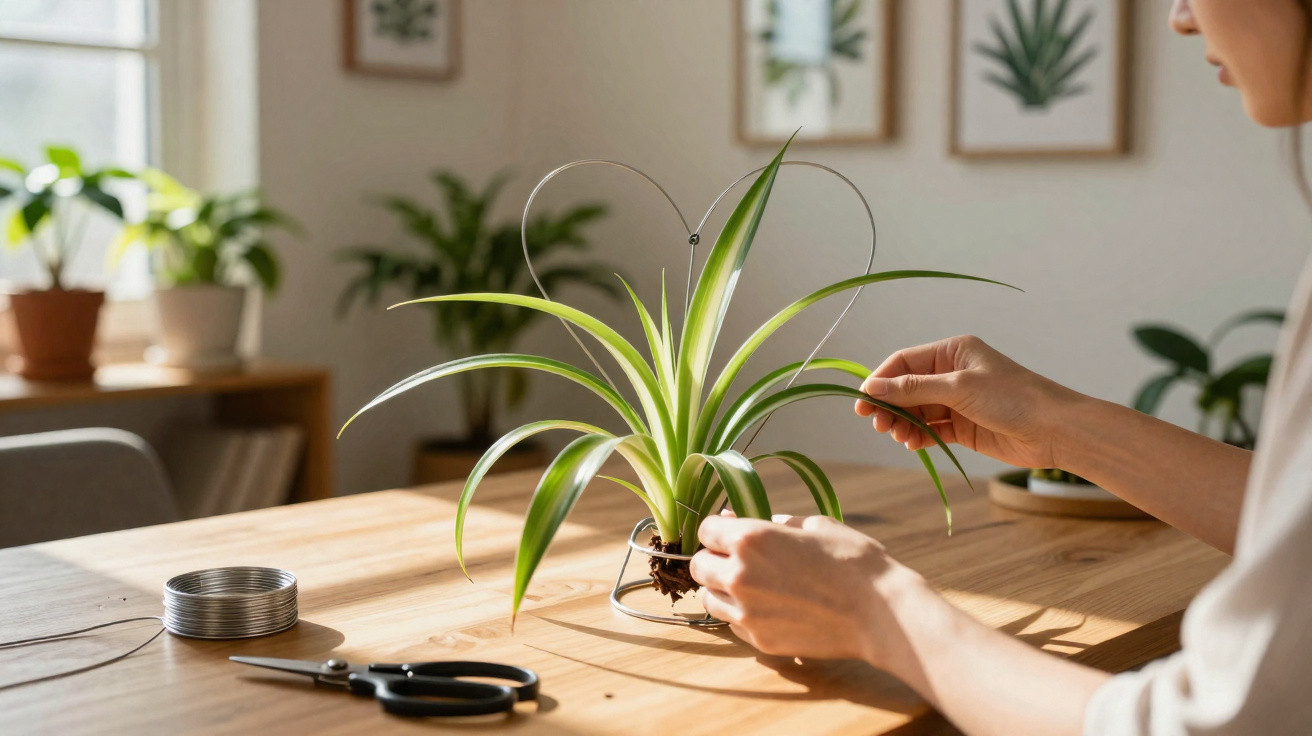
Many flats have one parked somewhere: a spider plant in a cover pot-tough, low-maintenance, but more of a background extra than the main attraction. Yet this plant has far more potential than most people give it credit for. With one deliberate tweak and a little patience, it can become a living sculpture that lifts any shelf or window ledge.
The underestimated spider plant: from background extra to statement piece
The spider plant, botanically Chlorophytum comosum, originally comes from South Africa. It grows reliably, shrugs off the odd care mistake, and it isn’t toxic to dogs or cats. That’s precisely why it’s so often overlooked: it gets put somewhere, watered now and then-and then practically disappears from view.
Look more closely, though, and it quickly becomes clear why it’s ideal for creative experiments. From the green rosette-often with white variegation-long, thin stems emerge. At the ends of these stems sit small rosettes, the so-called plantlets (offsets). Usually they simply dangle downwards and, over time, turn into a dense tangle.
"These trailing plantlets aren’t an accident, but an ideal ‘building material’ that can be shaped into circles, hearts, or even small columns."
The key is not letting the stems hang wherever they like, but guiding them on purpose. The plant itself stays the same; only the presentation changes-and suddenly the result looks like a design object.
Thinking of the spider plant as a living sculpture
If you want to reshape your spider plant, it helps to stop seeing it as just another pot plant and start treating it like a living sculpture. The stems are surprisingly flexible: you can bend and unbend them gradually without them snapping-so long as you don’t force them.
This is especially useful in smaller homes. Instead of foliage spilling over a chest of drawers, the plant can be trained upwards and used to fill awkward gaps. The effect is like a “green totem” that draws attention without taking up much space.
Aluminium wire: the invisible stage for green shapes
One of the simplest approaches uses a light framework made from aluminium wire. Slightly thicker craft wire is ideal: firm enough to hold a shape, but still easy to bend. For example, you can make:
- a closed circle
- a heart
- an oval or gently curved outline
Push the wire into the pot or rest it lightly in the compost, taking care not to disturb the roots too much. Then guide the long stems with their plantlets along the wire and secure them loosely using soft plant clips, small raffia loops, or strips cut from an old fabric tie.
"The wire almost disappears from view; the plant ‘draws’ the intended shape with its stems-like a green light painting."
Aluminium has the advantage of hardly rusting and being very light. That means the plant isn’t burdened with extra weight and still looks natural, even when trained into a defined form.
Shaping hearts, wreaths and perfectly round sculptures
Before you begin, take a quick look at your “blank”. Choose the strongest, longest stems with several plantlets-these are best for creating closed outlines.
The process is essentially like creative styling:
- Bend a wire form (circle, heart, oval).
- Bring the strongest stems to the front and lay them carefully around the outline.
- Fix the stems in place loosely, without tightening or constricting them.
- Trim off surplus plantlets and pot them up separately to root in a second pot.
Over time, the plantlets grow larger and denser until the line you’ve set out reads as a closed green sculpture. If you like, you can also plant extra plantlets around the base so you get a stronger, fuller “plinth” from which the shape appears to rise.
Braided columns: when the spider plant grows upwards
A second option doesn’t need a circle or heart at all. Here, you create a kind of living plait. Gather several long stems and braid them loosely into a column. A thin wooden cane in the middle helps the whole structure stay upright.
Benefits of this method:
- The plant gains noticeable height.
- Narrow alcoves suddenly look intentional and styled.
- The structure can be undone and re-braided whenever needed.
A braided column works well next to an armchair, at the end of a low sideboard/TV unit, or beside a slim shelving unit. In a small home, it lets you use unobtrusive spots effectively-without buying extra furniture.
Where these plant sculptures look best
Shaped spider plants need one thing above all: a position where you’ll actually notice them. A dense wreath works brilliantly as a centrepiece on a dining table; the plantlets can fall gently over the edge without blocking anyone’s view.
A heart shape makes a strong impression in the entrance area, on a console table or chest of drawers. In hallways-often kept cool and purely functional-a green sculpture like this adds warmth and a touch of humour.
The braided column suits narrow corners in particular:
- next to a TV unit
- between the sofa and a bookcase
- in a quiet corner of the home office
In small bedrooms, a mini column can sit on the bedside table and bring a bit of nature into view without stealing space. The main point remains the same: avoid harsh, direct midday sun, but aim for plenty of bright light.
Care after shaping: keeping the sculpture intact
After a makeover like this, a spider plant benefits from a little support at the start. A liquid fertiliser with a simple nutrient profile added to the watering can helps the plantlets grow and makes the chosen shape look fuller more quickly.
Basic rules for healthy plant sculptures:
- Keep the compost lightly moist; avoid waterlogging.
- Turn the pot every few weeks so all sides get enough light.
- Shorten overly long, weak stems regularly.
- Check ties now and then and loosen them if they start to cut in.
In particularly mild areas where temperatures rarely stay below about 13 °C for long, the spider plant can spend warm months outdoors for a while-sheltered from heavy rain and strong midday sun. The extra light encourages richer colour and more plantlets.
Why the effort is worth it
From a psychological point of view, a trained spider plant changes the feel of a room far more than yet another standard pot on the window ledge. It feels more personal-almost like a small project you can develop bit by bit.
At the same time, it remains ideal for people without “green fingers”. It forgives missteps, shoots again after pruning, and continuously produces plantlets you can give away or use for new sculptures. If you have children, you can involve them in shaping and pinning the stems-a low-barrier way into plant care and simple design.
If you enjoy this kind of shaping, you can later apply the same idea to other houseplants. Climbing types such as pothos or philodendron can also be guided around forms-just much more slowly. The spider plant, by contrast, responds quickly, which makes it an ideal plant to experiment with.
That’s how an “ordinary” houseplant becomes a small design project: not an expensive decorative object from a furniture shop, but a living sculpture that keeps evolving-and is guaranteed to prompt questions from visitors.

Comments
No comments yet. Be the first to comment!
Leave a Comment