
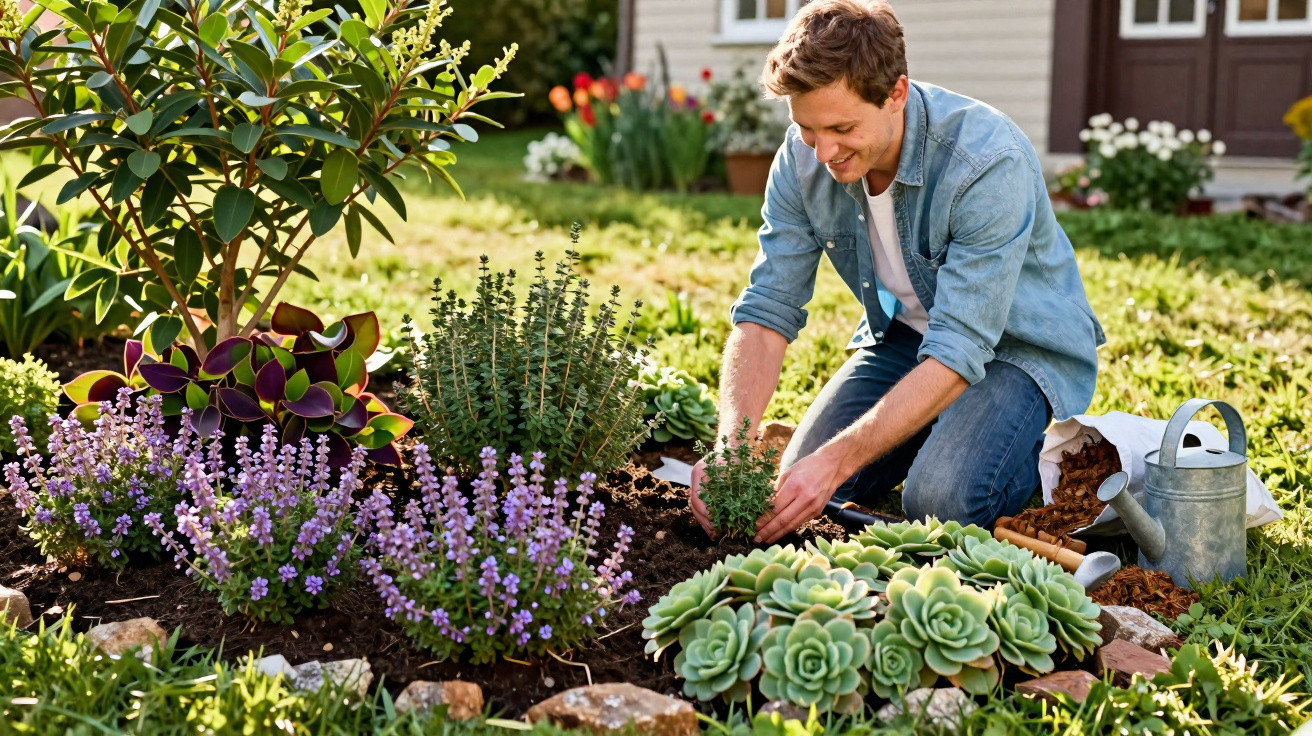
There’s a straightforward trick that can keep your garden tidy with very little effort from you.
Anyone who steps back into the garden in spring knows the familiar frustration: everything starts growing, everything turns green - and wild weeds shoot up between your perennials. Rather than spending every weekend on your knees with a hand weeder and trowel, you can tackle it in a surprisingly neat way: choose the right ground cover plants so weeds simply have nowhere to establish.
How ground cover plants effectively smother weeds
Bare soil is effectively an open invitation to anything you don’t want in a border. As soon as light reaches the ground, seeds germinate all over the place. This is exactly where ground cover plants come in: they fill the gaps before weeds get a chance.
"Ground cover plants form a living carpet layer that blocks light, protects the soil and massively slows down weeds."
These plants spread low and wide, binding the soil with a network of roots and overlapping leaves. With so much leaf cover, very little sunlight reaches the soil surface. Many weed seeds then fail to germinate at all, or they simply can’t push through the dense mat.
On top of that, the soil beneath this green cover stays damp for longer, dries out less quickly and doesn’t heat up as much. Earthworms, small soil organisms and beneficial fungi tend to thrive - which improves soil quality over time and, in turn, supports the health of the whole garden.
Why this approach is much more environmentally friendly
Planting ground cover doesn’t just save time - it’s also kinder to your garden ecosystem. Constant hoeing and scraping damages fine root networks and disrupts soil life. Chemical weedkillers don’t only affect the “troublemakers”; they can also harm wanted plants, insects and microorganisms.
Ground cover acts like a natural barrier:
- no toxins in the soil
- less soil disturbance, less erosion
- better habitat for insects and soil organisms
- more stable moisture levels - especially helpful in dry summers
The garden looks well kept, even though you’re intervening far less. Once established, the system simply carries on in the background.
The strong trio: three ground cover plants for almost any garden situation
This strategy becomes particularly effective when you combine different ground covers. That way you can cover sunny, dry, partly shaded and fully shaded areas at the same time. One proven mix brings together three types that complement each other extremely well.
Thyme carpet: fragrant protection for sunny, dry areas
Creeping thyme loves sun and heat, and prefers lean, well-drained soil. It’s ideal for:
- rock gardens and dry-stone walls
- paths and joints that get light foot traffic
- front gardens with lots of sunshine
Its small evergreen leaves knit together into a tight carpet. With every step - or even a light brush of the hand - a strong herbal scent is released. In summer, when it flowers, the surface can be covered in a haze of pink to purple blooms, which attracts bees and other pollinators.
Benefit: creeping thyme copes surprisingly well with drought. If you’ve got a hot, rather poor spot, it’s a tough ground cover that asks for very little care.
Bugle for shade: colourful soil cover under trees and along walls
For shaded or partly shaded areas, creeping bugle is a great choice. It’s often sold with deep green foliage or leaves with a purple tint, bringing colour to places where many other plants struggle.
Typical places to use it:
- around the bases of ornamental shrubs and fruit trees
- north-facing sides of houses
- border edges in the shade of hedges
In spring, small upright flower spikes rise above the leaves, usually in a cool blue. The tight rosettes make it difficult for weeds to spread between the roots of trees and shrubs. At the same time, the area looks far more cared-for than bare, mossy ground.
Robust sedum: a survivor for difficult soils
Where soil is stony, low in nutrients or hard to work, many plants quickly reach their limits. This is where low-growing sedum really shines. As a succulent, it stores water in its fleshy leaves and can cope even through extremely dry spells.
Typical places to use it:
- banks and awkward-to-reach edges
- green roofs and gravel areas
- extremely lean, stony sites
The stems lie along the ground, rooting at many points and filling gaps on their own. Within a few months, this can form a close-knit mat that needs very little maintenance.
How many plants per square metre makes sense
If you want quick results, planting density is the most important factor. If you plant too sparingly, you can end up battling weeds between young ground covers for years. A slightly higher investment at the start can save you countless hours later.
| Area | Recommended number of plants |
|---|---|
| 1 m² bed area | 8–10 plants |
| 5 m² bed area | 40–50 plants |
| 10 m² bed area | 80–100 plants |
At this density, the plants usually knit together within one season. They still have enough room to branch out with their roots without choking one another.
Planting properly: the steps you should follow
Prepare the soil and set the plants in place
Before you move ground cover into a bed, a little preparation pays off:
- Loosen the top layer of soil with a rake and remove thick roots and stones.
- Stand the pots in a bucket of water until no more air bubbles rise.
- Dig planting holes large enough for the root ball to sit comfortably.
- Position the top of the root ball level with the soil surface - not too deep.
- Firm the soil so no air pockets remain.
Pressing firmly with your hands around each plant ensures good contact between roots and soil, allowing the plants to take up water from day one.
Mulch layer: five centimetres makes the difference
Right after planting comes a key step: lay a continuous mulch layer between the young ground cover plants. Fine bark products, wood chippings or even shredded leaves are all suitable.
"A mulch layer about five centimetres thick keeps the soil moist, blocks light for weed seeds and helps ground cover plants get established."
Keep the mulch away from the stems so nothing rots. After spreading it, water generously to help the mulch settle against the soil and close any last gaps.
How to encourage faster growth
If you want to get your ground cover moving quickly, you can spread a thin layer of well-rotted compost before mulching. Compost provides nutrients that release gradually and remain available over the following months.
Especially in the first year, it’s worth watering regularly and deeply during dry periods. Once the plants have properly taken over the soil, they often need extra water - depending on the species - only during exceptionally hot summers.
What happens after one to two years
Once the carpet has closed, the maintenance workload changes noticeably. Weeds usually appear only where small gaps remain or where seeds land directly on top of the mulch. These odd seedlings can be removed with a quick pull.
The biggest advantage shows up in everyday life: instead of spending hours crouched over beds, it’s often enough to trim off the occasional spent shoot, replant a gap here and there, and enjoy the overall look. Many ground cover plants don’t require pruning, but they generally tolerate it if you need to keep areas contained or paths clear.
Practical tips and possible pitfalls
Ground cover doesn’t suit every spot or every planting scheme. Low-growing perennials can pair well with it, whereas strongly rooting woody plants may leave less space. If you grow roses or tall perennials, choose varieties that won’t swamp them.
A common mistake is soil that’s too rich. Some of the species mentioned are happier in leaner conditions. Heavily fertilised areas encourage soft, sappy growth that’s less resilient and ages more quickly. In this case, less is often more.
It gets particularly interesting when you mix ground cover with insect-friendly perennials. You’ll create not only a low-weed area, but a lively, long-lasting ribbon of flowers. Thyme carpets combined with lavender or sage, in particular, add structure and bring a steady buzz of life into the garden.


Comments
No comments yet. Be the first to comment!
Leave a Comment