
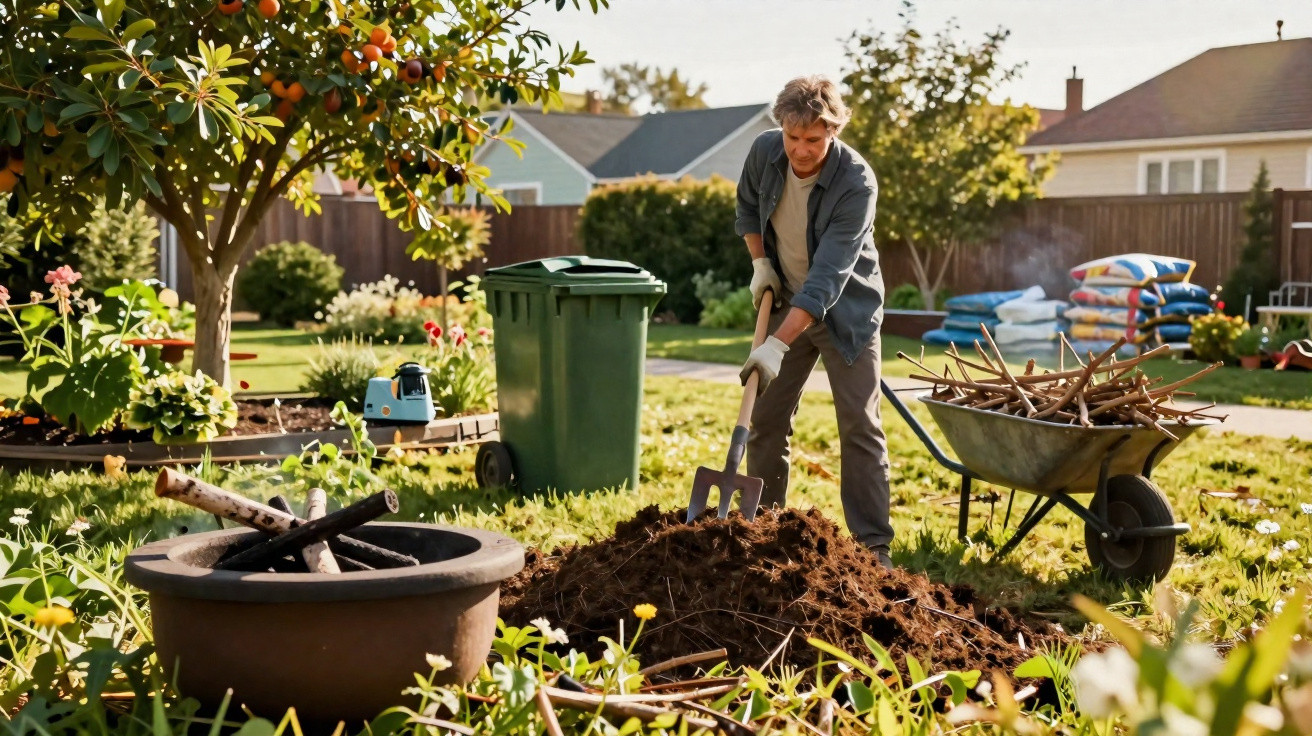
Anyone who decides to burn fallen leaves and green cuttings in their own garden in March is, in many places, already taking a risk. Several German states are letting their last exemptions expire, and other regions are preparing an outright ban. Ignoring the updated rules can mean more than a row with the neighbours - it can also lead to hefty fines.
Why burning garden waste is hardly ever permitted now
From a legal standpoint, the position is straightforward: the German Circular Economy Act generally prohibits burning garden waste nationwide. While states and local authorities can allow exemptions, the permitted windows are getting shorter - and in some areas they are set to disappear completely.
In a lot of municipalities, a transitional arrangement still applies: private gardeners may burn leaves, branches and prunings under strict conditions up to 31 March - and in some places up to 15 April. After that, it stops. If you light a fire anyway, you are committing a regulatory offence.
“Garden fires are no longer treated in law as harmless tradition, but as avoidable waste burning with clear environmental consequences.”
Environmental protection over fire nostalgia: the main reasons behind the ban
Local authorities are coming under increasing pressure. The push is not simply “green symbolism”; it is driven by a combination of tangible environmental and public health factors:
- Fine particulate pollution and smoke: Burning leaves and damp wood produces large quantities of fine particles and other pollutants.
- Impact on nearby residents: Smoke can enter homes, and children and older people often react particularly sensitively.
- Loss of nutrients: Valuable organic matter ends up as smoke instead of improving the soil.
- Fire risk: Flying sparks and wind repeatedly lead to uncontrolled fires, especially during dry spells.
In densely built-up neighbourhoods and exposed, windy locations, disputes can escalate quickly. Every spring, once the first piles are set alight, complaints to local enforcement teams and the fire service tend to rise.
Saxony-Anhalt example: fines can follow after 31 March
In Saxony-Anhalt, many municipalities still allow garden waste to be burned on private land up to 31 March - but only subject to conditions. Once that date has passed, private burning is off-limits. Anyone who ignores the rule must expect significant fines.
Typical requirements in these transitional schemes include:
- Burning only on specified days or during set hours
- Minimum distances from houses, trees and roads
- Only dry, untreated green waste (no plastic, no paper, no paint residues)
- Supervision until the fire is fully extinguished
These specifics are set out in local by-laws or regulations. If you disregard them, you cannot rely on “not knowing” as a defence.
Mecklenburg-Western Pomerania: complete ban planned from 2029
Mecklenburg-Western Pomerania shows the direction of travel. Agriculture and Environment Minister Till Backhaus has announced that burning garden waste is to be prohibited entirely from 1 January 2029. At that point there will be no seasonal exemptions.
The planned change is justified by alignment with federal waste law and by the need to protect air quality and the climate. The principle is clear: organic waste should return to the material cycle, not end up in the atmosphere.
“Leaves and green cuttings belong on the compost heap or in the organic waste bin in the long term - not on the fire.”
Other states are also tightening requirements step by step. In many municipalities, garden fires are already banned all year round, regardless of season.
What garden owners should check now
The biggest trap is relying on long-standing habits or on what neighbours say - which can easily be outdated or wrong. Rules vary from one place to another.
How to find out what applies where you live
- Check your municipality or district website
- Phone the local enforcement office or environmental office
- Look up notices in the official gazette or community newsletter
These sources usually state clearly whether garden fires are allowed, at what times, and under which conditions. Many local rules also link directly to a schedule of fines.
| Question | Typical answer from the municipality |
|---|---|
| Am I allowed to burn leaves? | Only within set periods - or not at all |
| Does this also apply to branches and shrubs? | Yes, usually to all garden waste |
| What penalties can I face? | Depending on the breach, from a warning to a high fine |
Which alternatives to garden fires actually make sense
If burning is no longer permitted, that does not mean you are stuck with an unmanageable mountain of leaves. In virtually every area there are legal ways to dispose of garden waste - or to use it productively.
1. A compost heap in your own garden
The most obvious approach is home composting. It takes some space, but it pays off over time. Leaves, grass cuttings and kitchen scraps gradually turn into nutrient-rich humus.
- Ideal for vegetable beds and ornamental plants
- Less need for bought-in fertilisers
- Less waste going into the bin
One key point: shred thicker twigs first, for example with a garden chipper. Otherwise, larger branches rot very slowly.
2. Organic waste bins and municipal collection sites
If there is no room for compost, an organic waste bin can help. Many towns and municipalities accept leaves and small amounts of green cuttings alongside food waste. For larger volumes, recycling centres or dedicated green-waste drop-off points are an alternative.
There, the material is often composted industrially or processed in biogas plants. That means energy and fertiliser are produced instead of smoke clouds and fine particulate pollution.
3. Chipping and using it as mulch
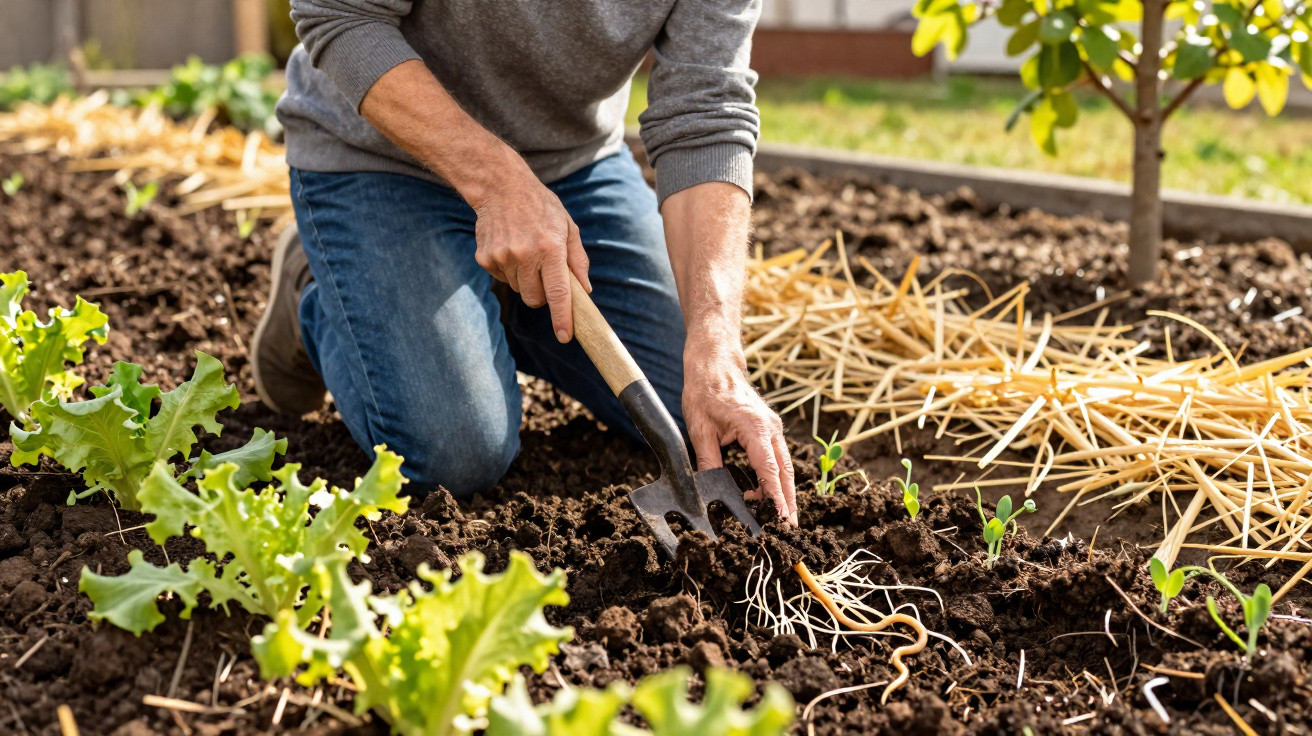
Anyone who owns - or can borrow - a chipper can keep branches and shrub cuttings in circulation on site. The chipped material works very well as a mulch layer.
- Helps the soil retain moisture
- Suppresses weed growth
- Improves soil quality over the long term
Common mistakes that can now cost real money
Many breaches are not deliberate; they happen out of convenience or lack of awareness. Typical examples include:
- “I’ll just quickly set light to the pile - no one will notice” - from the authority’s perspective, that is a clear violation.
- Burning in strong wind - the smoke plume drifts across neighbouring properties and complaints are almost guaranteed.
- Burning other waste alongside garden cuttings, such as plastic, chipboard or varnished wood - at that point it is no longer “garden waste” but waste burning, with much harsher penalties.
- Lighting fires in the evening or at night - often explicitly forbidden, even where exemptions exist.
If you are unlucky, you may not only hear from the enforcement office; in serious cases you could also be billed for fire-service call-outs if neighbours dial 112.
Why garden waste is treated as a “resource”
The tightening approach reflects a broader shift: green cuttings and leaves are no longer seen as inconvenient rubbish, but as a usable resource. That is exactly the logic of the circular economy.
“What used to go up in smoke is now meant to improve soils, generate energy or be processed industrially.”
Many specialists consider this change sensible. Organic material stores nutrients that plants need. Burning it destroys that natural fertiliser - and people then often compensate with artificial inputs, which is ecologically and economically irrational.
Practical tips: how to prepare for the ban
If you are still allowed to burn legally this year, it should not be treated as an invitation for large fires, but as a transition period. Three steps are particularly helpful:
- Plan a permanent space for composting or for storing green waste in your garden
- Check what green-waste services your municipality offers: bin, drop-off point, or collection service
- When redesigning beds, consider lower-maintenance planting that sheds fewer leaves
Those who stop burning now gain an advantage: the change will not hit all at once if and when a complete ban applies.
For many hobby gardeners, it can also be worth considering a purchase such as a garden chipper - or, if necessary, buying one jointly with neighbours. That makes it straightforward to handle larger quantities of shrub cuttings without needing a fire.

Comments
No comments yet. Be the first to comment!
Leave a Comment