
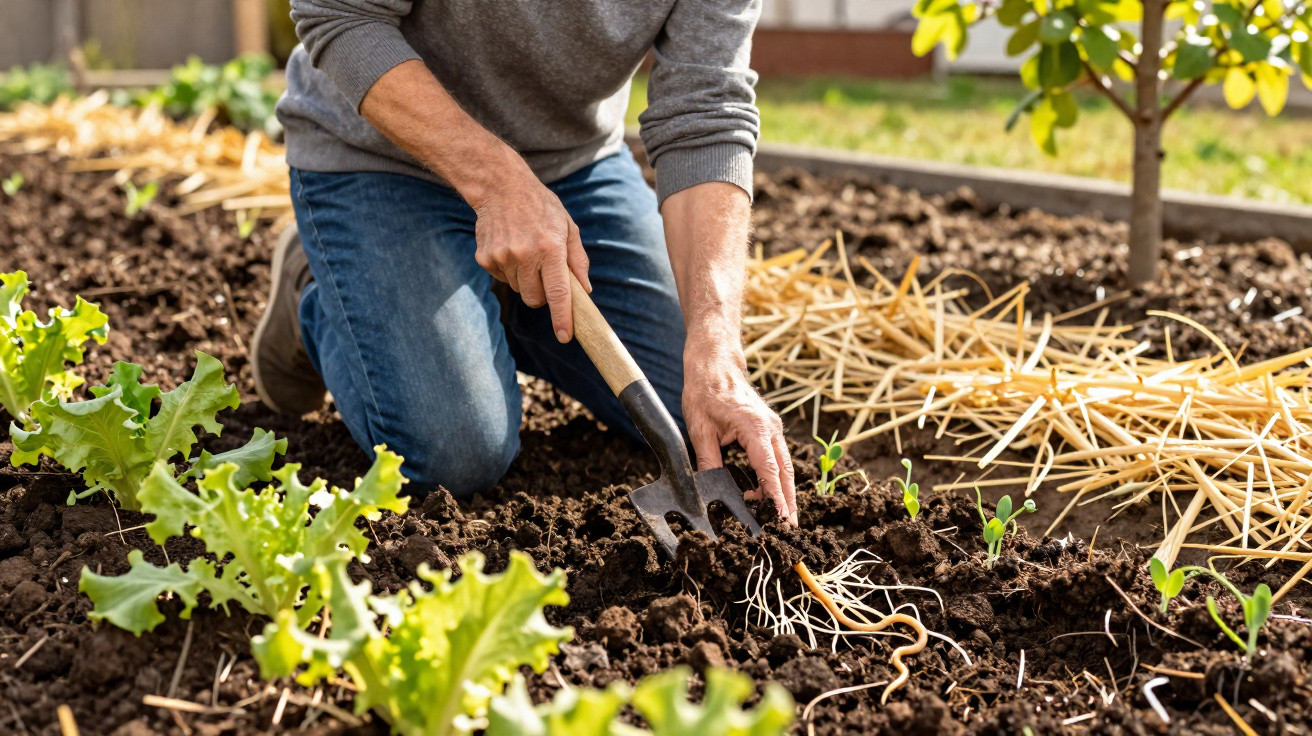
The first warm day arrives, the beds are calling, and the spade is within reach. For decades the rule seemed simple: if you care about your garden, you turn the soil in spring. New research suggests the opposite-this kind of digging disrupts a delicate underground world, leaves vegetables less resilient, and makes gardening harder work than it needs to be.
Spring ritual with a downside: why traditional digging over is a problem
Beneath what looks like an entirely “normal” bed, there is constant activity. In the top 20 centimetres of healthy soil, a single gram can contain between 100 million and 1 billion bacteria, alongside countless fungi, nematodes, tiny arthropods and earthworms. Together, they form a complex soil ecosystem.
That hidden machinery is what keeps a veg patch functioning: it breaks down dead plant matter, unlocks nutrients, loosens the ground, and helps roots access water and minerals. Each time you fully turn the soil with a spade, you pull that system apart.
"If you dig intensively in spring, you destroy the very soil organisms that are meant to produce strong plants later on."
Different soil layers are home to different specialists. Near the surface live organisms that cope with light, air and oxygen; deeper down are species adapted to little or no oxygen. When the soil is flipped over at scale, oxygen-shy life ends up on top and dies off, while surface dwellers buried down below cannot survive either.
There is also another factor that is often underestimated: fine fungal networks-so-called mycorrhizal fungi-run through the soil like an invisible web of roots. They link plant roots to nutrients some distance away. Every spadeful that turns the earth slices that web into countless pieces-like using garden shears on a power cable.
Soil life as an ally: how microorganisms strengthen your harvest
Modern soil science shows just how closely plants cooperate with bacteria, fungi and earthworms. Many types of vegetables only thrive properly when this network is left intact.
Three key helpers underground:
- Nitrogen-fixing bacteria: convert nitrogen from the air into forms plants can use.
- Mycorrhizal fungi: increase the effective root surface area by a factor of ten to one hundred.
- Earthworms: work organic matter into the soil and leave behind a nutrient-rich crumb structure.
The less you throw this system into disarray, the more reliably these “underground staff” can do their jobs. Vegetables repay that stability with stronger growth, improved tolerance of dry spells, and less vulnerability to disease.
Gentle loosening: why a digging fork beats a spade
If you still want to open the soil up, there is a tool that has become standard in many nature-focused gardens: a special digging fork with several curved tines that lifts the soil without turning it.
The technique is straightforward. Push the tines vertically into the ground, then pull the handle slightly back so the soil lifts and fractures just a little. Move a few centimetres along and repeat. The layers largely remain where they are, air gets in, and compaction starts to release.
"Loosen gently instead of turning brutally-this preserves the soil structure and keeps the tiny habitat intact."
This method has a major benefit, especially for older gardening enthusiasts: it is much kinder on the back, because you are not shovelling and throwing heavy soil. The movement is closer to levering than to strenuous spade work.
The right time to loosen the soil
For the job to feel easy, soil moisture matters. The ideal moment is the day after a good spring rain: the ground is softened, but not sloppy.
- Too dry: the soil is hard, tines struggle to penetrate, and tools can be put under damaging strain.
- Too wet: the soil sticks and smears, then compacts again as it dries.
- Slightly damp: the tines slide in well and the crumb structure stays intact.
Mulching: how an organic blanket can transform the garden
If you leave the spade in the shed, you need another way to protect the soil: keeping it covered with organic material-mulch.
Good options include:
- straw or hay (not too thick, otherwise it can attract mice),
- shredded autumn leaves,
- grass clippings left to dry slightly,
- woodchip or bark pieces (especially for paths and perennial beds).
"Mulch works like a natural protective coat: it keeps moisture in the soil, slows weeds, and feeds soil life."
The benefits are noticeable in day-to-day gardening. People who mulch their beds consistently water far less-studies cite water-use savings of 30 to 50 per cent. In hot weather, soil temperatures under mulch fluctuate much less, which takes pressure off sensitive crops such as lettuce or spinach.
At the same time, a cover prevents the hard crust that forms after heavy rain when bare soil is left exposed. Water soaks in more effectively instead of running off across the surface. As the mulch slowly rots down, earthworms and microorganisms move into it, break it apart, and increase the soil’s humus content.
Mulch in practice: how much, how often, how thick
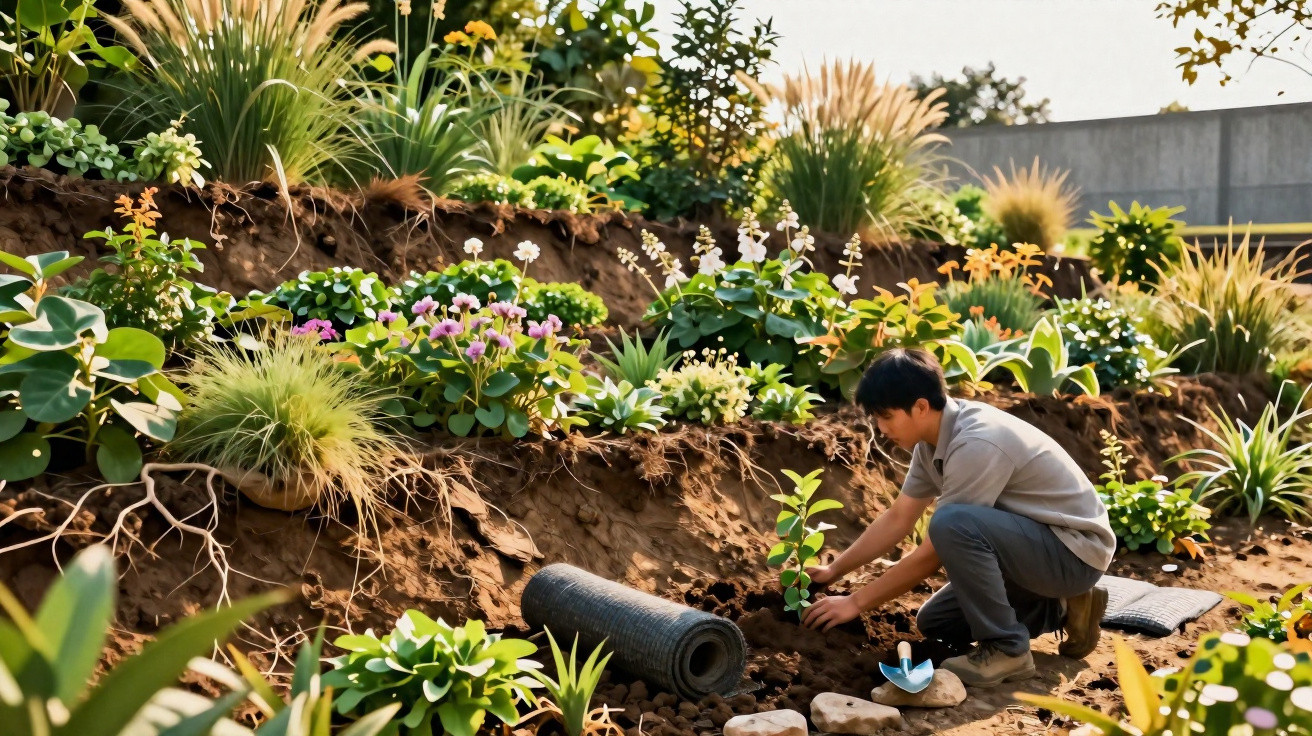
In a vegetable garden, a layer of five to ten centimetres has proved effective. Around young plants, keep it a little thinner so stems do not rot and slugs are less tempted to hide underneath.
A typical spring routine can look like this:
- Loosen the soil with the digging fork, then break up any large clods with a rake.
- Spread about five centimetres of mature compost on top-do not dig it in.
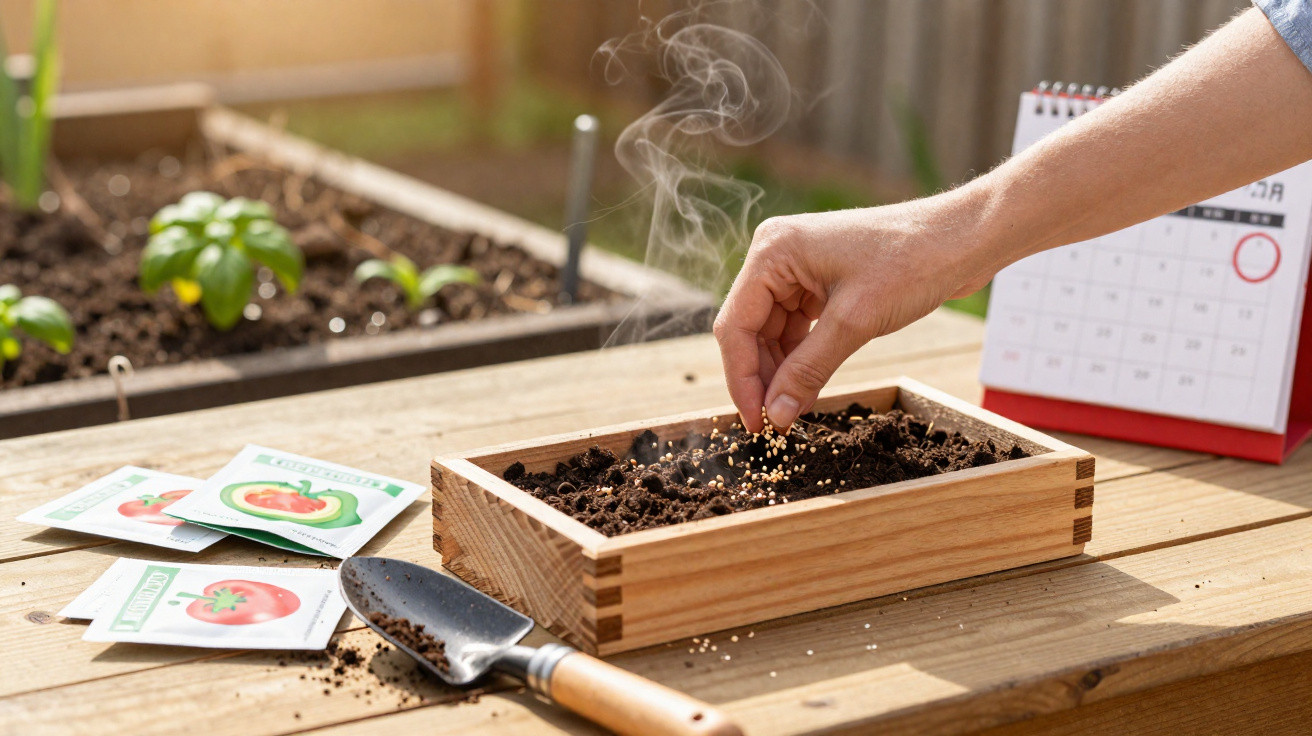
- Plant out vegetables or sow seeds.
- Mulch between rows: start thinly, then top up later.
From furrowed soil to a gentler garden: switching step by step
No one has to abandon every habit overnight. If you are unsure, set up a trial plot and treat that bed according to the newer approach: no traditional digging over, just loosening and mulching.
| Traditional practice | Gentler approach |
|---|---|
| Turn the whole bed in spring | Only loosen the soil; do not invert layers |
| Work compost into the soil | Lay compost on the surface |
| Keep beds “tidy” and bare | Keep beds covered with mulch most of the time |
| Deep cultivation every year | Deep intervention only once for severely compacted soil |
If you have heavy, clay-rich ground, it can make sense at the start to loosen more thoroughly to break up waterlogging and rock-hard layers. The key is not to let it become an annual ritual. With each season in which plenty of organic material is added from above, the structure improves on its own.
More yield with less effort: why gentle gardening pays off
Many hobby gardeners report that, after two to three years without traditional digging, their beds become noticeably looser. The spade is then used at most for planting larger shrubs. Work shifts away from heavy digging and towards lighter maintenance.
The change shows up in several ways:
- Vegetables grow more evenly and show fewer signs of stress.
- Slugs cause less damage because the beds develop more structure.
- Even after rain, the soil is easier to walk on without smearing.
- The watering can stays in the shed more often, because moisture remains in the ground for longer.
Practical tips for getting started with a gentler spring
If you want to do things differently next spring, you can begin with simple steps:
- Walk on paths only and keep feet off beds as much as possible to prevent compaction.
- After harvesting, leave plant residues where possible, or chop them up and use them as mulch.
- Grow mixed crops so roots work at different depths.
- Add small amounts of compost on top regularly, rather than digging in large amounts occasionally.
Terms such as “no-dig” or “low-disturbance cultivation” are appearing more and more in this context. They all point to the same idea: let the soil function as a living system, instead of treating it like a building site every year.
Anyone who has felt how easily a handful of loose, dark, sweet-smelling soil can be lifted from a well-kept bed quickly understands what earlier generations already sensed: soil is more than just dirt under your shoes. Treat it gently, and summer brings robust plants and baskets full of harvest-without heroic springtime spade work.
Comments
No comments yet. Be the first to comment!
Leave a Comment