
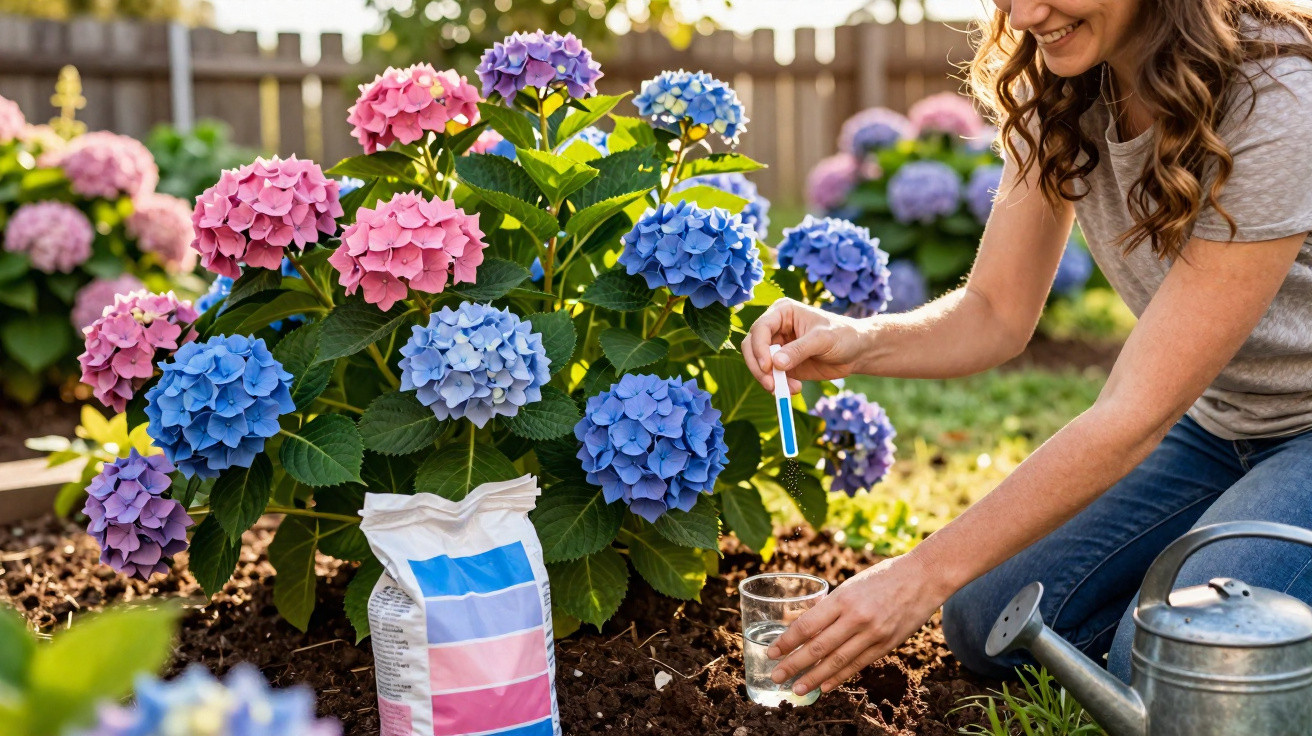
The garden may still look bare and the beds can seem as though they are asleep for winter. Yet right now, out of sight, a key choice is being made: will your hydrangeas flower a vivid blue in summer, a soft pink, or something in between? With a simple soil adjustment in late February, you can steer that outcome with surprising accuracy.
Why late February is the perfect moment for hydrangeas
Even if there is little happening above ground, plenty is already under way in the soil. The shrubs’ roots begin to ramp up again, the plant starts preparing for spring, and it gradually resumes taking up nutrients.
"If you influence the soil now, you are taking a direct role in planning the colour of the summer flowers."
If you wait until buds are already visible, the change is usually too late. Chemical reactions in soil move slowly, and the plant needs time to register the new conditions and convert them into pigments.
Late February (and, depending on your area, early March) is therefore ideal for:
- testing the soil,
- deliberately acidifying it or adding lime,
- and, in doing so, influencing the colour of the flowers to come.
A quick soil check: nothing works without the pH value
Before you add anything at all, you need a diagnosis. The deciding factor is the pH value-whether your soil is acidic, neutral, or more alkaline. It may sound like something from a chemistry lesson, but it is straightforward to check at home.
How amateur gardeners can test the pH value in minutes
Garden centres and DIY stores sell simple test kits. These commonly include a small tube, a powder or liquid reagent, and a colour chart.
Typical method:
- Use a small trowel to take a soil sample from a depth of 10–15 cm right by the base of the hydrangea.
- Mix the soil with distilled water or the supplied reagent, following the kit instructions.
- Wait for the colour change, then compare it with the chart provided.
"Knowing the pH value saves money, stress, and prevents failures in the bed."
Without this test you are, in effect, working blind with fertilisers and soil additives-which often ends in disappointing flowers or a plant that is under strain.
How the pH value really controls flower colour
The classic bigleaf hydrangea (Hydrangea macrophylla) in particular reacts to soil conditions much like litmus paper. It is not primarily the variety that decides between blue and pink, but how much aluminium is available in the soil-and that depends directly on the pH value.
The basic rule for controlling colour
- Blue flowers: The soil needs to be clearly acidic, roughly pH 5 to 5.5. In this range, aluminium becomes soluble and can be taken up by the plant. That produces strong blue tones.
- Pink to red: The soil is more neutral to slightly alkaline, from about pH 6 to 6.5. Aluminium remains bound, and the hydrangea shifts to pink or reddish shades.
- Mixed colours / purple: Around pH 6, blooms often turn mauve or mixed-sometimes unevenly, and occasionally with patchy colouring.
That is why the familiar scenario happens so often: a plant is an intense blue in its pot, then turns pink after being planted out. The potting compost was acidified and fed accordingly, the garden soil is neutral, and the hydrangea responds exactly as expected.
How to change the soil with the right products
Once you know the pH value and have a clear colour goal, it is time to act. In practice, two staples usually matter most: aluminium sulphate and lime.
How to make hydrangeas a rich blue
If your test shows a pH value above 6, your soil needs help becoming more acidic.
- Aluminium sulphate: Often sold as “hydrangea blue” or a similar name. It lowers the pH and provides aluminium in an available form. Dosage depends on the product instructions-this is one situation where it pays to read carefully to avoid going too far.
- Soil used for bog-garden plants: Pure rhododendron or heather compost is naturally acidic and works well as a longer-term amendment mixed into the root area.
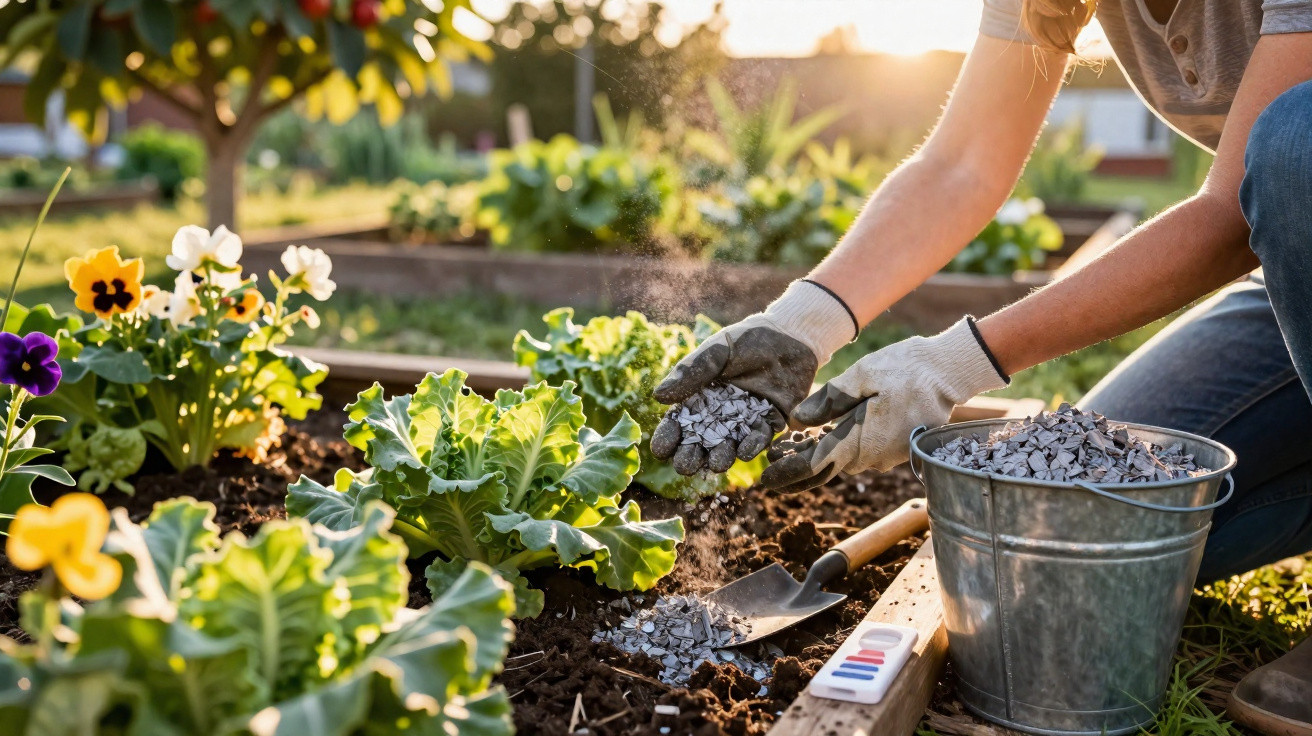
- Crushed slate or lava granules: These can help stabilise a slightly acidic pH over the long term.
Important: not every hydrangea responds as strongly as the typical bigleaf hydrangea. Panicle hydrangeas, for example, are largely unaffected by these tactics-colour there is mainly determined by the variety.
How to get bright pink and red hydrangeas
If you want strong pink flowers, you need soil that is neutral to slightly alkaline. Where soil is very acidic-such as in older bog-garden beds-raising the pH deliberately can help:
- Garden lime or dolomitic lime: Work a moderate amount into the root zone. It increases pH gradually.
- Wood ash: Contains potassium and is strongly alkaline. Use sparingly, spread it evenly, and only after checking that the ash is free from paint, varnish, or treated-wood residues.
"With lime, you slow aluminium uptake-the hydrangea ‘has to’ flower pink."
This approach can also bring back a clearer, fresher pink colour in older shrubs whose blooms have become washed out.
How to apply amendments correctly
The most common mistake is sprinkling powder on the surface and hoping for results. For a soil additive to work, it takes a little hands-on effort.
- Carefully loosen the soil around the base with a hoe or cultivator.
- Distribute the amendment evenly, without piling it directly against the stem.
- Work it in lightly, taking care not to damage thicker roots.
- Then water thoroughly-but not excessively.
Water carries the materials into the root zone. However, overwatering can wash them beyond the area where the plant actually needs them.
Why summer watering matters
Once you have adjusted the pH value, watering practices continue to influence it. In areas with hard, chalky tap water, the effect of acidic additives can be undone fairly quickly.
"For blue hydrangeas, rainwater is worth its weight in gold-or rather: worth its weight in blue."
Rainwater collected in a water butt contains very little lime, helping the soil stay acidic for longer. If you do not have rainwater storage, you can at least try to use tap water only occasionally where it is very hard, and otherwise rely on any stored rainwater you can gather.
What many people do not realise about colour-changing hydrangeas
A few practical points are easily overlooked, yet they make all the difference:
- White varieties usually stay white: Many pure-white hydrangeas respond only weakly to pH changes. They may develop a slight tint, but rarely shift colour completely.
- Colour change takes time: In many cases the full effect is only clearly visible in the following flowering season. Patience pays.
- Overdoing it causes harm: Too much aluminium sulphate can damage roots, and too much lime can lock up nutrients. Several small applications are better than one drastic treatment.
Practical ideas for your own garden
If you have several hydrangeas in one bed, you can use this deliberately and creatively. Keep one side of the bed more acidic and the other lightly limed, and you can create a gradient from deep blue through violet to pink.
The same method also works well in pots. You can mix the compost precisely, and rainwater is often easier to use. The key point with containers is checking more regularly, because pH can shift faster than it does in open ground due to feeding and the water you use.
Risks, limits, and sensible combinations
Any addition to soil alters a small ecosystem. If you lime heavily or acidify strongly over the long term, you are making a major intervention. A moderate approach is usually best: make small yearly corrections rather than a dramatic change every few years.
Mulching can support this. Bark mulch or pine needles help maintain a slightly acidic soil, whereas coarse compost tends to move things towards neutral. That way, the effect of your late-February action remains more stable, while the soil also benefits from better structure and more biological activity.
In the end, it comes down to something remarkably straightforward: one quick soil test and a short late-winter adjustment-and the hydrangea responds with a burst of colour that looks as though a professional gardener has been at work.
Comments
No comments yet. Be the first to comment!
Leave a Comment