
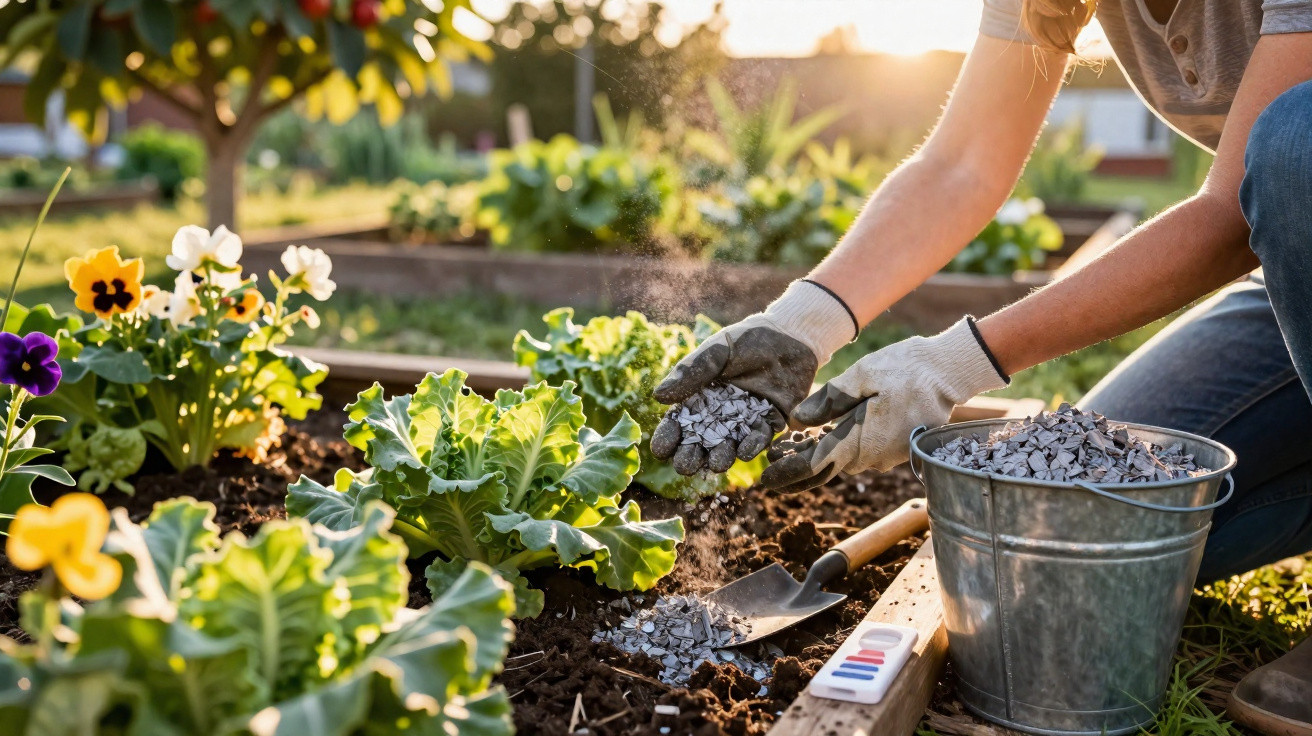
It’s a sharp morning, and your breath hangs over the gardens like mist. Next door, someone is tipping ash from a wood-burning stove-grey dust into an old metal bucket, left by the fence as if it were nothing. I stop, look at that unremarkable pile, and think: that’s pure money sitting there-just not in shiny garden-centre bags. It’s wealth in a form that smells of winter, firelight, and long evenings. Many of us throw wood ash away as though it’s dirt. In reality, it can hold more quiet value than most fertilisers on the shelf. What changes when we treat it like a precious raw material?
Why wood ash suddenly feels like a luxury in the border
Once you’ve watched a tired vegetable bed perk up after the lightest dusting of ash, it’s hard to forget. The grains seem fuller, the leaves look juicier, the colours deepen-almost as if someone secretly sprinkled in an expensive specialist feed. Wood ash isn’t magic; it’s simply concentrated natural chemistry: potassium, calcium, magnesium, plus a handful of trace elements-exactly the things we often pay good money for. And it comes straight from the wood that was warming the house a moment ago.
I know an older neighbour who never seems to appear in a garden centre. No bright boxes of feed, no glossy packaging-just his stove, a bucket of ash, and a garden that has looked better for years than any Instagram feed. In spring, he scatters the thinnest veil of ash around his berry bushes, gives the soil a quick scratch, and moves on. No fuss, no drama. Later, the redcurrants hang so densely the branches bow. If you ask him about it, he just shrugs: “It’s only ash.” There’s a quiet confidence in that look-knowledge that doesn’t need a marketing campaign.
A glance at the basic figures makes it clear why it works. Depending on the type of wood, ash can contain up to 10% potassium-a nutrient that strengthens plants, supports flowering, and helps fruit develop properly. The calcium in ash can gently reduce soil acidity and improve structure. Many soils-especially in wetter regions-suffer from nutrients washing out over time. In those conditions, a touch of ash acts like an understated upgrade. What looks like a worthless by-product of a fire turns into a calm but powerful kind of soil medicine. It’s not a miracle cure, but it’s a building block that can come surprisingly close to pricey specialist fertilisers.
How to use wood ash like a professional fertiliser
The “secret” starts with a simple rule: less is more. Wood ash should sit on the soil like fine powder, not be poured in like flour for baking. A barely visible dusting across vegetable beds, beneath berry bushes, and around roses is plenty. Choose a dry day when the ground isn’t frozen, then lightly rake it into the top layer of soil. That helps it reach the root zone instead of being washed away by the next rainfall. Sandy soils can tolerate a little more; heavy clay soils generally need a lighter hand.
We all know the temptation: you’re holding something “natural” and think more must be better. That’s exactly where problems begin. Wood ash is strongly alkaline, so overdoing it can raise soil pH too far. Sensitive, acid-loving plants-such as blueberries, rhododendrons, and hydrangeas-often react badly. Let’s be honest: hardly anyone measures soil pH before every handful of ash. Still, you do need a sense of restraint. Better to apply a thin layer two to three times a year than to create one thick grey crust in a single go.
An old stove owner once put it to me like this:
“Ash is like salt in soup-a little makes everything better, too much ruins the whole pot.”
If you want to use wood ash well, keep to a few straightforward principles:
- Use only clean wood ash-no charcoal briquettes, no painted or varnished timber.
- Never sprinkle it directly onto young seedlings; keep a little distance.
- Use no more than a handful per square metre per application.
- Particularly suitable for tomatoes, roses, fruit trees, and root vegetables.
- Don’t apply it at the same time as nitrogen-rich fertiliser; space the applications out.
Why this “waste” changes how we think about gardens and resources
Wood ash quietly tells a story about cycles we’ve nearly forgotten. Trees grow and store nutrients, the wood warms us, it becomes ash-and those minerals can return to the soil the tree once drew from. The first time you consciously close that loop, it often brings a surprisingly childlike satisfaction. Suddenly, the bucket by the stove isn’t a bin for leftovers; it’s part of a small, personal ecology. And yes, there’s a faintly rebellious pleasure in using what you already have while everyone else reaches for the latest “turbo formula” in the DIY shop.
| Key point | Detail | Value for the reader |
|---|---|---|
| Wood ash is nutrient-rich | Contains potassium, calcium, magnesium and trace elements | Understands why ash can come surprisingly close to expensive potassium fertilisers |
| Use in moderation | Apply thinly, lightly work in, avoid for acid-loving plants | Prevents damage from overfeeding and shifting soil pH |
| Keep resources in a loop | Ash from your own stove instead of bought fertiliser | Saves money, reduces waste, and strengthens the feeling of self-sufficiency |
FAQ:
- Question 1: Can I use wood ash in any garden soil? In principle, yes-provided you use it sparingly. If your soil is already very alkaline, or if you’re feeding sensitive, acid-loving plants, avoid it or check the pH first.
- Question 2: Can ash go on the compost heap? Yes, in small amounts. A light dusting from time to time can add minerals to compost. Thick grey layers, however, are harmful to microorganisms.
- Question 3: How do I know whether my wood is suitable for ash fertiliser? Use only natural, untreated wood. No painted, pressure-treated, glued, or manufactured materials, and no chipboard-those residues don’t belong in the soil.
- Question 4: Can wood ash deter pests? A dry ring of ash around young plants can slow slugs briefly, because they avoid the dry, dusty barrier. After rain, that effect fades quickly.
- Question 5: What’s the right way to store wood ash? Keep it dry and safe. Ideally, store it in a metal bucket with a lid until it has fully cooled. After that, you can keep it in a bucket or sack and use it gradually in the garden.

Comments
No comments yet. Be the first to comment!
Leave a Comment