
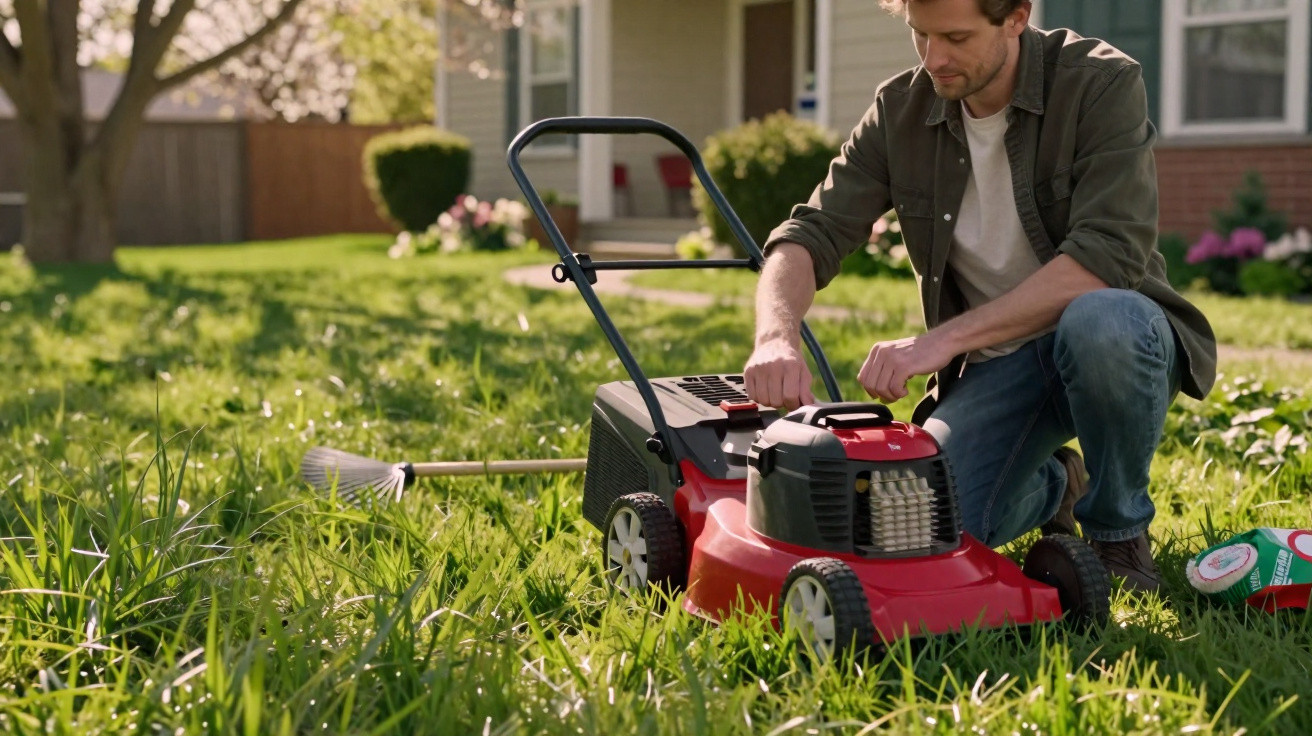
Many garden owners simply wait “until it’s properly warm” before they reach for the lawnmower. That’s exactly where things go wrong. If you plan one very specific, very gentle step in March - or shortly afterwards depending on where you live - you set up the foundations for a dense, resilient lawn that copes far better with summer heat and dry spells.
Why the first cut in spring sets the tone for the whole summer
After winter, your lawn is carrying plenty of baggage: bent blades, tired tips, leftover leaves and dead material. To the eye it may only look “a bit scruffy”, but for the grass plants it acts like a brake.
“An early, deliberately high cut in March works like a wake-up call: old material off, young shoots to the front.”
A light trim at this point triggers several benefits at once:
- the plant shifts its energy into fresh side shoots
- the turf thickens up and closes gaps in the soil
- a denser sward shades the ground more, helping to prevent it drying out
- weed seeds get less light and germinate less readily
A common mistake is taking far too much off on that first mow. It may look “neat” at a glance, but it seriously weakens the grass. Professionals call this “scalping”: the turf is shaved almost down to the soil, sometimes leaving patches of bare earth.
The knock-on effects are immediate: the ground warms up faster, dries out faster, and weed seeds get ideal conditions. On top of that, the sensitive “heart” of the grass blade - the crown - is left exposed. A late cold snap or strong sunshine can then turn whole areas grey or brown.
The right timing: your lawn decides, not the calendar
Many guides throw out dates such as “from mid-March” or “from early April”. More reliable is paying close attention to your own garden. Whether you’re near the coast, in a river valley or in the uplands, lawns wake up at different speeds.
Look for these signs before you mow for the first time:
- the soil is no longer muddy and feels firm underfoot
- after you step on it, the blades spring back upright
- the area looks mostly fresh green rather than yellowish
- ночные frosts become less frequent and daytime temperatures are often above 10 °C
- the blades are roughly 11–12 cm tall
In practical terms, that often means late March in milder areas, and closer to early April in cooler spots or hilly regions. If you follow what you can see in the lawn, you’ll do better than sticking rigidly to a date.
How to set up the lawnmower correctly for the first cut
Before you start, a quick technical check is worth it. A blunt blade tears the grass rather than cutting it cleanly, which leads to yellow tips and makes the lawn more vulnerable to disease.
- Sharpen the blade: Either do it yourself (whetstone/file) or take it to a specialist.
- Clean the deck/housing: Remove old, damp clippings and soil so nothing blocks up.
- Check safety: Quickly inspect the cable, plug, fuel line or battery fitting.
- Set the highest cutting height: On the first pass, the mower should be set as high as possible.
Many manufacturers only label cutting heights as numbers. As a rough guide, the first cut of the year should finish at around 7–8 cm. That way you remove mainly the old tips, while the blade still has enough leaf area to produce energy.
The “one-third rule”: a small trick with a big impact
Garden professionals rely on a simple rule of thumb that many hobby gardeners ignore: never remove more than a third of the blade length in one go.
“If the lawn is at 12 cm, the first cut should take it down to no less than 8 cm.”
Why be so cautious? If you cut far more than that, the plant suddenly loses a lot of leaf. Photosynthesis slows, the lawn struggles, and it becomes more sensitive to heat, drought and foot traffic.
In practice, that means:
- set the first spring mow very high
- if needed, mow a second time 1–2 weeks later, slightly lower
- for summer, gradually work towards a day-to-day cutting height of about 4–5 cm
How to mow properly the first time
The day you choose matters too. Ideally, mow on a dry day with light cloud cover.
- Avoid wet grass: Damp blades stick together, the cut turns ragged, and the blade/deck clogs.
- Not in the midday heat: Straight after mowing, strong sun stresses the fresh cut edges more.
- Keep a steady pace: Walk slowly and evenly rather than racing the mower across the lawn.
Clippings always spark debate. On the first cut - which is only a light trim - you can usually leave the short pieces on the lawn, especially if you mulch or if a standard rotary mower chops them finely. Small fragments break down quickly and return nutrients.
Only if the lawn has grown very long, or your mower tends to “chunk” the grass rather than shred it, is it better to collect the clippings. Thick layers otherwise sit like a blanket on the turf, trap moisture and encourage fungal disease.
What a March cut does for summer heatwaves
The real payoff shows up months later. With an early, gentle cut, grasses branch more strongly. The turf closes up and the soil is left hardly exposed. This creates a natural microclimate just above the ground.
“A dense lawn holds moisture in the soil for longer and shields the roots from extreme temperatures.”
If you give your lawn this “wake-up call” in March and April, you often notice by July:
- fewer brown patches even during heatwaves
- noticeably less clover, dandelion and other common lawn weeds
- tougher turf that copes better with footfall, children and barbecues
In very exposed places, you’ll rarely manage without any watering at all. But a well-prepared lawn needs significantly less water to keep looking decent. Many gardeners report they can water less often when the sward has been thickened early in the year.
What else you can do before or after the first cut
If you’re already out with the mower, you can add one or two extra care steps if they’re needed. They aren’t mandatory, but they can noticeably improve the lawn’s condition.
Sweep or rake the lawn
Before mowing, it’s worth a quick pass with a fan broom or lawn rake. This helps remove:
- old autumn leaves
- small twigs
- thicker moss or thatch mats on the surface
Your mower is less likely to clog, and the grass gets more air. Proper scarifying in March is only advisable on lawns that are well dried out and strong; often, a gentle comb-through is more than enough.
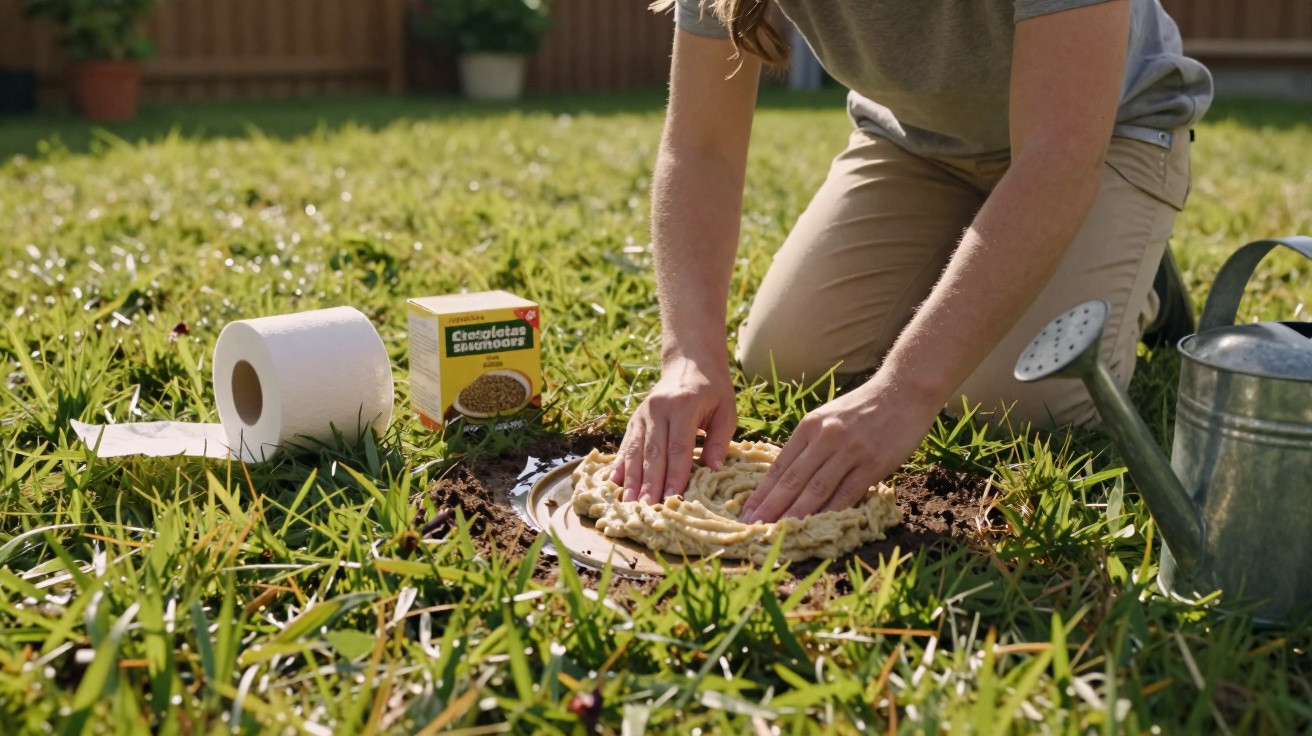
Spot overseeding for bare patches
After the first mow, you can see the lawn’s true condition. Small bare spots become much more obvious. This is the moment to overseed them, ideally using a specialist lawn overseeding mix.
Method:
- lightly loosen the area (with a rake/hoe)
- sprinkle on a little seed
- cover thinly with soil or a fine substrate
- keep evenly moist over the next few weeks
Typical spring mistakes - and how to avoid them
| Mistake | Result | Do this instead |
|---|---|---|
| mowing too early on wet ground | wheel ruts, compacted soil, yellow stripes | wait until the soil is firm and the blades are dry |
| cutting extremely short the first time | scalping, scorched areas, more weeds | follow the one-third rule and choose a high setting |
| using blunt blades | frayed blades, higher disease risk, poor appearance | sharpen or replace the blade before the season starts |
| leaving thick clippings behind | rot, fungal problems, brown patches | only mulch fine clippings; collect the rest |
Why this “unspectacular” step makes such a difference
At first glance, the first spring cut seems unremarkable. No new fertiliser, no expensive kit, no high-tech solution. That’s exactly the appeal: with a well-prepared mower and a deliberately high first mow, you steer growth in the right direction before problems develop.
If you build this small task into your routine every March (or just after), you gradually create a stable, hard-wearing lawn. Feeding, watering and scarifying then become add-ons - not a desperate attempt to rescue a weak, patchy area.
In the end, the gap between “it’ll do” and “wow, what a lawn” rarely appears in high summer. It starts the moment you set the mower high for that first spring cut - and give your lawn the starting signal for a strong season.

Comments
No comments yet. Be the first to comment!
Leave a Comment