
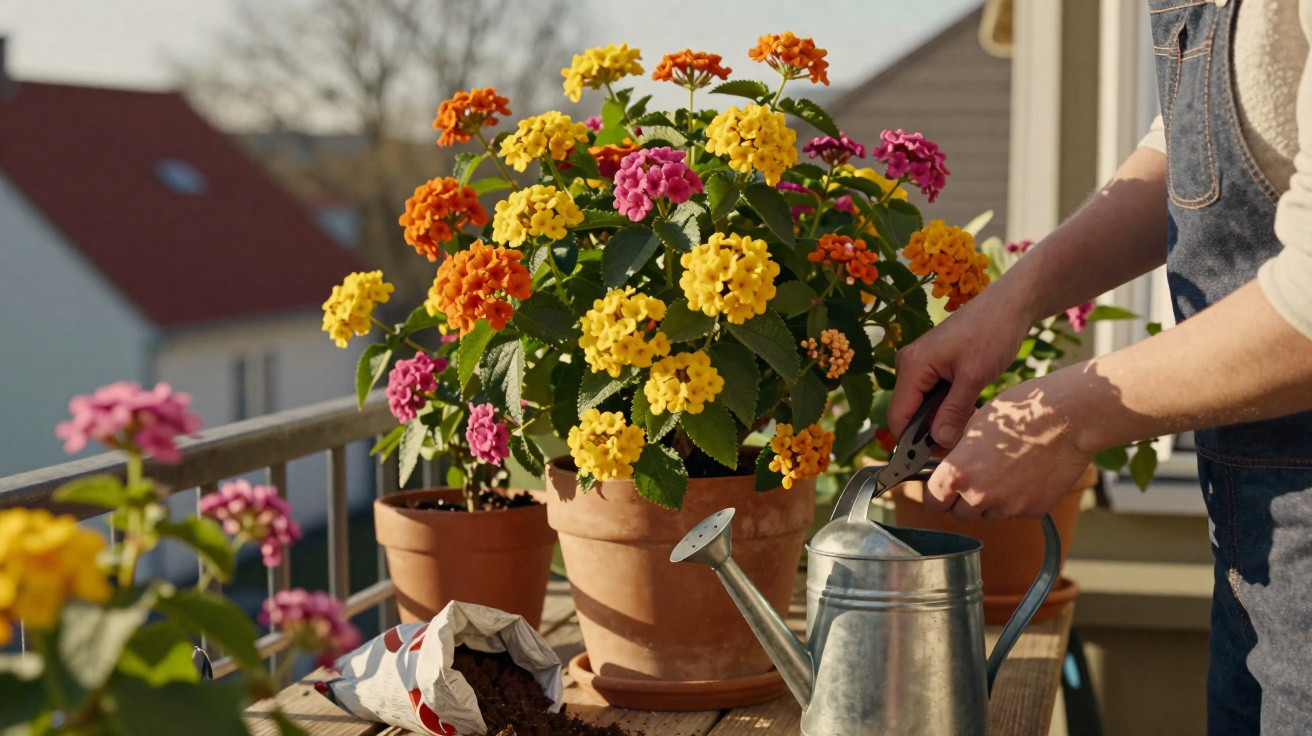
If you’ve ever stared out at a bare garden in January or November and felt deflated, it’s easy to assume nothing can offer colour for long. In reality, there are plants that flower for what feels like non-stop. One of the best known is the lantana shrub, a true ever-bloomer.
Originally from the tropics, lantana can still thrive in UK gardens, on patios and on balconies - provided you follow a few simple rules.
What’s really behind this ever-bloomer
The lantana shrub is a small, sun-loving ornamental shrub from tropical parts of the Americas and Africa. In its native habitat it often grows like a wild roadside bush. Here, it usually stays more compact and is most often grown in pots or planted into borders.
Its signature feature is the dense flower head: lots of tiny individual flowers packed tightly together to form a round, sometimes slightly domed cluster. The striking part is that the flowers can shift in colour over time. A single cluster might open in a strong yellow, turn orange a few days later, and then move into pink or violet.
“The shrub often looks as if several plants are growing into one another - so many shades are mixed at the same time in a single ball of flowers.”
The blooms are rich in nectar, making the plant popular with bees and bumblebees - and especially with butterflies. After flowering, small berries develop and can attract birds. In other words, it adds not only colour, but also wildlife activity to the garden.
Why this shrub is a real gamechanger in the garden
Lantana’s biggest advantage is its exceptionally long flowering period in mild climates. In southern Europe you’ll often see it in bloom all year in parks and along roadsides. In Germany, the length of flowering depends largely on frost and light levels; even so, it typically starts in late spring and continues into autumn - noticeably longer than many classic bedding plants.
If you live in an area with little frost, or you overwinter lantana in a bright, sheltered place, you can enjoy colour for almost the whole year. Paired with evergreen shrubs, it can make even a January garden look far less bleak.
Another benefit: the shrub is considered tough and forgiving, as long as it gets enough sun. It copes with short dry spells, manages in relatively poor soils, and generally demands much less attention than many lush summer bloomers.
“For anyone who doesn’t have much time for high-maintenance gardening, lantana delivers an almost cheeky return in flowers for the effort you put in.”
Position, soil, watering: how to grow it successfully
The right spot in the garden or on the balcony
This shrub wants sun - and plenty of it. The more direct sunlight it receives, the fuller and longer the flowering tends to be.
- Position: full sun, sheltered from strong winds
- Soil: loose, well-drained, and on the lean side rather than heavy and rich
- Problematic: waterlogged, compacted soils where moisture sits for a long time
If you only have a north-facing balcony, this plant is unlikely to perform well. On south-facing balconies or in front gardens that get sun all day, it really comes into its own.
Watering and pot size
Right after planting, young lantana needs a little more care. For the first three to four weeks, keep the root area evenly and lightly moist so the plant can anchor itself properly.
After that, it’s better to water less often but thoroughly, rather than giving small amounts all the time. Let the top layer of compost/soil dry out between waterings. Permanently wet soil encourages root rot and weakens the plant.
For container growing, pots with a volume of around 7 to 10 litres work well. That gives the roots enough room without leaving the compost wet for too long. On a balcony, one or two pots can create an impressively strong splash of colour.
If you plant in the ground, leave 50 to 100 centimetres between plants depending on the variety, as the shrub can spread quite a bit over time.
Pruning and propagation - no harder than a quick geranium check
To keep the shrub compact, prune it back in spring once hard frosts are no longer expected. Old, woody growth or very long shoots can be cut back more firmly.
After phases of very strong growth, a second, light trim in summer can help maintain shape and encourage fresh flowering. If you leave it too long, lantana can start crowding other plants in the border.
You don’t need specialist kit to propagate it. A sharp knife, a small pot and a free-draining growing medium are enough:
- Choose semi-ripe shoots in spring (not too soft, not too hard).
- Cut 8 to 12 centimetres long cuttings.
- Remove the lower leaves so nothing rots in the compost.
- Insert into a pot of loose, sandy, humus-rich compost.
- Keep lightly moist (never soggy) and place somewhere bright, out of harsh midday sun.
After a few weeks, new roots should form. With this method you can turn one plant into several - ideal for planting up matching balcony displays or filling out an entire bed.
Important warnings: it’s not entirely harmless
As easy-going as it appears, lantana has drawbacks. Many varieties are considered poisonous - particularly for pets such as dogs and cats, and also for small children. The leaves and berries contain substances that can cause stomach and intestinal upset if eaten, and in extreme cases more serious poisoning.
“If you have small children or free-roaming pets, choose the position carefully and play it safe.”
A sensible approach is to place it where children cannot reach it without supervision. On a balcony, for instance, you can grow it in higher planters or hanging baskets. In the garden, it’s better in beds that are not right next to a sandpit or trampoline.
In warmer regions, lantana can behave partly like an invasive species. It may spread rapidly, push out native plants and dominate larger areas. If you have a garden in southern Europe or spend long periods there, check local guidance and recommendations.
How to stage this ever-bloomer for maximum visual impact
Lantana suits both romantic cottage gardens and modern roof terraces. The key is how you pair it with other plants.
| Location | Suggested combinations | Effect |
|---|---|---|
| Balcony | Pots with lantana, plus trailing petunias or verbena | A dense cloud of colour that draws insects |
| Border edge | Planted in a line or staggered at 60–80 cm spacing | A bright line of blooms as a living border |
| Mediterranean-style bed | Lavender, sage, scented pelargoniums | Colour contrast alongside aromatic foliage |
| “Nectar corner” | Several shrubs, complemented with butterfly bush | A magnet for butterflies, bees and other pollinators |
If you specifically want to support insects, you can create a kind of “nectar station”: several lantanas combined with perennial favourites such as coneflower, stonecrop or scabious. That creates a buffet from June to October that many pollinators will use.
Practical tips for beginners and experienced gardeners
If you’re new to gardening, it’s worth starting with lantana in a pot. That way you can see how it responds to your local conditions. If winter turns very cold, you can move the container into a bright, frost-free space. In regions that regularly see double-digit sub-zero temperatures, this is close to essential if you want the shrub to last for several years.
More experienced hobby gardeners often use lantana as the centrepiece in mixed container planting: the shrub in the middle, surrounded by trailing plants that spill over the rim. The result is a small “fountain” of flowers from May into autumn, with relatively little maintenance.
If sustainability matters to you, water with collected rainwater and choose peat-free compost. In well-prepared, loose soils, the plant naturally needs watering less often. During heatwaves, a thick mulch layer of bark chips or shredded prunings pays off: it holds moisture in the soil and shields the roots from extreme temperature swings.
One point that’s often underestimated is feeding. While lantana will grow in poorer soils, it benefits from modest nutrition. A slow-release fertiliser in spring or occasional liquid feed in the watering can helps maintain flowering strength without pushing the plant into lots of leaf growth at the expense of blooms.
Follow these basics and you’ll have a shrub that offers far more than a single season of colour. Between grey winter days and dusty, hot midsummer spells, it brings what many gardens lack: colour, structure and the lively hum of insects - with surprisingly little effort.



Comments
No comments yet. Be the first to comment!
Leave a Comment