
…yet a near-indestructible fruit tree from Asia is suddenly capturing the attention of hobby gardeners.
While traditional fruit trees struggle through heatwaves and water shortages, a long-overlooked exotic species seems to thrive precisely under those conditions. The jujube tree, also known as the Chinese date, is already being touted in specialist circles as a “fruit tree of the future” for dry gardens. So what makes it so resilient - and how can you successfully grow this climate champion in your own garden?
Why orchards buckle during heatwaves
Recent summers have made it clear just how fragile many familiar varieties can be. In plenty of areas, rainwater tanks run dry, sprinkler bans loom, and stressed fruit trees drop their crop prematurely. Shallow-rooting species such as apple and cherry, in particular, often find extended dry spells difficult.
On top of that, many home gardens sit on soils that are low in nutrients, compacted, or very sandy. In exactly these conditions, more sensitive fruit varieties quickly reach their limits. If you still want a harvest, you need woody plants that can cope with little water, wide temperature swings, and poor soils.
“A fruit tree that withstands frost down to -25 degrees, heat up to 40 degrees and months of drought sounds like a fantasy - the jujube tree comes surprisingly close.”
The jujube tree: a Chinese date with real future potential
The jujube tree (Ziziphus jujuba) originates from northern China and Mongolia. There, harsh winters and scorching summers paired with very dry air are normal - and that environment has shaped the species. It is considered exceptionally adaptable and notably tough.
In southern France, there are already specimens more than a hundred years old that manage without any meaningful care. That longevity is a strong sign of how permanently the tree can establish itself in one spot. In warmer parts of Germany - wine-growing regions, sheltered courtyards, and urban heat islands - it is now seen as a genuinely viable choice.
What makes the jujube tree so hardy
- High drought tolerance: Once it has rooted in properly, the tree gets by with very little water.
- Low soil demands: It tolerates poor, sandy, or compacted soils, provided they drain well.
- Frost-hardy and heat-resistant: In its native range it survives severe frosts and extreme summer heat.
- Very low disease pressure: So far, only a small number of pests and diseases are known to cause serious problems in gardens.
- Reliable annual cropping: It is self-fertile and does not tend towards biennial bearing, meaning it fruits every year.
That matches what many gardeners are looking for right now: a fruit tree that doesn’t constantly “call” for the watering can, yet still produces dependably.
What do jujubes taste like - and how can you use them?
At first glance, the fruits look a little like small dates, which is where the name Chinese date comes from. Depending on variety and ripeness, they range from greenish to reddish-brown. The flesh tastes like a cross between apple and date: crisp, slightly floury, gently sweet, with a delicate aroma.
In their countries of origin, jujubes are eaten fresh, dried, or processed. They work well as:
- Snacks straight from the tree
- Dried fruit for muesli or baking
- Chutneys and sweet-and-sour sauces
- Tea blends and syrups
- Jams and jellies
If you like the flavour, the tree becomes a versatile addition to the usual fruit selection.
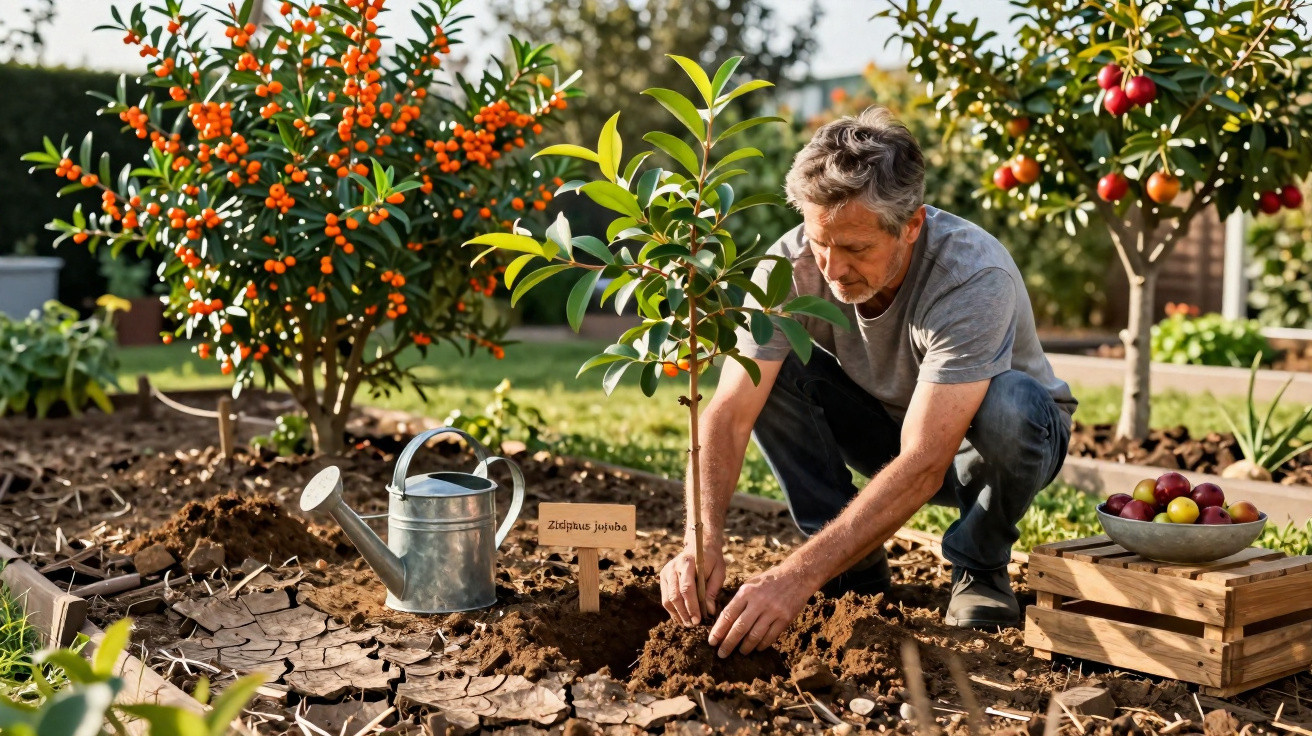
How to plant successfully in spring
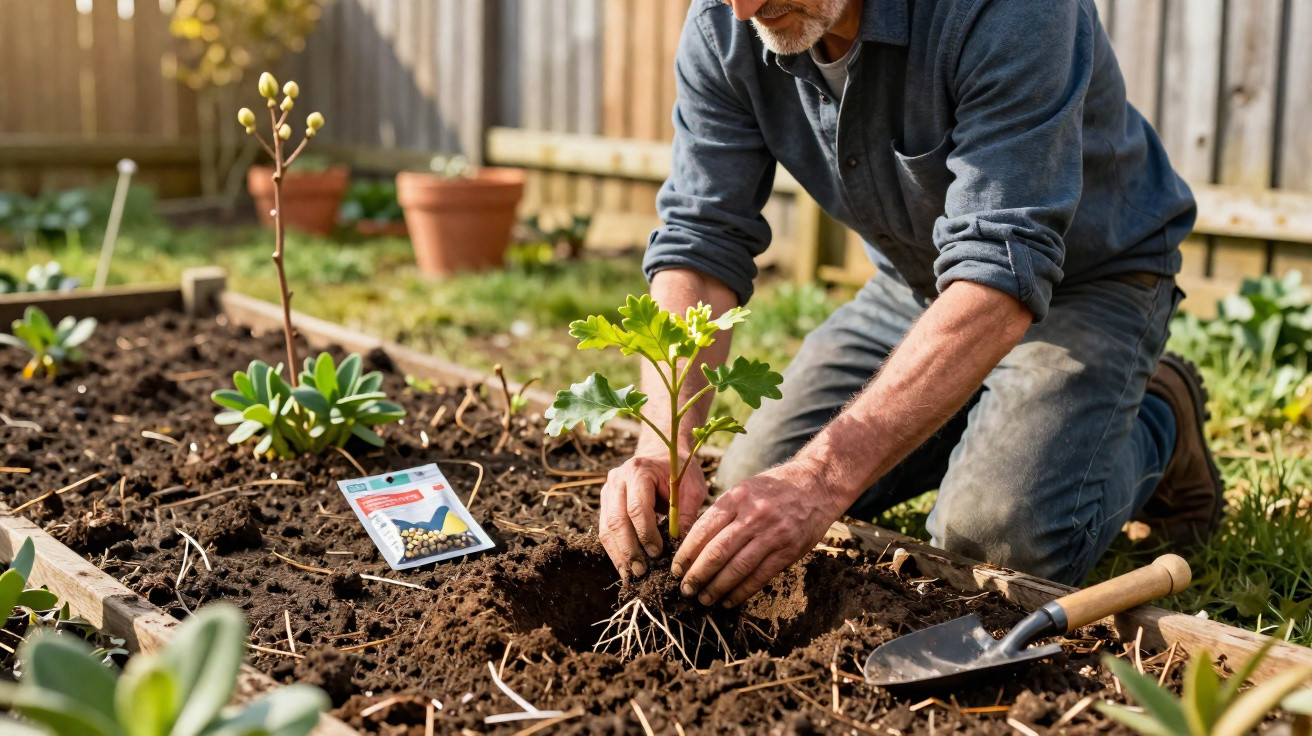
Spring is the best time to plant, once the ground is no longer frozen and has started to warm up. That gives the tree until midsummer to form new roots and settle in.
Step-by-step guide for hobby gardeners
- Choose the site: Sunny to full sun, sheltered from wind, with no permanently waterlogged soil.
- Dig the planting hole: At least twice the width and depth of the root ball.
- Improve the soil: Mix the excavated soil with mature compost or well-rotted farmyard manure - but don’t overdo it, as the tree copes well with lean soils.
- Position the tree: Loosen the root ball and set the tree so the root collar sits level with the surrounding soil.
- Backfill and firm in: Refill with soil and gently firm it down so no air pockets remain.
- Water in: Water thoroughly straight after planting, then keep the soil lightly moist during the first year.
After this establishment phase, water needs drop noticeably. In many cases, only occasional watering during extreme periods is needed.
The perfect trio for a “dry orchard”
If you want to plan bigger, you can pair the jujube tree with other drought-tolerant fruiting shrubs and trees. A particularly appealing combination is jujube, sea buckthorn, and pomegranate.
Sea buckthorn: a vitamin C powerhouse for poor soils
Sea buckthorn (Hippophae rhamnoides) occurs across Europe and Asia on harsh, sandy sites. It thrives in sun, wind, and dry conditions. Through a symbiosis with soil bacteria, it fixes atmospheric nitrogen and enriches the soil - effectively acting as a natural fertiliser source.
Its bright orange berries ripen towards the end of summer and are extremely rich in vitamin C. For birds, they provide valuable food well into winter; for people, the sharp-tasting fruit is mainly used for juice, purée, and jelly.
Pomegranate: a Mediterranean guest with surprising toughness
The pomegranate (Punica granatum) comes from the Mediterranean region. Many varieties cope unexpectedly well with Central European conditions, as long as they are given a warm, sheltered position. In protected spots, hardier types tolerate temperatures down to around -10 degrees.
It prefers very sunny sites and well-drained soils, so it can be grown in relatively poor ground. The fruit usually ripens between late September and October, neatly extending the season alongside jujube and sea buckthorn.
| Woody plant | Ripening period | Strengths in a dry garden |
|---|---|---|
| Jujube tree | October to November | Highly drought-tolerant, low susceptibility to disease |
| Sea buckthorn | Late summer | Improves the soil, extremely robust, wildlife-friendly |
| Pomegranate | Late autumn | Heat-loving, highly adaptable, attractive fruit |
If you combine these three species thoughtfully, you can spread harvesting over several months while significantly cutting back on irrigation.
What to keep in mind for ongoing care
Even a jujube tree isn’t completely maintenance-free. A few points are worth attention:
- Pruning: A light shape prune after harvesting keeps the crown open and supports fruiting.
- Mulch: A thin mulch layer of grass clippings or leaves reduces evaporation and protects the soil.
- Young-tree protection: In harsher regions, a light trunk wrap (for example, horticultural fleece) is advisable for the first few winters.
- Container growing: In very cold areas, a pot-grown tree can make sense so it can be overwintered frost-free.
Compared with apple, pear, or peach, the workload is still modest. Spraying against fungal diseases or pests has, so far, rarely been necessary.
Risks, limitations and sensible additions
As with any plant that suddenly becomes fashionable, practical experience can shift over time. As a species spreads, pests and diseases often appear that previously weren’t an issue. Different varieties also react differently to hard frosts or late spring frosts. If you are planting in a borderline climate, you should therefore expect occasional losses.
The jujube tree is especially interesting when paired with other climate-adapted species: figs against warm house walls, robust almonds, vigorous nut trees, or olives grown in containers. Step by step, this approach can create an orchard that needs far less water while still delivering generous yields.
For many hobby gardeners, this shift represents a real change in mindset: moving away from thirsty varieties that are increasingly difficult to carry through summer, and towards trees and shrubs that are naturally adapted to heat and drought. The jujube tree has become a symbol of that trend - and that is why it is, quite rightly, turning into the new spring obsession for gardeners battling dry conditions.

Comments
No comments yet. Be the first to comment!
Leave a Comment