
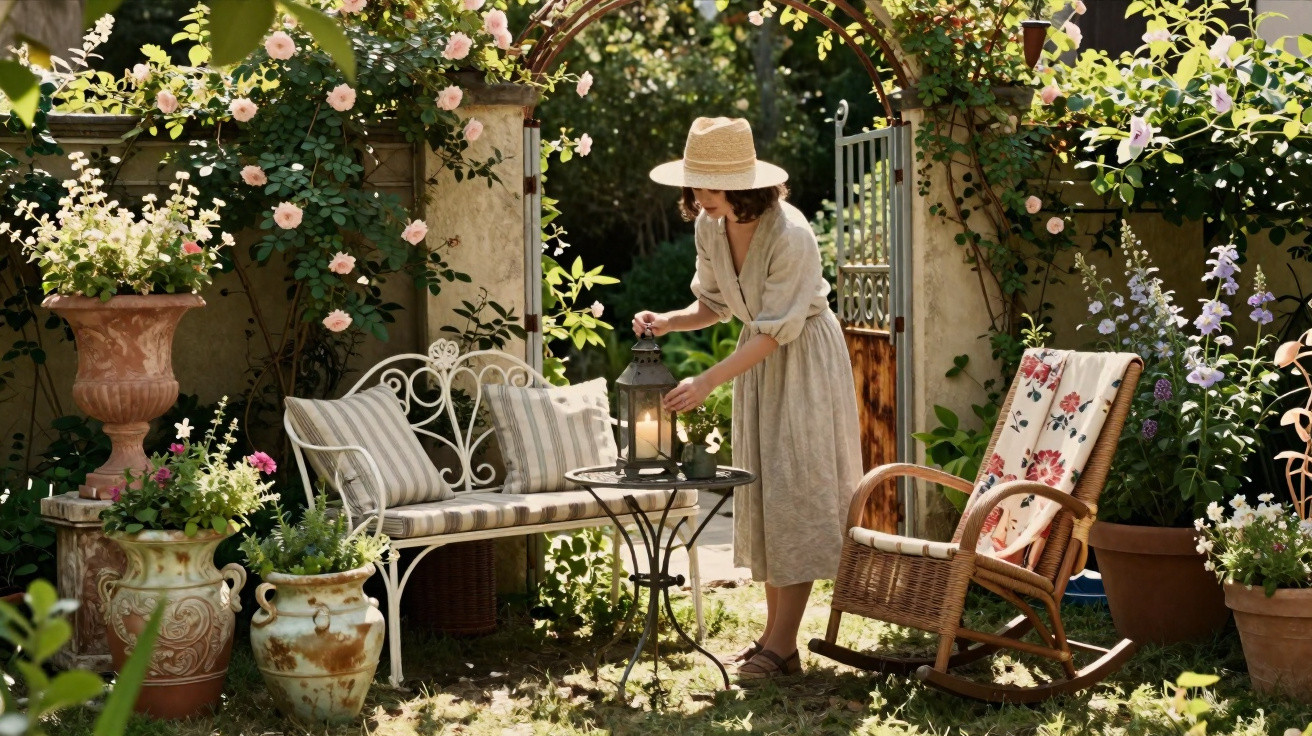
Anyone still filling their balcony or garden with plastic furniture from the DIY shop suddenly looks a little out of step. More and more styling pros are turning to flea-market treasures instead: rusty lanterns, timeworn urns, and curving wrought-iron pieces. Outdoors becomes an extension of the living room - with personality, history and a hint of nostalgia, rather than slick catalogue perfection.
Garden in the Brocante look: out with plastic, in with patina
For years, almost all decorating effort went into the living room, kitchen and bedroom. Balconies and terraces might get a string of lights and a couple of plastic chairs at best. That’s changing fast. Outdoor spaces are demanding a style of their own - not something mass-produced, but something that feels collected over time.
"The new garden trend favours pieces that aren’t perfect, but come with stories: scratches, rust and signs of use are explicitly welcome."
Instead of identical lounge sets, you’re increasingly seeing mix-and-match arrangements: a small old iron bench next to a rattan chair, with a weathered zinc tub repurposed as a planter. Interior designers are treating balconies and courtyards like an extra room that ties in seamlessly with the home’s style - just tougher, more textured and more honest.
1. Vintage lamps: old light for a new garden atmosphere
Outdoor lighting often decides whether a space feels inviting after dark or simply goes unused. Everyone knows LED fairy lights by now. Much more interesting are older lamps that were never originally intended for the garden at all.
People are mainly hunting for:
- Lanterns and wall lights in brass or iron from the 1950s to the 1970s
- Glass domes and pendant lights with frosted or textured glass
- Industrial fittings that once lit factory halls or stairwells
You’ll spot these pieces at flea markets, in house clearances and, of course, online. With a bit of patience, you can find real standouts that give even a plain balcony an instant restaurant-like ambience.
"Old lamps create that exact mix of cinema and summer-evening feeling that new models rarely achieve."
Important: always have the electrics checked by a qualified professional - or replaced outright. The housing can be old, but cables and fittings should meet today’s standards, especially outdoors.
2. Patinated terracotta pots and urns: aged ceramics as a focal point
Few things look as naturally “right” in a garden as an old terracotta pot that’s started to gather moss. That kind of patina is hard to fake - which is exactly why garden enthusiasts chase larger, heavier vessels with visible wear.
Common finds include:
- Tall amphora-style pots with sun-faded rims
- Wide planting bowls with fine cracks and limescale marks
- Stone-like urns that have clearly spent decades outside
The larger the pot, the stronger the impact. One imposing container by the front door reads like a statement; several ceramics at different heights can shape a terrace almost like sculptures in a museum garden.
Don’t scrub away every trace of moss and staining. A light brushing is usually enough to make the piece look cared for without looking sterile. If you want to speed up the ageing effect, plant the pots with herbs or ferns that hold moisture - it helps create that slightly enchanted look more quickly.
3. Wrought iron: gateways, arches and furniture with history
Wrought-iron elements are making a surprisingly strong return - not just as benches, but as full architectural accents. An old garden arch, an ornate fence section or a small pergola can turn even a tiny courtyard into a scene reminiscent of historic city gardens.
"Many of these iron pieces were originally built to last for generations - you can feel the material when you touch them and you can hear it when the wind rattles it."
Particularly popular are:
- Climbing arches for roses, clematis or vines
- Small gates marking the entrance to beds or tucked-away seating areas
- Delicate pergolas to cover a little sitting spot
Compared with lightweight aluminium structures, these vintage pieces bring more heft - visually and literally. A little surface rust isn’t a problem; if anything, it suits the Brocante look perfectly. It only becomes an issue when load-bearing sections are badly corroded. In that case, sanding, rust protection and a fresh coat of paint can help.
Iron furniture: durable and timeless
Iron dining sets are also appearing on more terraces again. Typical examples include delicate chairs with curved backs, tables with perforated metal tops, and generous benches with ornamental details. Their appeal is simple: they can last for decades, and each season adds a bit more character.
| Feature | Vintage iron furniture | New lightweight metal furniture |
|---|---|---|
| Look | Patinated, detailed, distinctive | Smooth surfaces, often very similar |
| Durability | Usable for decades with good care | Often more prone to damage from scratches and knocks |
| Price | Affordable second-hand, pricier for design classics | Wide range, usually predictable |
If you come across an old set, don’t be put off by flaking paint. With a wire brush, rust protection and a new coat in a calm shade - dark green, anthracite or cream, for instance - you can create an entire “new” outdoor dining room.
4. Retro seating: rocking chairs, rattan & co. as mood-setters
If there’s one real game-changer in a Brocante garden, it’s seating. A single old rocking chair on a balcony can add more atmosphere than a whole plastic suite. The key is pairing comfort with a piece that clearly carries its own past.
Typical Brocante seating includes:
- Wooden rocking chairs, ideal for a veranda or covered balcony
- Rattan armchairs and sofas with flowing, curved shapes
- Wooden deckchairs with striped fabric covers in classic seaside style
"These pieces don’t look ‘newly bought’; they look like ‘they’ve been here for years - always used, always loved’."
When buying, it pays to inspect carefully: does the frame wobble? Can a screw be tightened? Is the fabric merely stained, or already rotten? Plenty can be repaired or reupholstered, but structural damage in wood or metal is a clear warning sign.
Using outdoor textiles wisely
Vintage furniture feels even more homely with the right textiles. Cushions and throws in muted shades, stripes or a linen-like texture sit beautifully with the Brocante style. If you don’t want to keep original covers, use seat pads that you can quickly bring indoors when it rains.
Worth noting: not every older fabric can cope with UV exposure and damp. For long-term outdoor use, modern outdoor textiles are usually the better choice - chosen in a way that still nods to the vintage look, for example through subtle patterns or softly “washed” colours.
5. Small finds with a big impact
Alongside the larger pieces - lamps, furniture and pots - it’s often the details that make a garden feel truly established rather than staged. Flea markets are full of smaller objects that can be given a new life outdoors.
Examples include:
- Old metal boxes repurposed as herb beds
- Scratched serving trolleys on wheels used as a mobile bar
- Enamel jugs as watering cans or vases
- Wooden shutters used as screening or climbing supports
Serving trolleys from the 1970s are especially sought after: they work as a side surface by the barbecue, a plant stand, or a mini buffet for summer evenings with guests.
How to achieve the Brocante look without kitsch
If you simply put every old thing you own into the garden, it can quickly start to feel like a junk room outdoors. A convincing Brocante garden follows a few straightforward principles:
- Set a colour palette: Two or three base colours for furniture and larger containers are enough. Classic choices include white, black, dark green and rusty tones.
- Repeat materials: If you already have iron furniture, additional iron elements will look more coherent than suddenly introducing modern fibreglass objects.
- Leave breathing space: The pieces need room around them. Plants and clear patches of floor stop the setting from feeling overloaded.
- Use plants deliberately: Climbing roses, vines, lavender, box or hydrangeas intensify the vintage effect.
If you’re unsure, start small: one old lantern, one special terracotta pot, or a single chair. Over time, a clear thread appears - far more personal than any ready-made garden set from a catalogue.
Practical tips for buying, care and safety
For all the romance, a few sober considerations matter. Metal pieces can be heavy - in every sense. If you’re decorating a balcony, it’s worth checking the structural paperwork before bringing in multiple solid iron objects. On a ground-level terrace, it’s more about handling: if you’ll be moving furniture on your own in winter, you’ll appreciate models that are easier to carry.
Wood and rattan do best in a sheltered spot, such as under an overhang or in a shed. Cleaning once a year, a light sand and a treatment with oil or varnish can significantly extend their lifespan. Protect terracotta from prolonged frost by raising pots on feet and avoiding waterlogging.
When you know what you’re looking for, Brocante pieces can save money while adding real style. The garden feels more personal and less interchangeable - and it evolves year after year. Every new find adds another layer of history, until the outdoor space becomes the favourite place you don’t want to leave all summer.
Comments
No comments yet. Be the first to comment!
Leave a Comment