
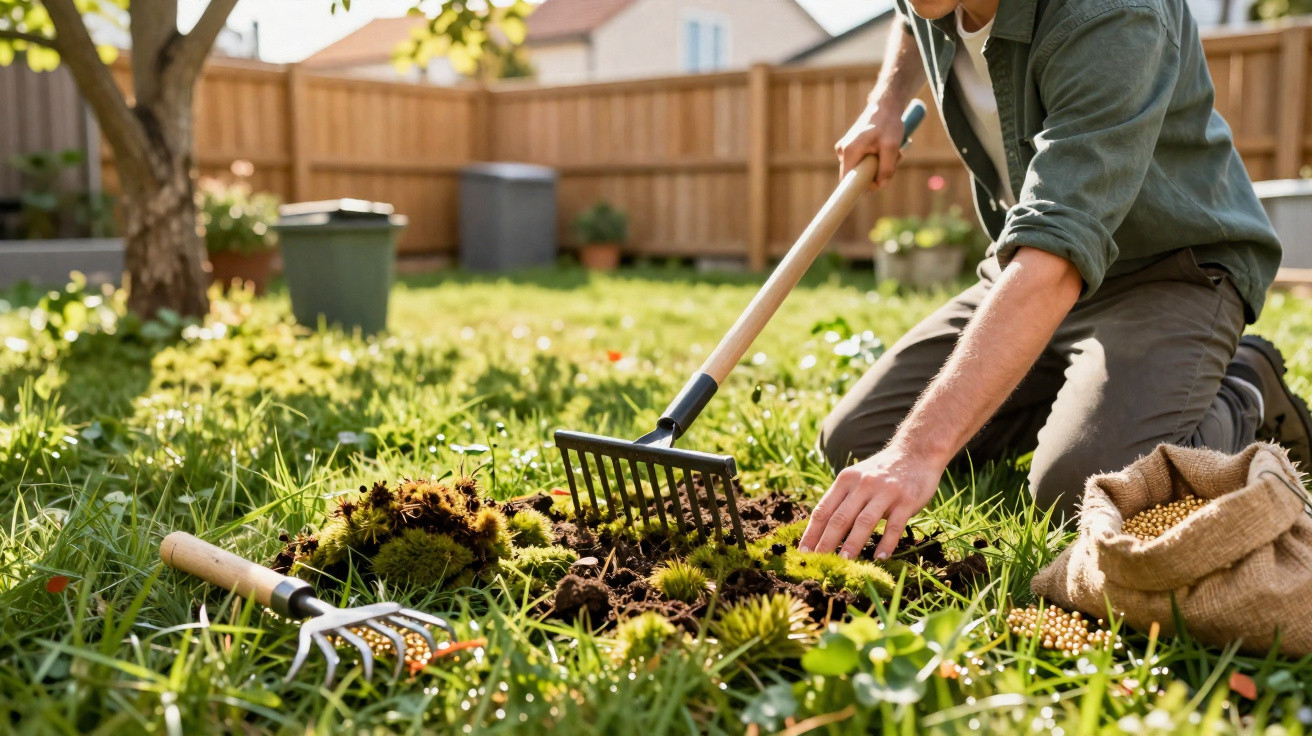
The vivid velvet-like patches can look appealing at first, but the charm soon fades when the grass beneath begins to thin and the mower fills with slime. Throughout the UK and US, increasing numbers of home gardeners are rejecting harsh chemicals and posing one straightforward question: is it possible to control moss while looking after the planet?
Why moss takes over your lawn
Moss is not a weed in the usual sense. It is a bryophyte: an ancient plant that has no true roots, flowers or seeds. This gives it a considerable edge when growing conditions are challenging.
It flourishes in wet, compacted, shaded places where grass finds it hard to survive. Beneath trees, beside fences and at the bottom of slopes where water gathers are all ideal moss habitats. When the environment suits it, moss forms a thick mat and gradually pushes out weakened grass.
Moss is less a cause of lawn problems than a symptom that your grass is under stress.
A number of conditions usually give moss an advantage over grass:
- Acidic soil (low pH), which deters many lawn grasses
- Poor drainage, so water remains after rainfall
- Heavy shade cast by trees, hedges or walls
- Scalped mowing, which leaves grass too short and weak
- Nutrient-poor soil containing little organic matter
- Compacted ground that prevents air movement and root development
Although scraping or spraying moss away may seem the obvious response, the real fight lies below the surface: in the soil and in how the lawn is cared for.
Four natural tactics for a tougher, moss-resistant lawn
1. Reconsider your mowing routine
Mowing quietly determines the condition of every lawn, either positively or negatively. Cutting grass extremely short – below roughly 4 cm (1.5 inches) – places it under serious strain. It has less leaf surface available for photosynthesis and recovery. Moss, which is perfectly comfortable close to the soil, then occupies the available space.
Gardeners seeking a natural, hardier lawn generally rely on two basic principles:
- Leave grass slightly longer, particularly in shaded areas or dry weather
- Mow frequently while taking off less grass on each occasion
A sharp mower blade and a slightly higher cut can do more against moss than a shelf of chemical products.
A neat cut recovers more quickly and lowers the chance of disease. Dull blades rip the grass instead, leaving brown ends and causing additional stress that once again gives moss an opening.
2. Nourish the soil with organic fertilisers
A lawn short of nutrients is easily invaded. Grass that cannot access enough nourishment becomes sparse and uneven, exposing bare soil that moss rapidly occupies. Rather than using synthetic fertilisers, many gardeners are now opting for organic alternatives.
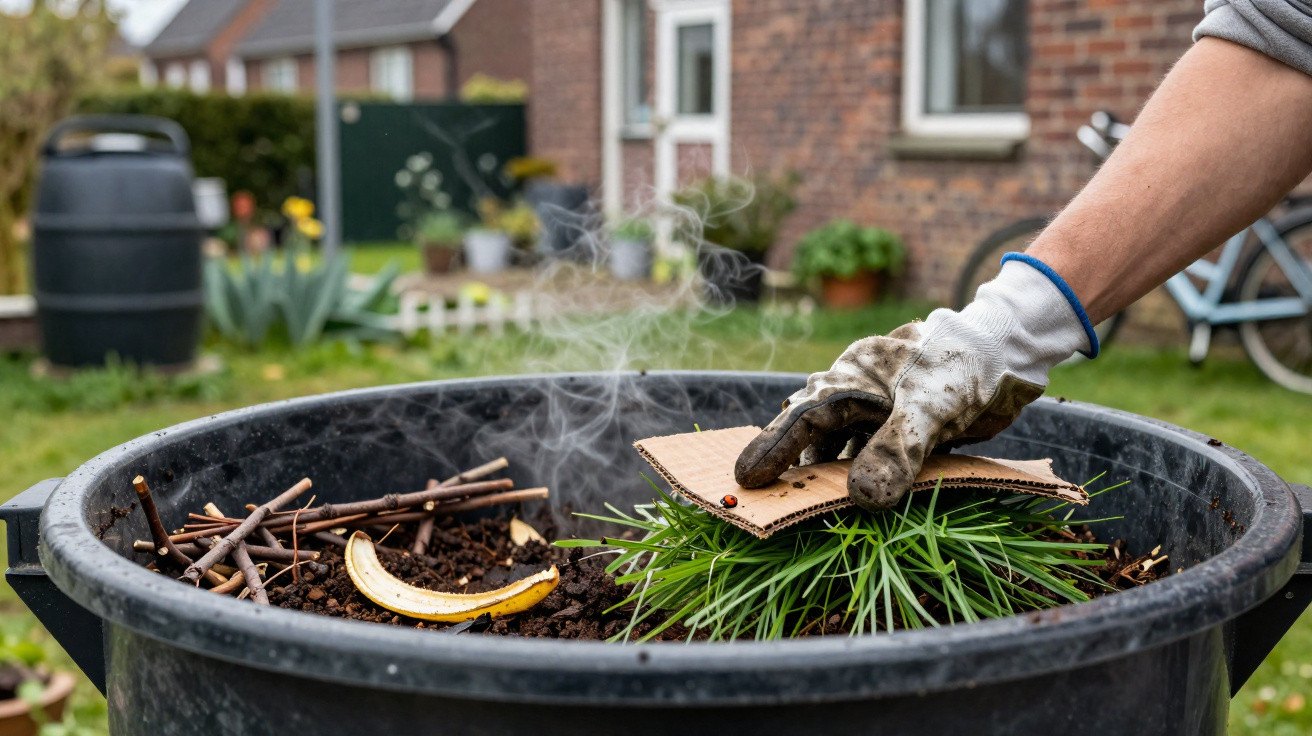
Composted manure, pelleted poultry manure and plant-based fertilisers, for example, release their nutrients gradually. They also support the unseen organisms living in the soil: fungi, bacteria and micro-organisms that enhance soil structure and enable grass roots to access water and minerals.
| Organic option | Main benefit | Typical use |
|---|---|---|
| Home compost | Improves structure and moisture retention | Thin layer spread in spring or autumn |
| Pelleted manure | Slow-release nitrogen for growth | Applied before rain or light watering |
| Seaweed-based feed | Trace elements and stress resistance | Liquid feed during active growth |
Properly nourished grass becomes thicker, grows together and shades the soil surface. This makes conditions far less favourable for moss, which depends on exposed, damp ground.
3. Help your lawn breathe: aeration and drainage
Soil compaction is a frequent but often hidden cause of moss. Regular footfall, children playing, dogs racing about and even weighty mowers all compress the soil particles. Air spaces disappear, roots struggle and water pools at the surface.
Aeration addresses the issue at its source. By making holes in the lawn, it allows air, water and nutrients to travel into the root zone.
A simple round of aeration can transform a spongy, mossy lawn into ground where grass can actually breathe again.
Several straightforward methods are available:
- Walking across the lawn wearing spike shoes
- Using a manual or mechanical hollow-tine aerator to remove small soil plugs
- Making deep holes with a garden fork in areas that receive heavy traffic
Where soil is waterlogged, aeration followed by brushing a light dressing of sand or compost into the holes can gradually improve drainage. In time, earthworms and other soil organisms help to maintain those channels.
4. Scarifying: a controlled clear-out
Scarifying is the gentle yet decisive tidy-up that many lawns need. It involves raking, or using a scarifier, to scratch the surface and lift out moss and “thatch” – the accumulated layer of dead grass and debris.
Carried out at an appropriate time, usually during spring or early autumn, scarifying lets light and air reach the soil surface. It also produces small channels in which fresh grass seed can settle.
Think of scarifying as peeling off an old, suffocating layer so the lawn underneath can breathe and regrow.
For a week or two after scarifying, a lawn can appear badly damaged. This is normal. Combine the work with overseeding and gentle fertilising, and the grass will generally return thicker and better able to compete with moss.
Balancing neat lawns and living gardens
The annoyance caused by moss reflects a broader change in gardening culture. For many years, the perfect lawn was viewed as an almost flawless green surface, without clover, daisies or moss. More people now wonder whether this ideal is sensible amid climate warming and a biodiversity crisis.
In limited amounts, moss is not harmful. It may provide cover for insects and small invertebrates, while birds occasionally collect it as nesting material. Along north-facing borders or in deep shade where grass will never grow well, a mossy patch can even serve as an appealing, low-maintenance groundcover.
A lawn with minor moss patches is not a failure; it can be a sign that nature still has a seat at the table.
Some gardeners now maintain a tidy central lawn for games and socialising while allowing the edges to remain wilder. Moss, clover, violets and other small plants can coexist there, offering nectar, habitat and visual appeal throughout the year.
Going chemical-free: what you gain, what you avoid
Conventional moss killers commonly contain iron sulphate or similar active ingredients that turn moss black rapidly. They can work quickly, but they do not deal with the conditions that encourage moss in the first place. Repeated application may compact soil or affect nearby plants and soil organisms.
A natural approach takes longer, yet it offers lasting advantages:
- Healthier soil life, supporting every plant rather than grass alone
- Better water management, resulting in less run-off and fewer puddles
- Reduced risk for pets and children playing on the lawn
- More resilience through heatwaves, droughts and heavy rain
Homemade treatments are often promoted on social media, including vinegar or salty water poured over moss. These may harm soil structure and surrounding plants, often leaving bare areas that moss simply recolonises. Addressing the habitat rather than only the plant remains the more sustainable option.
Practical scenarios for different gardens
Small urban lawn with deep shade
In a city garden overshadowed by tall buildings or mature trees, grass will always face a difficult struggle. Here, a partial redesign may be more sensible than repeatedly trying to remove moss. You could retain a sunny strip as lawn and convert the darkest area into a moss-friendly space with stepping stones, ferns and shade-tolerant groundcovers.
Family lawn under heavy use
Compaction is unavoidable where children, pets and sport are constant features. An annual programme of aeration, followed by compost topdressing and overseeding, can control moss. Setting the mower higher shields grass from continual stress. Allowing small mossy areas beside fences or below swings also reduces pressure on the rest of the lawn.
Key terms gardeners often mix up
Two terms are regularly confused: “aeration” and “scarification”. Although they may sound technical, they describe separate jobs.
- Aeration concerns the soil, making holes that support gas exchange, water movement and root expansion.
- Scarification concerns the surface, removing moss and thatch to make room for fresh growth.
Together, they make an effective pairing. Aeration deals with the underlying causes of moss, whereas scarification removes the visible material at the surface. Combine these with organic feeding and less severe mowing, and moss loses much of its advantage.
With time, many gardeners notice that their outlook changes. The aim shifts away from “eradicate every scrap of moss” towards “grow a lawn that is dense, healthy and still part of a wider living garden”. This adjustment alone often means less frustration, more birds and insects, and a lawn better suited to the 21st century than a sterile green carpet.

Comments
No comments yet. Be the first to comment!
Leave a Comment