
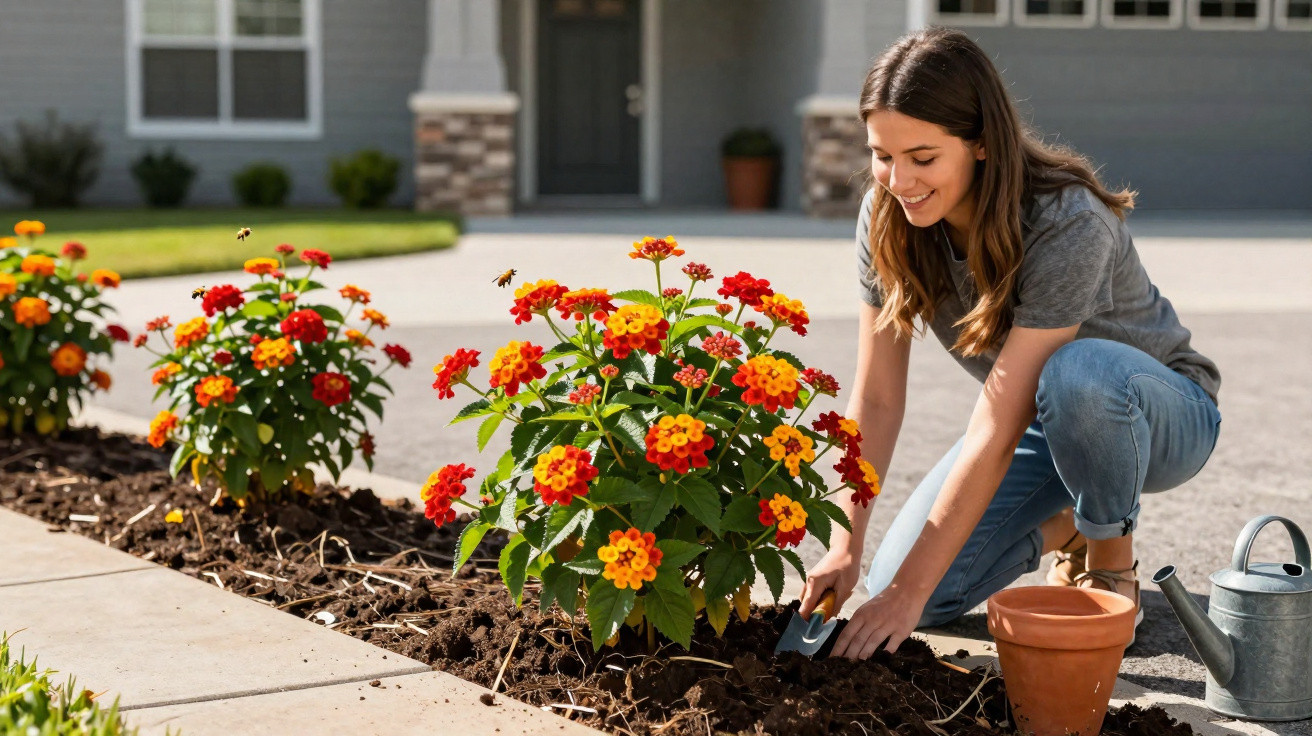
Many homeowners run into the same problem: how do you make the driveway or the route to the garage look more inviting without watching the planting collapse after the first scorching summer? Between tarmac, parked cars and rock salt in winter, plenty of plants simply give up. This is exactly where a vivid, compact shrub comes into its own-creating a glowing red ribbon along the edge from spring right through to autumn.
A shrub for challenging spots close to the house
Right beside a driveway, conditions are harsh: the surface stores heat, the sun beats down, tyres and car doors batter the ground, and in winter de-icing salt ends up along the margins. Lawns turn yellow and many perennials just scorch away. If you want reliable colour there, you need a plant that can take punishment.
That combination is precisely what the red-flowering Lantana shrub offers. It originates from warmer regions and belongs to the verbena family. In its native habitat it grows on dry, stony slopes-perfect training for coping with a heat-soaked driveway.
"Lantana ‘Hot Blooded’ combines punchy colour, a long flowering season and exceptional heat tolerance-a rare mix for driveway edges."
Its foliage is deep green and slightly rough, and it releases an aromatic scent when touched. That makes it interesting not only visually, but also in texture and fragrance-without demanding lots of attention.
Why the ‘Hot Blooded’ cultivar is in such demand
Botanically, this shrub is Lantana camara ‘Hot Blooded’. In the garden it looks far more dramatic than the matter-of-fact name suggests. It forms dense, semi-rounded mounds, around 60 centimetres high and about the same across. That size is spot on for running along a driveway edge without blocking doors or sightlines.
Three-toned flowers like a glowing ribbon
The real trick is in the flower heads: they start golden yellow, shift to orange and finish a deep red. On a single plant, all three stages sit side by side-like a flickering flame along the entrance drive. From May to October, fresh blooms keep coming, so the colour band doesn’t break.
The key benefits at a glance:
- compact growth (about 60 × 60 centimetres)
- flowering from late spring to autumn
- intense red and orange shades
- very good tolerance of heat and drought
- strongly attractive to bees and butterflies
- sterile cultivar-no annoying self-seeded plants in gravel beds
Because this cultivar doesn’t set seed, it won’t spread unchecked. That matters on driveways: the edge stays crisp, without constant weeding of seedlings from joints and gravel.
Location: where the red Lantana shrub genuinely thrives
Lantana is a sun-and-warmth lover. A spot by the driveway should be as sunny as possible; six or more hours of direct sun per day is ideal. In dappled shade the flowering drops noticeably, and the shrub tends to grow less compactly.
For climate guidance, gardeners often refer to USDA hardiness zones 7 to 11. In areas with very severe winters, the plant will die back in the ground, and the foliage is damaged even by light frost. In milder locations it can persist as a perennial; elsewhere it’s used as an especially free-flowering summer plant, or overwintered in a pot under protection.
Soil and planting along the driveway
Soil right at the edge of a driveway is usually compacted and often drains poorly. That’s the biggest obstacle-and the main lever for making this shrub work.
"Without free-draining soil, even the best heat resistance is pointless-waterlogging is the Lantana shrub’s greatest enemy."
How to plant it successfully, step by step
- Dig a planting hole two to three times wider than the root ball.
- Loosen the soil at the base well so roots can push in easily.
- Lighten heavy soil with gravel or expanded clay until it’s crumbly and free-draining.
- Position the plant so the top of the root ball sits level with the surrounding soil.
- Water thoroughly so the soil settles and air pockets close.
- Mulch with gravel or chippings-visually in keeping with the driveway surface.
For a continuous but airy strip along the edge, a spacing of 60 to 90 centimetres is recommended. If you want a particularly dense band, go for the smaller spacing.
Care through the year: minimal effort, big impact
The first summer is the make-or-break period. Until the shrub has rooted deeply, it needs regular watering-especially with extra heat radiating from the tarmac nearby. Once the root system is established, it copes remarkably well with longer dry spells.
Watering, pruning, winter-what to keep in mind
| Season | Main care focus |
|---|---|
| Spring | Prune back before new growth; remove dead shoots |
| Summer | Water during prolonged dry spells in the first year; roughly tidy spent blooms |
| Autumn | Final check; only light pruning; prepare winter protection |
| Winter | In mild areas: cover near the base with mulch; in pots: keep bright and frost-free |
Where winters are mild, it’s usually enough to cut plants back hard at the end of winter. This prevents them becoming overly woody and encourages fresh, flower-bearing growth. In harsher areas, cut stems down close to the ground and apply a thick mulch layer-or choose containers by the driveway and move them indoors when frost threatens.
Safety: beauty with toxic drawbacks
As striking as this red-flowering shrub is, it isn’t completely benign. All parts of the plant are considered poisonous to people and pets. If you have small children, or dogs and cats that roam freely, choose the position carefully.
"Always wear gloves when caring for it-the sap can irritate skin, and leaves and berries don’t belong in children’s hands."
That said, there’s no need to rule it out entirely: placed by a fence, slightly raised in a gravel bed, or grown in a pot near the garage approach, it can be enjoyed without children constantly handling it.
Bonus for nature lovers: a filling station for pollinators
While we’re drawn first to the vivid red, wildlife is after something else: nectar. The many flowers pull in honeybees, solitary bees and butterflies in large numbers. In warmer regions, even hummingbirds visit the plant.
If you want to smarten up the entrance area and do something for insects at the same time, this cultivar is a strong choice. Compared with many conventional ornamentals, Lantana ‘Hot Blooded’ flowers for a very long period, providing food for months.
Practical pairing ideas for the driveway
The red shrub looks particularly effective when combined with just a few clearly chosen partners. That way the entrance quickly feels upgraded without becoming visually cluttered.
- With ornamental grasses: fine, pale stems against dark tarmac, with red flowers threaded through, add movement and contrast.
- With grey-leaved plants: plants such as lavender or cotton lavender reinforce a Mediterranean feel and cope with similar conditions.
- With gravel areas: a narrow gravel strip between paving and border edge looks tidy and also helps drainage.
To keep maintenance down, keep the palette deliberately small and rely on repetition: one or two varieties along the full length of the driveway are enough to create a clean, high-quality look.
One more point many people care about: deer usually avoid this shrub. In suburban-edge areas where browsing can otherwise be a problem, the planting tends to stay intact for much longer. All told, Lantana ‘Hot Blooded’ creates an eye-catching yet surprisingly low-maintenance frame for driveways and parking spaces-intensely coloured, resilient and easy to live with day to day.
Comments
No comments yet. Be the first to comment!
Leave a Comment