
A simple, basic rule changes that.
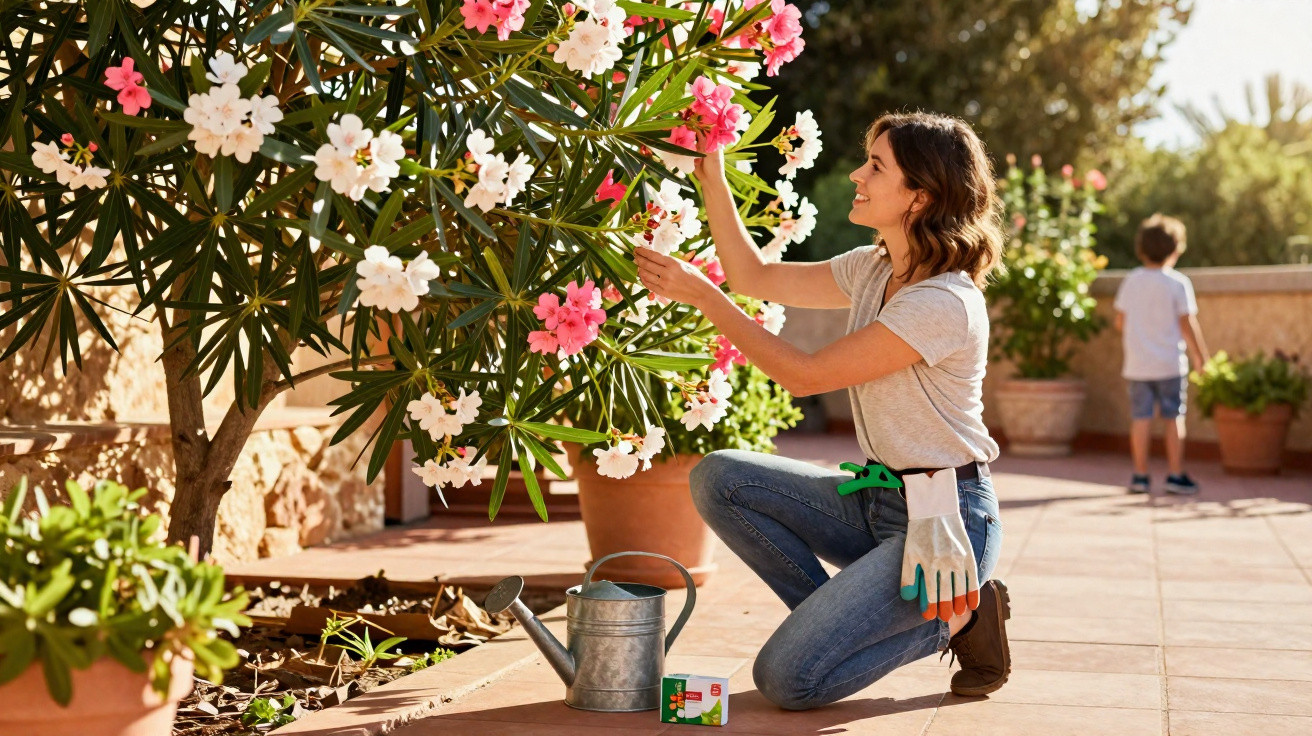
Plenty of hobby gardeners bring a touch of holiday feeling home with an oleander - only to end up staring at a few tired-looking flower clusters. The good news: it’s usually not the plant’s fault, but down to where it’s placed, how it’s cared for, and one small fertilising trick. Get a handful of points right and you can turn your oleander into a dense, flowering privacy screen.
Where oleander comes from - and what that means for your garden
Oleander, botanically Nerium oleander, originates from the Mediterranean region and parts of South Asia. In its native habitat it’s found in dried-up riverbeds, along roadsides, and in poor, stony soils. That background tells you exactly what it needs when you grow it at home.
- lots of sun and heat
- free-draining, relatively lean soil
- dry spells are fine, but no waterlogging
Put oleander in a half-shaded corner or in soil that stays wet, and you’ll almost inevitably get sparse flowering and a plant that’s more prone to problems. The variety matters to a degree, but care and siting are what really make the difference.
“Oleander isn’t a delicate diva - but when it comes to flowering, it hardly forgives the wrong spot.”
The golden rule for a lush oleander display
The single biggest lever for truly generous flowering is: as much light as possible, paired with plenty of water in summer and the right fertiliser.
Oleander is one of the biggest sun-lovers among ornamental shrubs. If it’s tucked on a north-facing side or left in light shade, bud formation slows dramatically. Give it a fully sunny patio or a warm south-facing wall and it will repay you with noticeably more flower trusses.
Positioning: full sun, not “good enough”
Place your oleander where, at the height of summer, you wouldn’t sit for half a day without sun cream. The stronger the sun, the better the flowering - provided you keep the watering up.
- at least six hours of direct sunshine per day
- a sheltered position, for example in front of a house wall or garden wall
- in a pot: a bright spot on the patio or along the edge of a balcony
Shelter isn’t just about comfort. Strong gusts can snap flowering shoots and dry out buds before they open.
Watering and feeding: plenty, but with a plan
The second part of the rule is about moisture and nutrients. Unlike many other Mediterranean plants, oleander appreciates lots of water in summer - it just mustn’t sit with its roots in a bog.
- Make drainage non-negotiable: In a pot, add a layer of expanded clay or gravel and keep drainage holes clear. In the ground, mix coarse sand into heavy soils.
- Water thoroughly: During hot spells, water less often but deeply, until water runs out of the bottom.
- Use the fertiliser trick: In summer, regularly add a liquid geranium fertiliser to the watering can - it supports bud formation and boosts colour intensity.
“Geranium fertiliser in the watering can is the small but decisive turbo for a mass of flowers.”
From around August, gradually cut back feeding so the shoots can ripen and the plant can prepare for winter.
Pruning, frost protection and pest checks
For the plant to stay not only floriferous but also sturdy and healthy, it benefits from regular pruning and protection from extremes.
The right time to prune: late winter
Late winter - before the plant starts into fresh growth - is the best moment to reach for the secateurs. The aim is a dense shrub with good branching.
- shorten long, thin shoots by a portion
- remove branches that grow inwards or rub and cross
- pinch out faded flower clusters repeatedly through summer
Taking off spent trusses directs energy into new buds rather than seed production. That noticeably extends the flowering season.
Frost and wind: when oleander needs help
Oleander can cope with slight sub-zero temperatures, but it reacts poorly to prolonged frost. In colder areas it’s best grown in a pot, so you can move it to a bright, cool winter spot when freezing conditions threaten.
In the ground, a sheltered position against a house wall helps, potentially combined with horticultural fleece around the crown and mulch over the root area. Cold wind dries out leaves and buds and can leave whole shoots brittle.
Spot common pests early
Aphids and scale insects often appear, especially in warm, sheltered locations. If you check regularly, you can act before they weaken the plant.
- Aphids: sticky leaves, curled shoot tips
- Scale insects: small brown “shields” on shoots and the undersides of leaves
- at the first signs, rinse off with a jet of water or treat with suitable products
“The sooner you respond to pests, the less energy they steal from flowering.”
Overly dense, poorly ventilated crowns can also encourage fungal problems. A slightly more open pruning style helps, as does more restrained watering during winter dormancy.
Propagating oleander successfully: cuttings that take
If you want more plants from a particularly attractive specimen, you can multiply it easily in summer using cuttings.
- In summer, cut a strong, non-flowering shoot to about 15 centimetres.
- Remove the lower leaves so only a small tuft remains at the top.
- Dip the cut end into rooting powder to encourage root development.
- Insert into a pot filled with a mix of sand and potting compost, then water lightly.
- Keep the pot warm and bright but out of harsh, direct sun, and keep the medium evenly moist.
After around two months, roots have usually formed and the cutting can be carefully moved into a larger pot. In this way, you can gradually build up a small collection of your favourite oleander variety.
Why oleander wants less water in winter
In winter the plant enters a rest period. It barely grows and needs far less water. A common mistake is to keep watering as if it were summer. The result is root rot and fungal disease.
A better approach: water only enough to stop the root ball drying out completely. Between waterings, the top layer of compost should dry out noticeably. If you do a simple finger test, you’ll usually get it right.
Risks, gardening gloves and child safety
Oleander is one of the poisonous ornamental plants. All parts contain substances that are dangerous if eaten. In gardens with small children or pets, it’s worth choosing the position carefully - for instance in tall pots or in less accessible areas.
When pruning, wear gloves, as the sap can irritate skin. Put prunings in general waste or the food and garden waste bin, not on compost that children or animals can easily reach.
Practical examples for a flower-packed oleander
If you have a south-facing balcony, place two or three robust oleanders in pots along the railing, combine them with geraniums or lavender, and you’ll create a small Mediterranean-style setting. Set in a line, potted oleanders can also form a living privacy screen from next door.
In a front garden, a single large oleander makes an eye-catcher near the entrance. The key is a sufficiently large container with good drainage and a spot that heats up well in summer, such as beside a natural stone wall.
With the right combination of sun, generous watering, targeted feeding and a clear pruning routine, what started as a holiday souvenir becomes a reliable summer star - year after year, with dense, richly coloured blooms.
Comments
No comments yet. Be the first to comment!
Leave a Comment