
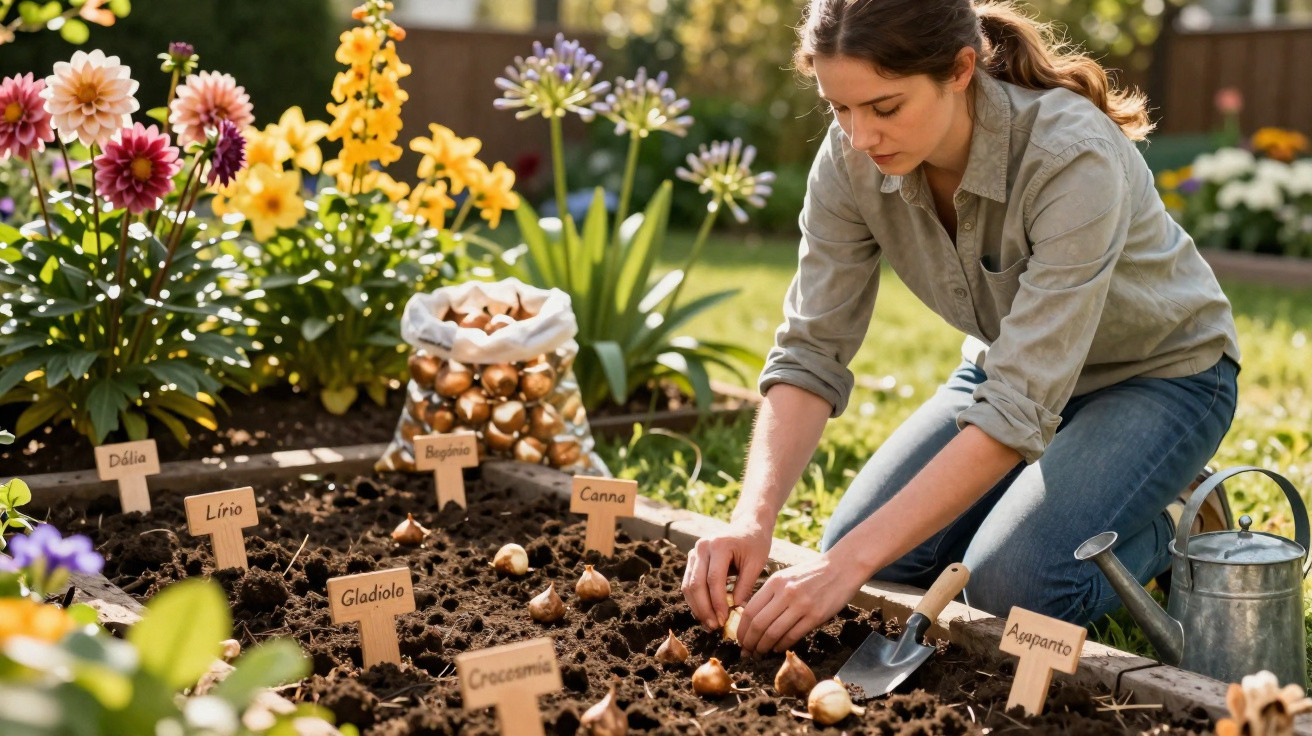
In March, a border can still look bare, yet below the surface the groundwork for July and August is already under way. If you plant the right flower bulbs and tubers early, you set yourself up for a garden display that starts in June and keeps going well into autumn. What matters most is timing, a well-chosen mix of summer bloomers, and a few straightforward planting steps.
Why March is a quietly perfect month for summer bulbs
March sits right in the changeover period: the soil is still moist after winter, but it’s beginning to warm up. For many bulb and tuber plants that are meant to flower in summer, these are near-ideal conditions.
Whoever plants their summer bloomers in March gives them a head start – stronger roots, less stress in peak summer, fuller flowers.
With mild weather on their side, the bulbs can establish a robust root system before the first heatwave arrives. Later on, that helps them cope better during dry spells and reduces how much watering they need.
Region makes all the difference
Exactly when you should plant depends heavily on where your garden is:
- Mild regions / wine-growing climates / on the edge of towns: planting is often possible from early March.
- More central areas: mid to late March is frequently the sweet spot.
- Cooler, higher or more northerly locations: it’s safer to wait until late March or April, or start them in pots under glass.
Where late frosts are still a risk, a simple horticultural fleece placed over tender young shoots in the evening can make a big difference. Bulbs grown in containers can also be moved temporarily to a sheltered house wall or into a shed if frost is forecast.
Basic rules: how to succeed with flower bulbs that bloom in summer
Before looking at specific plants, it pays to get the basics right. Many cases of rotting bulbs or weak growth come back to the same issues: the wrong position, or soil that stays cold and wet.
Choose healthy bulbs and tubers
A simple buying rule applies: the firmer the bulb or tuber, the better.
- press gently with your fingers – it should feel solid, not soft or spongy
- avoid dark rot patches and any visible mould
- pick bulbs that are plump, not sunken or shrivelled
- store them somewhere cool, dark and dry until planting
The right soil for summer bloomers
Most summer bulbs do best in soil that is loose and free-draining. Heavy clay holds water, and bulbs can rot there very easily.
You can improve the soil with:
- well-rotted compost to add nutrients and open up the structure
- sand or fine horticultural grit on heavy soils to help drainage
- organic material such as leaf mould in poorer, leaner areas
Avoid spots in the garden where puddles are still sitting days after heavy rain – summer bulbs have very little chance there.
The key rule: planting depth
A classic rule of thumb for bulbs is to plant them about two-and-a-half to three times as deep as the bulb is tall.
| Bulb height | Recommended planting depth |
|---|---|
| 3 cm | approx. 7–9 cm |
| 5 cm | approx. 12–15 cm |
| 8 cm | approx. 20–24 cm |
| 10 cm | approx. 25–30 cm |
Set the pointed end upwards; flatter tubers are placed with the “smoother” side facing down. Water thoroughly after planting, then usually it’s enough to keep the soil evenly, lightly moist. A thin mulch of bark compost or lawn clippings helps reduce evaporation.
Seven flower bulbs that really get going in summer
To keep flowers coming for as long as possible, it’s best to combine several types. Aim for a sequence that runs from June through to October. These seven choices are among the most dependable summer bloomers for a typical home garden.
Dahlias: long-flowering right into autumn
Dahlias are a classic for lavish summer borders. Depending on the variety, they flower from July through to October. Their tubers can go into the ground from March or April; in cooler areas, plant later or start them in pots first.
- Location: sunny to full sun
- Soil: fertile, humus-rich, well-draining
- Use: borders, cottage gardens, cut flowers
Taller varieties are best given a stake so they don’t topple in windy weather. If you regularly remove spent blooms, the plant is encouraged to produce more buds.
Lilies: elegance and fragrance in mid-summer
Lilies add height to a border and, depending on the variety, can be strongly scented. Their flowering period is usually between June and August.
They prefer their roots to stay cool and lightly shaded, while the top growth can take sun. A low ring of perennials around lilies achieves exactly that: cool “feet” with a sunny “upper storey”.
Tuber begonias: colour for shady spots
If you have a shaded patio or a darker corner of the border, tuber begonias are a great fit. They’re ideal for window boxes, containers, and the edges of beds in partial shade to shade. Flowering generally runs from July into autumn.
Tuber begonias prove that a north-facing balcony isn’t a life sentence – they can bring colour to shaded places too.
Plant the tubers shallowly, as they are sensitive to waterlogging. In cooler areas, many gardeners start them indoors and move the pots outside after the last frosts in mid-May (“Ice Saints”).
Gladioli: dramatic flower spikes for border and vase
Gladioli bring tall flower stems that look almost architectural in the garden. If you plant successive batches about two weeks apart, you can extend flowering into late summer.
- Location: sunny, sheltered from wind
- Needs: nutrient-rich soil; occasional feeding supports better flowering
- Tip: stake them well so the long stems don’t bend or snap
Canna: a tropical feel in the border
Canna (often known as Indian shot) adds exotic impact with big leaves and vivid flowers. The rhizomes want warm, fertile soil and do best in a full-sun position.
Canna also works extremely well as a specimen plant in a large pot. In that case, you can overwinter the container frost-free in autumn, which makes winter care much easier.
Crocosmia: fiery colour with a lightly wild look
Crocosmia (often sold as montbretia) produces delicate, slightly arching sprays of flowers in yellow, orange and red shades. Flowering is typically from July to September.
It suits naturalistic borders, especially alongside grasses or looser-growing perennials. In harsher locations, a thick winter mulch of leaves and brushwood helps protect the corms.
Agapanthus: the African lily for pots and patios
Agapanthus (African lily) stands out with impressive, globe-shaped flower heads in blue or white. It prefers sun and a rather lean but well-drained growing medium.
Agapanthus looks especially striking in a pot on the patio and can then be overwintered frost-free.
Don’t plant the rhizomes too deeply; keep them only just below the surface. Many gardeners also find that keeping the root ball slightly “cramped” in a pot improves flowering.
How to combine the seven summer bloomers effectively
A well-planned border uses height, colour and flowering times to best effect. Place tall growers such as dahlias, gladioli and canna towards the back; put lilies and crocosmia in the middle; and use begonias plus lower agapanthus varieties towards the front or along the edging.
You can also use colour deliberately:
- warm shades (red, orange, yellow) for a southern, lively feel
- agapanthus blues and whites as calming counterparts
- lily and begonia pastels for more romantic corners
Lower perennials such as lady’s mantle, catmint or hardy geranium fit neatly between the bulb plants. They hide gaps where some species emerge later, and they help keep the soil lightly shaded.
Practical extras: care, protection and small risks
Summer bulbs appreciate regular watering, but not excess. During hot spells, it’s better to water deeply every few days than to give frequent light sprinklings. Hungry plants such as dahlias and canna respond well to an organic liquid feed every two to three weeks.
Late frost remains a potential hazard. Shoots may blacken, but the bulb usually survives. If this happens, remove the damaged growth, don’t replant, and simply wait-often the plant will send up new shoots once temperatures rise.
If your area has lots of slugs, protect young growth early with slug fences or barriers made from sharp grit. Dahlias, in particular, are a favourite target.
Beginners may find it useful to try a few bulbs in pots first. That makes it easier to identify the best spot in the garden before planting larger areas. And if you test a couple of new varieties each year, you can gradually build a summer border that flowers from June until the first frost.
Comments
No comments yet. Be the first to comment!
Leave a Comment