
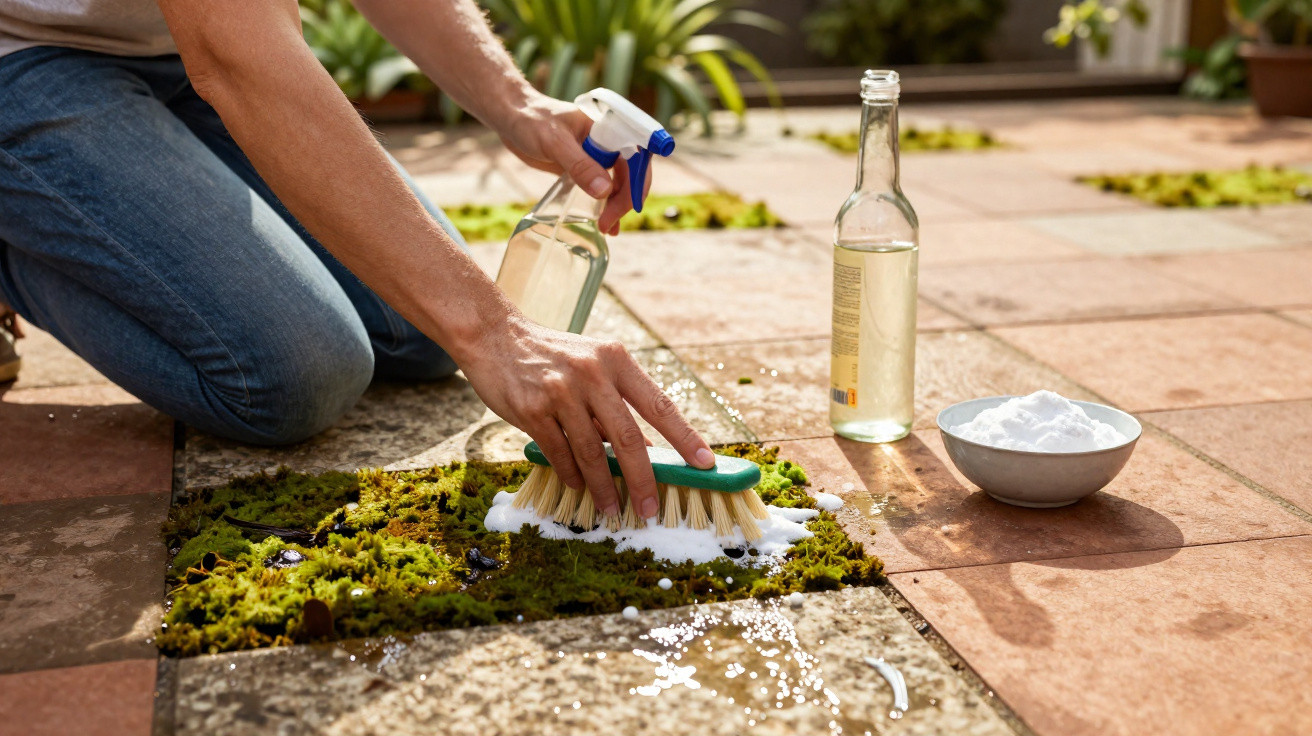
With a simple kitchen trick, you can get rid of it surprisingly sustainably.
Many homeowners scrub year after year until their arms ache - yet after the next spell of rain, the moss is back. What most people don’t realise is that two everyday cupboard staples in most homes tackle moss far more effectively than pricey specialist cleaners, while being much gentler on your garden and the environment.
Why moss keeps taking over your patio so stubbornly
Moss thrives where it’s damp, shaded and slightly rough. Patio slabs, block-paved paths, garage drives, walls - even roof tiles - all become ideal surfaces as soon as rainwater lingers or dries only slowly.
After a dark, wet winter, conditions are almost perfect: little sunshine, constantly damp joints, and tiny cracks where spores can settle. If you only brush the surface, you often make the long-term problem worse.
The reason is simple: the visible green layer may disappear, but spores - and so-called rhizoids - stay behind in the gaps. These are fine, root-like structures that anchor moss into the surface. They’re effectively waiting for the next rainfall to kick off again.
"If you only remove moss mechanically, you’re treating the symptoms, not the cause - you need a chemical effect as well, otherwise it will always grow back."
That’s why many people reach for harsh moss killers from the DIY store. They can work, but they may also severely harm nearby borders, lawns and even the life in the soil. It becomes particularly risky if vegetables, herbs or delicate ornamental grass are growing right next to the patio.
Timing matters just as much as the product you use. On rainy days - or just before rain - you can almost save yourself the effort. Rain dilutes the solution, washes it into your beds and reduces its effectiveness. A dry but slightly overcast day is far better: the mixture stays on the surface long enough to work, without evaporating too quickly in strong sun.
The kitchen-cupboard duo: vinegar and bicarbonate of soda against moss
Two ingredients found in almost every kitchen can hit moss remarkably hard: ordinary white household vinegar and bicarbonate of soda. Mixed with warm water, they create a solution that doesn’t just attack moss on the surface, but breaks down its structure more lastingly.
Vinegar contains acetic acid. It penetrates the soft moss tissue quickly and damages the cells. Bicarbonate of soda, by contrast, is mildly alkaline. It draws moisture out of the moss and disrupts the conditions at the base, making regrowth much harder.
Used together, you get a kind of “double strike”: the vinegar breaks down the visible plant mass, while the bicarbonate of soda shifts the surface environment so new moss cushions struggle to establish.
A small squirt of washing-up liquid is also useful in the mix. It acts as a surfactant - meaning it reduces surface tension - so the solution clings better to the moss instead of immediately running into the joints or off the slab.
"Vinegar for the cells, bicarbonate of soda for the base, washing-up liquid for adhesion - this trio turns simple kitchen ingredients into a surprisingly strong moss treatment."
What you’ll need for the moss treatment
- Household vinegar (white, ideally not heavily diluted)
- Bicarbonate of soda powder
- Washing-up liquid (a standard kitchen detergent is fine)
- Hot water
- A bucket or large bowl
- A stiff scrubbing brush or a yard broom with hard bristles
This mixture isn’t only suitable for patio slabs. You can also treat paved paths, concrete areas, drives or wall tops - as long as you control where you rinse afterwards and protect neighbouring beds.
Step by step: how to remove moss from patios and paths
1. Prepare the area thoroughly
Before you use the mixture, sweep the whole patio: remove leaves, soil, sand and loose pieces of moss. Only then can the solution reach the moss directly, rather than being absorbed by a layer of dirt.
2. Mix the solution - a bit of fizzing is fine
Pour hot (but not boiling) water into a bucket. Add a generous amount of vinegar, then mix in two to three tablespoons of bicarbonate of soda and a small squirt of washing-up liquid. Stir briefly - if it foams, that’s normal. Once the fizzing settles down, the liquid is easy to spread.
| Amount | Ingredient | Note |
|---|---|---|
| 5 litres | Hot water | Base of the mixture |
| approx. 1 litre | Vinegar | For the acidic effect |
| 2–3 tbsp | Bicarbonate of soda | For the drying effect |
| 1 squirt | Washing-up liquid | For better adhesion |
3. Apply and leave it to work
Pour the mixture slowly over all discoloured and mossy sections, aiming to wet the entire surface. If you prefer more control, use a watering can or a large cup to distribute it.
Then leave it alone: the solution should sit on the surface for at least 15 minutes - 30 minutes is better. During that time, the acetic acid works on the cells, while the bicarbonate of soda and washing-up liquid do the rest. If you scrub too soon, parts of the moss can remain alive and return later.
4. Scrub and rinse
After the waiting time, scrub the surface with the stiff brush using circular motions. Ideally, the moss will come away in strips or sheets that you can push aside easily. Then rinse with clean water.
Rinse carefully: try to direct the water away from borders, vegetable patches and sensitive lawn areas. Vinegar is a relatively mild household remedy, but in larger amounts it can still damage leaves and roots.
How to keep moss away from your patio in the long term
Removing moss once buys you some breathing space, but prevention is what really matters. Moss mainly needs constant moisture and shade. Reduce those factors and you significantly lower the chance of another takeover.
Reduce moisture, increase light
Start by checking drainage. If water sits in low spots after rain, a small adjustment to the slab levels or re-sanding the joints can help. Sometimes, simply renewing the joints is enough to improve run-off.
Dense, low-hanging shrubs or trees along the patio edge block light and airflow. Thinning or cutting them back allows more sun and quicker drying after rain. In brighter, breezier conditions, moss finds it much harder to thrive.
Make it a routine, not a rescue mission
Many homeowners wait until the patio has turned completely green. A more effective approach is a light preventative treatment every two to three months, especially during the shoulder seasons and in autumn. A weaker vinegar–bicarbonate mix is enough; often you won’t even need to scrub.
- After wet weeks, check the surface briefly
- At the first green haze, treat it straight away
- Keep joints clean so spores can’t settle
- Remove fallen leaves promptly in autumn, as they trap moisture
What to watch out for with vinegar & bicarbonate of soda in the garden
As handy as this mixture is, it still alters the small ecosystem around your home and patio. A few splashes on lawn or ornamentals are usually not a problem, but you should avoid pouring it directly onto borders.
If you have sensitive plants right at the patio edge, it helps to use a sheet of plastic or a board as a simple splash guard. If children or pets use the area, wait until everything has been thoroughly rinsed and dried before letting them back onto the surface.
One more consideration: paving joints can become roughened over time if you use strongly acidic treatments too often. So don’t reach for the vinegar every day - apply it purposefully and at sensible intervals.
Why choosing household remedies is often worth it
The biggest plus of vinegar and bicarbonate of soda is that they’re inexpensive, widely available and easy to adjust in strength. Many specialist cleaners contain quaternary ammonium compounds or other substances that can remain detectable in soil for a long time and harm micro-organisms.
If you care about living soil, a dense lawn and healthy borders, household remedies are kinder to the surrounding area. You also avoid a trip to the DIY store - and the hassle of hazard warnings and protective equipment.
If you use your patio as an extension of your living space - with lounge furniture, a barbecue spot or a children’s play area - you benefit twice over: a clean, less slippery surface reduces the risk of falls and looks well cared-for, without relying on aggressive chemicals. With a little routine, moss control becomes a quick, standard job over the year instead of an exhausting springtime overhaul.

Comments
No comments yet. Be the first to comment!
Leave a Comment