
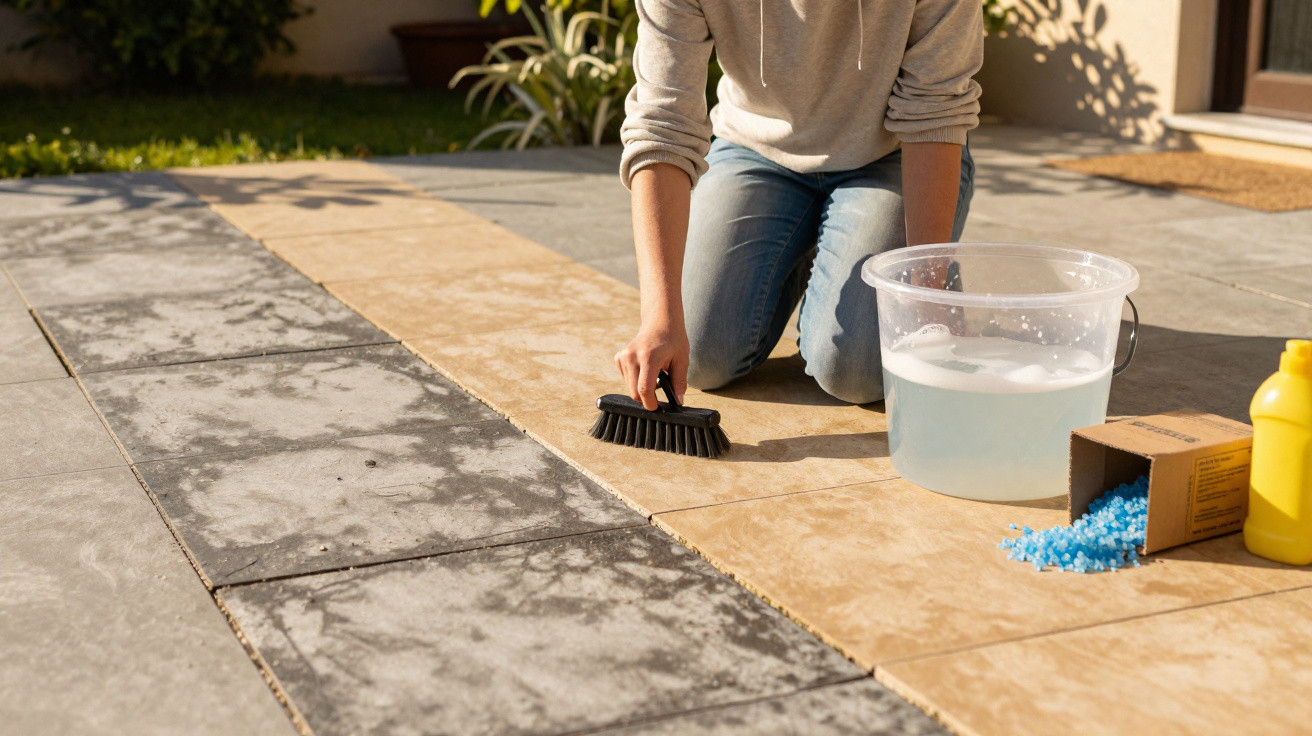
A straightforward trick can get your paving slabs looking right again.
When the patio looks grim, many people automatically reach for a pressure washer or harsh products from the cleaning cupboard. But there’s a gentler, quieter and cheaper way-using two everyday items most households already have, and without any vinegar.
Why your terrace looks so rotten after winter
If the garden hardly gets used over winter, March can bring an unpleasant surprise. What looked reasonably fine through the window turns out, outside, to be a slippery green film-often alongside dark shadows and rusty rings under chairs, tables and plant pots.
The cause is usually straightforward: constant damp, little sun and cold nights. Algae, moss, lichen and fine grime settle on patio slabs, while metal feet on furniture or planters can rust or leach colour. Even a high-quality terrace can end up looking neglected very quickly.
A lot of homeowners respond with the same three “classics”:
- A pressure washer with a hard jet
- Strong chemicals such as chlorine cleaners or heavy-duty descalers
- Vinegar cleaner or neat household vinegar
All three options come with clear downsides. Pressure washing can blast out jointing material, roughen the surface and leave it more prone to future dirt. Aggressive cleaners can attack joint mortar and certain stone types, and eventually end up in the soil or lawn. And while vinegar may sound “natural”, it is still an acid-one that can etch particular stones and upset the pH of the surrounding ground.
"Anyone who regularly treats their terrace with high pressure or aggressive products often shortens the lifespan of the slabs without realising it."
The surprisingly simple 2-product trick
A British DIY expert therefore recommends a much milder approach: combining soda crystals with ordinary washing-up liquid. For a normal spring clean, that’s all most terraces need.
What soda crystals actually are
Soda crystals-often sold as washing soda-are well known from traditional laundry care. They cut through grease, soften dirt and help lift organic residue from surfaces. Important: they are not the same as bicarbonate of soda, and they are also not the same as caustic soda (sodium hydroxide).
- Washing soda (soda crystals): dissolves well, strong degreaser, suitable for household use and terraces
- Bicarbonate of soda: milder, more for kitchen use and food-related cleaning
- Caustic soda: highly corrosive, not for cleaning terraces
For patio cleaning, only washing soda (soda crystals) is appropriate. It’s alkaline, which helps loosen the typical green film reliably, without attacking stone and joints as aggressively as strong acids or chlorine.
Why ordinary washing-up liquid is enough
The second item is even less exciting: standard washing-up liquid. It breaks down grease and oily films-the sort you get from barbecuing, sun cream or road dust. There’s no need for an expensive specialist product; a basic one, ideally free from dyes and chlorine, will do. If you prefer a “greener” option overall, choose an eco washing-up liquid.
"The combination of soda crystals and washing-up liquid shifts both organic green growth and greasy grime from the terrace-without vinegar or harsh additives."
How to clean it, step by step
The process is intentionally simple and easy to fit into a weekend. The key factor is patience rather than brute force.
Preparing the terrace
- Clear the joints: Use a joint scraper or narrow trowel to remove weeds and moss from between the slabs.
- Sweep thoroughly: Brush away sand, leaves and loose debris with a stiff broom.
- Wet the surface: Hose down the whole terrace. It should be wet, but not flooded.
Applying the 2-product mix
- Sprinkle soda crystals: Dust the wet surface with a thin, even layer. Avoid piling it up-light coverage is enough.
- Add washing-up liquid: Drizzle a small amount over the slabs.
- Scrub: Work the mixture in firmly with a stiff brush, section by section, so you don’t miss patches.
If you prefer using a bucket, you can dissolve a few tablespoons of soda crystals in hot water, add a little washing-up liquid, then pour the solution onto the terrace or spread it with the brush.
Leave it to work – the most important step
After scrubbing, don’t rinse it straight away. The mix needs time to break down the build-up. In the British instructions, it’s left on the surface for around 48 hours. Rain doesn’t necessarily ruin the process; it can even help keep things active, as long as the mixture isn’t completely washed away.
Only then rinse the terrace thoroughly with the garden hose until there are no visible soap residues. Often the improvement really shows once everything has dried: the slabs look lighter, more even and noticeably better cared for.
"If you give the mixture time, you can often avoid hours of pressure washing-and protect the slabs, joints and garden at the same time."
Important safety and practical tips
Soda crystals are considered relatively manageable for household use, but they still need to be treated with care.
- Wear gloves if you have sensitive skin.
- Keep children and pets away while the surface is wet.
- Rinse for long enough that no puddles are left with a soapy film.
On very light or delicate natural stones such as limestone or marble, test first in an inconspicuous spot. You’ll quickly see whether the colour or surface reacts. For these stones, a weaker mix with less soda and a softer brush head is often sufficient.
Common mistakes that undo the results
Terraces often age faster because they’re handled badly after a deep clean. Typical errors include:
- Reaching for the pressure washer again “for the last bit”
- Experimenting with chlorine cleaner or descaler on top
- Scrubbing with wire brushes or extremely abrasive pads
All of this can roughen the surface and weaken the joints. The terrace may look clean in the short term, but it will pick up future dirt much more quickly.
How to keep the terrace cleaner for longer
If you don’t want to face a major deep clean every year, lighter but regular maintenance helps. A few minutes a month can take the edge off the dreaded “spring shock”.
- Sweep every two weeks: Don’t let leaves, soil and sand sit on the surface.
- Deal with small marks immediately: Wipe up barbecue grease spots or spilled drinks straight away with washing-up water.
- Schedule an autumn session: Before winter, do a diluted round with the soda-and-washing-up-liquid mix.
With this easy routine, the green film stays much thinner, and in spring a shorter application of the same method is often enough.
How different terrace surfaces react
A terrace isn’t always the same material. Depending on what you have, it’s worth adjusting your approach slightly:
| Material | Reaction to the method | Recommendation |
|---|---|---|
| Concrete slabs | Generally unaffected, well suited | Normal dosage; a stiff brush is fine |
| Brick pavers / paving blocks | Robust; keep an eye on joints | Rinse carefully; top up jointing sand if needed |
| Granite | Usually resilient; tends to suffer little damage | Test a small area first, then clean normally |
| Limestone / sandstone | More sensitive; can react more strongly | Dilute heavily; use a soft brush; test a small area |
Why avoiding vinegar and harsh cleaners makes sense
Many gardeners have sworn by vinegar cleaner-or neat vinegar-against green growth for years. It can work, but the cost often appears later: attacked stone types, discoloured joints and a disrupted pH in the bordering soil. Plants around the terrace can be sensitive to this, especially in small gardens where beds sit right next to the paving.
Strong descalers or bleaching products can also leave pale marks or run into the lawn. If you’re puzzled by bare patches, the cause can sometimes be traced back to annual cleaning “blitzes”.
This is where soda crystals and washing-up liquid sit neatly in the middle: far more effective than just water and a broom, yet much less aggressive than acids or chlorine cleaners. It’s a noticeably more garden-friendly compromise for children, pets and plants-provided you rinse thoroughly at the end.
If you want to keep your terrace looking good long term, use this method as your baseline and adjust it depending on the type of dirt: use less soda for light build-up, add a touch more washing-up liquid for stubborn barbecue grease, and do a second pass a few days later if needed. That way, the outdoor space stays usable without turning into a major project every year.

Comments
No comments yet. Be the first to comment!
Leave a Comment