
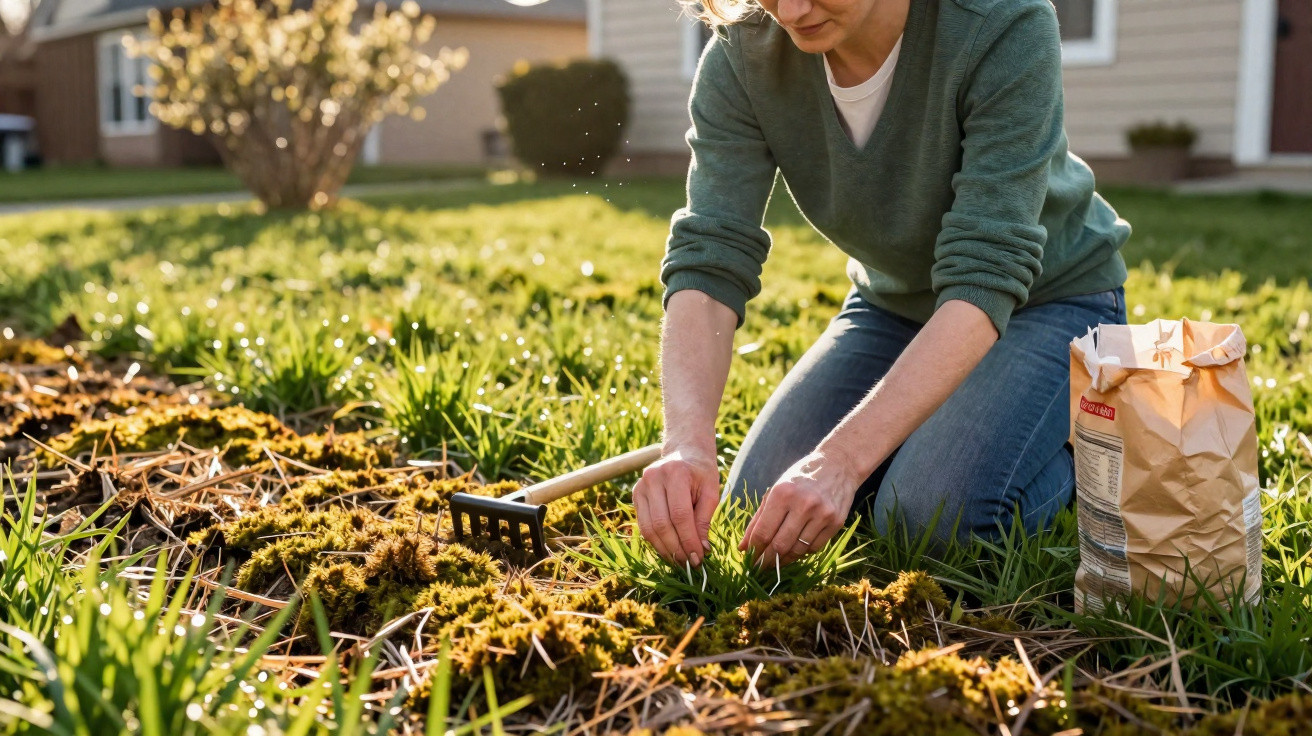
In place of a firm turf, a vivid green carpet spreads out - a serious warning sign.
If you walk across the garden in spring and, instead of hearing the grass crunch under your shoes, you feel it give way, you’re dealing with a clear issue: the ground is under strain, the lawn is weakened, and moss cushions have taken over. What looks harmless is usually driven by a complicated mix of waterlogging, shade, compacted soil and an unsuitable pH level. With a few targeted measures - the same practical steps landscapers have relied on for years - a lawn can be turned surprisingly quickly back into a resilient, dense green surface.
Why the lawn turns spongy after winter
Damp, shade, cold - the perfect conditions for moss
After a wet winter, the soil is often soaked right down. In shaded spots beneath trees, alongside walls, or by hedges, it barely dries out. Those are exactly the places where moss thrives. It needs very few nutrients, copes with darkness far better than grass, and exploits every weakened gap in the turf.
The lawn itself is at a disadvantage at this time of year: limited light, cold ground and constant moisture put grasses under stress. They start growing later, become thin and patchy, and moss ruthlessly takes advantage - forming, quite literally, a “felt lid” across the surface.
A spongy lawn isn’t a coincidence; it’s an unmistakable cry for help from the soil: too wet, too compacted, too acidic.
Compacted soil starves the lawn of air
Rainfall, children playing, garden equipment and naturally heavy soils - all of this gradually presses the ground tighter and tighter over the months. Beneath the surface, a hard layer develops that barely allows air and water to move downwards.
The results:
- Less oxygen around the roots
- Rainwater sits on the surface
- Grass roots weaken, and moss spreads
Grasses need airy, free-draining soil to build strong roots. Moss manages with almost no root system at all and simply settles on top. So that seemingly “comfortable” moss carpet is actually a sign of a serious structural problem in the soil.
What the soil is really telling you with moss
pH too low: moss favours acidic soil
Heavy moss growth is often a dependable indicator of strongly acidic conditions. Grasses perform best in neutral or slightly alkaline soils. If the soil becomes more acidic over the years, the roots struggle to take up many nutrients properly.
Moss responds differently: it tolerates acidity much better. As the pH drops, the grass retreats - and the green cushions move in.
If you want to be certain, use a simple pH soil test from a DIY store to check the level. In many gardens with severe moss, readings come in well below 6.0 - a clear disadvantage for lawn grasses.
Poor drainage: roots left sitting in water
If puddles linger on the lawn long after rainfall, or the ground still feels clammy days later, the water balance is off. Instead of passing water down into deeper layers, the soil holds it like a sponge in the top few centimetres.
For grass roots, that means:
- Constant wetness and very little oxygen
- Risk of rot at the roots
- Weakened plants that fail quickly
This combination of oxygen shortage and waterlogging is what makes the area feel spongy. Moss, by contrast, loves these damp conditions and spreads wherever grass dies back.
The professional starting point: remove moss and thatch thoroughly
Use a scarifier, not a rake: a proper, forceful “combing through”
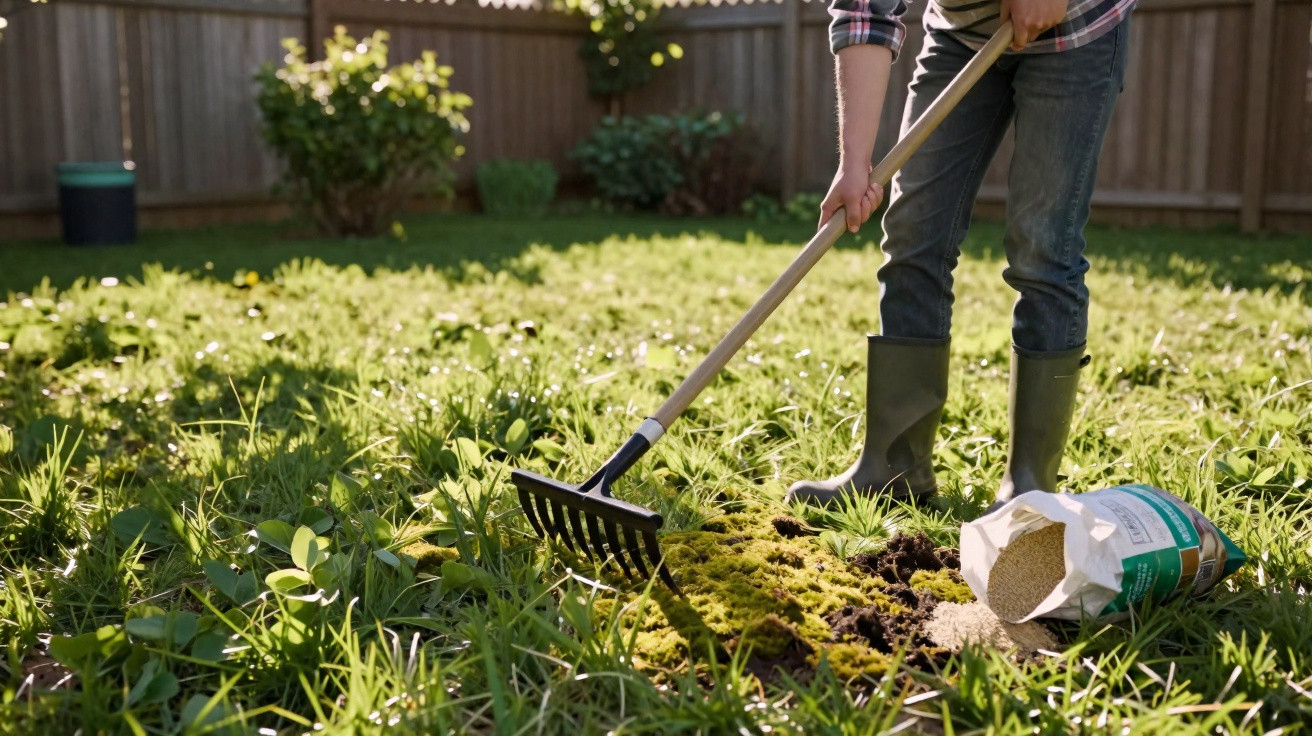
The first step towards a stable lawn is a thorough - almost brutal - intervention: scarifying. A scarifier (manual or electric) scratches a few millimetres into the surface, cuts through the matted layer, and pulls moss, old clippings and dead material up where it can be removed.
What matters:
- Mow the lawn short before using the machine
- Scarify in one direction and, with heavy infestation, also crosswise
- Sweep up and dispose of all loosened moss and thatch
The lawn can look alarming afterwards: gaps, brown patches and plenty of bare soil. That’s the point. Grass roots get air again, and the ground is ready to be rebuilt.
Aerate: bring air back into the soil with holes
Once the moss layer is gone, compaction is still the underlying issue. This is where professionals move on to aeration. You can do it with a sturdy garden fork, dedicated hand tools, or spiked aerator sandals strapped to your shoes.
The principle is straightforward: lots of deep holes break up the compacted layer.
- Push holes 8–10 cm deep at regular intervals
- Cover the entire problem area, not just a few spots
- In heavy clay soils, add sand if needed so the holes stay open
These channels let air, water and nutrients reach deeper layers again. The soil starts to “breathe”, and the roots can recover.
Correct the soil gently
Light liming to counter excessive acidity
If testing confirms the soil is too acidic, a careful application of lime can help. Suitable products include garden lime or dolomitic lime from a DIY store. The key is not to over-apply and to follow the label instructions.
Lime shifts the pH slowly, gives grasses better conditions to establish, and indirectly slows moss.
Spread the lime evenly over the scarified and aerated area. Heavy raking-in is usually unnecessary; rainfall will work it in gradually. If you haven’t limed for a long time and moss is widespread, you’ll often see noticeably stronger grass growth after a few weeks.
Close gaps immediately: overseed rather than wait
Where the scarifier has removed moss, bare soil is left behind. Those patches shouldn’t stay exposed for long, otherwise weeds and fresh moss will take advantage. That’s why overseeding is the next step straight after scarifying and aerating.
Particularly useful are:
- Overseeding mixes designed for established lawns
- Seed blends for shady areas under trees and near walls
- Hard-wearing varieties for lawns heavily used by children or dogs
Scatter the seed lightly over the loosened surface, rake in gently, then keep the area evenly moist. This helps the “carpet” close again, leaving moss far fewer places to return.
Why March becomes the key moment for the lawn
The right time for a “fresh start” treatment
Early spring - often March - is an excellent window for this programme. The ground is no longer frozen, it’s still moist enough, and the grasses are just about to enter a strong growth phase. If you scarify, aerate, lime and overseed now, you make the most of the natural growth surge in the weeks ahead.
At this point, the measures reinforce each other particularly well:
- Scarifying removes the moss layer
- Aeration loosens the soil and improves oxygen flow
- Lime stabilises the pH range for lawn grass
- Overseeding fills gaps before moss returns
If you then keep watering sensible and fertilising appropriately, the change is often striking: the lawn feels firmer, grows denser, and reacts less dramatically during wet spells.
How to slow new moss growth over the long term
Avoid common watering and mowing mistakes
Many moss problems are caused by maintenance habits that are easy to adjust. Frequent, light watering keeps the top layer of soil permanently damp - ideal for moss, but poor for deep grass roots. Better is watering less often but more thoroughly, so moisture reaches deeper down.
Mowing height matters too. Cutting extremely short weakens the grass, makes the ground dry out more quickly and creates light gaps where moss can gain a foothold again. A medium cutting height of about 4 centimetres offers a good balance between appearance and plant health.
Redesign typical trouble spots with purpose
In some places, moss will return again and again despite every measure - for instance in deep, permanent shade or persistently damp north-facing areas. In those cases, a different approach can be worthwhile:
- Under trees, consider crown pruning to let more light reach the ground
- On slopes, plan drains or run-off channels if water continually flows in
- In very dark corners, design with shade-loving perennials, ground cover or mulch instead of trying to keep grass
Taking the soil’s signals seriously - the spongy feel, moss cushions and standing water - saves a great deal of frustration over time. These largely mechanical steps replace aggressive chemical quick-fixes and improve the soil in a lasting way. Gradually, you end up with a lawn that feels the way it should underfoot again: springy but firm, richly green - and largely free of moss.

Comments
No comments yet. Be the first to comment!
Leave a Comment