
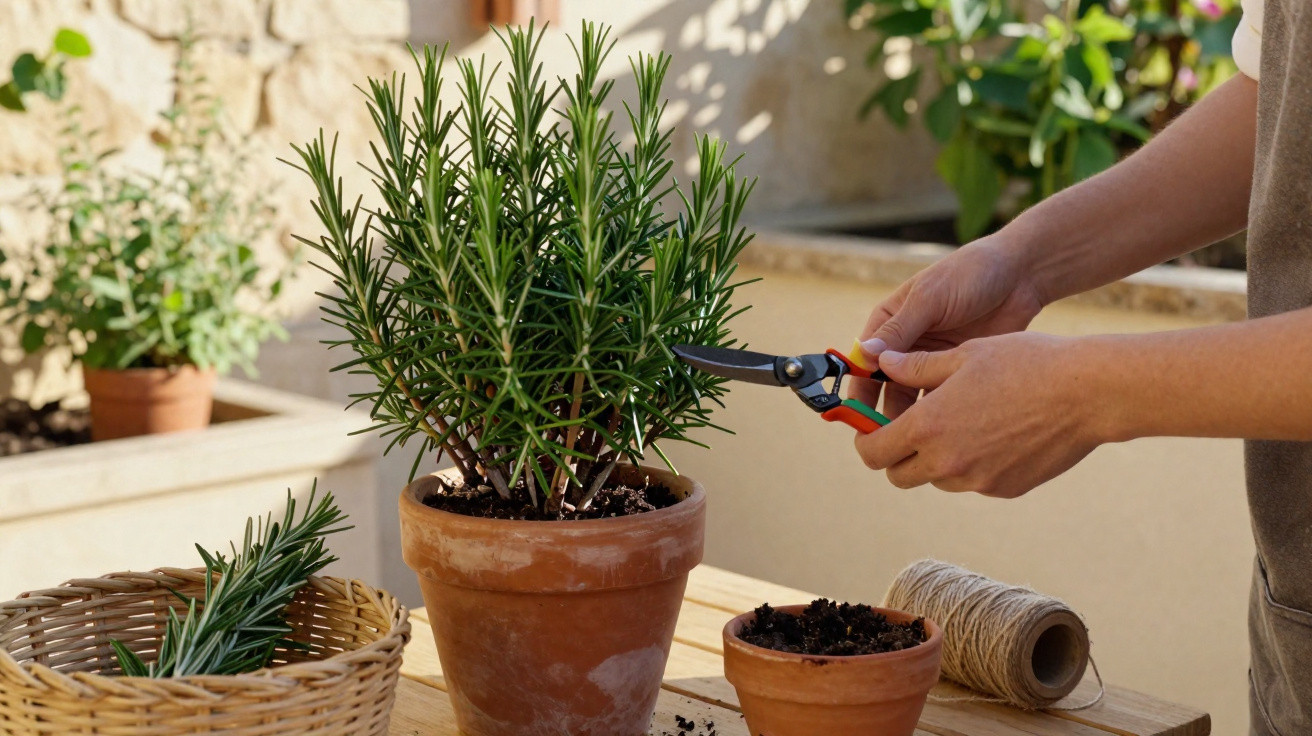
With the right cut, this Mediterranean herb stays compact, intensely fragrant and long-lived.
Rosemary thrives on sun, heat and lean soil - but left entirely to its own devices, this popular kitchen staple quickly becomes woody and tired. If you prune it with purpose and at the right time, you not only keep the plant shapely, you also encourage vigorous growth of fresh, aromatic shoots. What matters most is timing, technique and the plant’s age.
Why rosemary needs pruning at all
Rosemary is a perennial subshrub. If you simply let it grow, after a few years it develops lots of dead wood, the inner stems become bare, and the shrub starts to flop apart. The leaves lose fragrance and the plant looks exhausted.
Regular, gentle pruning keeps rosemary compact, rejuvenates the wood and boosts the aroma of the needles.
A well-planned maintenance cut brings several benefits:
- soft, fresh shoots for cooking and herbal tea
- tighter, denser growth instead of bare twigs
- lower disease risk thanks to a better-ventilated crown
- a neat, decorative shrub in a border or in a pot
Whether it’s in a pot on the balcony or planted out in a rock garden: without using the shears, rosemary becomes increasingly woody - and there’s only so much you can undo later.
The best time: when to prune rosemary
Spring pruning after flowering
In Central and Northern Europe, the ideal window is usually March, and in some areas April. By then the main flowering period has finished, the harshest frosts are typically over, and the plant is gearing up for active growth.
This is how experienced gardeners approach it:
- shorten faded shoots by around one third
- cut only within the green, still-flexible growth
- avoid nicking old, hard, brown wood
This spring tidy-up prompts lots of new side shoots, making the plant noticeably bushier. At the same time, you’ll collect perfect sprigs for the kitchen or for drying.
In exposed, colder locations, it pays to wait a little longer so fresh cuts aren’t caught by a late frost. Young plants only tolerate a very light trim - more like pinching out the shoot tips back to 5 to 8 centimetres.
Light shaping in autumn
A second, much gentler session can be done in October. The aim isn’t a hard cut-back, but a bit of “tidying” so the shrub goes into winter in good health.
Key points:
- remove only dead, damaged or badly out-of-shape shoots
- prune on a sunny, dry day so wounds dry quickly
- avoid any heavy intervention shortly before severe frosts
In windy, cold regions, a small autumn maintenance trim is often enough. A mineral mulch or a little gravel around the base protects the roots while keeping the soil free-draining.
Times when it’s better to put the shears away
Rosemary can be sensitive when pruning and weather don’t match. There are three periods you should clearly avoid:
- hard frost: cuts barely heal and fungi and rot become more likely
- heatwaves and drought stress: the added stress of pruning can weaken the plant significantly
- full bloom: heavy trimming drains energy and can reduce flowering the following year
Persistent rain is also unhelpful. Damp cut surfaces are an ideal entry point for fungal disease.
How pruning depends on the age of your rosemary
Shape young plants gently
For the first two years, the priority is setting the foundation for a compact, bushy plant. Harsh pruning would overwhelm the still-developing root system.
A tried-and-tested approach:
- pinch back shoot tips regularly by 5 to 10 centimetres
- never remove more than a quarter of the total leaf mass in one go
- always cut just above a pair of leaves or a bud junction
Handled this way, young rosemary branches well from the start and develops a sturdy, bushy outline. If you cut back too hard, you risk growth checks - or even plant loss.
Rejuvenate older, woody shrubs step by step
At some point, many gardeners find themselves facing a huge, woody bush with bare patches inside. Here, patience - and a multi-year plan - is the only real answer.
An old rosemary cannot be saved with a single drastic cut. The trick is slow rejuvenation over several seasons.
A gentle rejuvenation looks like this:
- First, remove completely dry, dead branches low down at the base.
- On remaining stems, cut back only as far as you can still clearly see green sections.
- The following year, shorten the oldest, weakest parts again, always leaving some foliage for photosynthesis.
Over two to three years, you can rebuild a denser shrub without leaving the plant suddenly “leafless” and at risk of dying.
When only a hard reset is left
Sometimes rosemary has gone years without any pruning and is made up almost entirely of hard, brown wood. If you can still find small buds or leaf starts anywhere on these stems, a severe cut back to about half the shoot length may be the last option.
Afterwards, the plant needs:
- loose, well-drained soil around the root zone
- measured watering - no waterlogging
- plenty of light and warmth, but not constant rain from above
Recovery can take months. If you see fresh green during that time, the rescue attempt has paid off.
Differences between pots and borders
Pruning rosemary in a pot
In a container, rosemary needs closer attention: roots have limited space, and nutrient and water reserves are restricted. Any pruning therefore has a stronger impact than it would in the ground.
So the rules shift slightly:
- reduce pruning intensity by about one third compared with plants in the ground
- focus on trimming young, soft growth; only touch hard wood in emergencies
- after cutting, keep the root ball evenly and lightly moist, while ensuring good drainage
Standing water in the saucer can seriously slow the healing of cut sites. A loose, mineral-leaning herb compost mix is invaluable here.
How pruning works when planted out
In the garden, with deeper roots, rosemary can cope with more. Planted out, you can shape it more decisively - as long as you stay within the green growth.
Cuts of up to two thirds of the shoot length are possible, provided the shrub is well established. You can also steer the silhouette: rounded, more upright, or slightly looser, depending on your garden style.
Key points for pruning in a border:
- always use sharp, clean tools
- remove crossing shoots or those rubbing inside the plant first
- maintain good air circulation through the shrub
Special cases: ground cover and ball shapes
Strongly trailing varieties are often grown as an aromatic ground cover. Upright “rogue” shoots spoil the low, creeping look, so cut these vertical stems right back at their base to keep the plant hugging the ground.
If you want a perfect ball in the herb bed, use a different method: trim all shoots evenly by about one third, literally moving around the plant as you work. Two such shaping cuts a year are enough to create very dense, green spheres that organise beds or edge paths.
Common mistakes when pruning rosemary
Cutting into old wood
By far the most frequent mistake is cutting into dead, brown sections instead of green growth. From these old parts, rosemary rarely - if ever - reshoots.
How to spot the boundary:
- lightly score or scrape the bark
- if fresh green and the typical rosemary scent appear underneath, you’re in the right area
- if it’s grey, dry and scentless, leave it alone
Cutting into old wood leads to permanent bald holes that won’t fill in. Older plants can end up looking ragged very quickly.
Taking off too much at once
Removing more than a third of the total leaf mass in one session is major stress for rosemary. The plant must seal large wound areas and has little energy left to produce new shoots.
Better several gentle interventions over years than one brutal action in a single day.
If you’re trying to reclaim a long-neglected shrub, break the job into stages. Between cuts, rosemary can recover, grow fresh needles and build reserves.
The wrong tools and the wrong location
Blunt, dirty secateurs tear stems rather than making a clean cut. That encourages rot and fungal infection and slows healing.
A basic kit for healthy pruning:
- well-sharpened, disinfected secateurs
- for large shrubs, lightweight hedge shears or sheep shears
- a dry, sunny day for the cut
Rosemary needs at least around six hours of sun a day to grow strongly and regenerate quickly after pruning. If it’s too shaded, it becomes leggy, more prone to problems, and reacts far more sensitively to any trimming.
Propagating rosemary easily from prunings
Raising new plants from cuttings
What you remove during pruning is far too good for the food-waste bin. Healthy, semi-woody shoots can be turned into new plants with minimal effort.
Step by step:
- Select strong shoots about 15 centimetres long, ideally from this year’s growth.
- Strip all needles from the lower third so nothing rots later.
- Insert into a very free-draining mix of herb compost and coarse sand.
Keep the pot in bright light, but out of scorching midday sun. The substrate should stay only lightly moist - never soaking wet. After four to six weeks, the first roots will usually have formed.
Water or soil - which works better?
Many gardeners like to place rosemary cuttings in a glass of water so they can watch roots develop. This can work well with soft spring shoots: change the water every few days, use a clean glass, and avoid any slimy residue that leads to stagnation.
More robust, semi-woody summer shoots generally do better in compost. The roots develop more strongly, and moving the plant on into a pot or into the garden tends to be less stressful.
Caring for young plants and planting out
Once the cuttings have built a solid root ball, move them into a larger pot. A diameter of at least 12 centimetres gives enough room for the first year. When potting on, handle the roots carefully and avoid damage.
Over the following weeks, keep the compost lightly moist but airy. Bright, sheltered spots are ideal until the young plants are more stable. If they establish well and reach roughly 15 centimetres in height, they can be moved the following frost-free spring to their final position in a border or into a larger container.
With a little routine in pruning and propagation, you’ll not only keep your rosemary healthy - you’ll gradually build up a whole supply of robust, aromatic plants for the garden, balcony and kitchen.





Comments
No comments yet. Be the first to comment!
Leave a Comment