
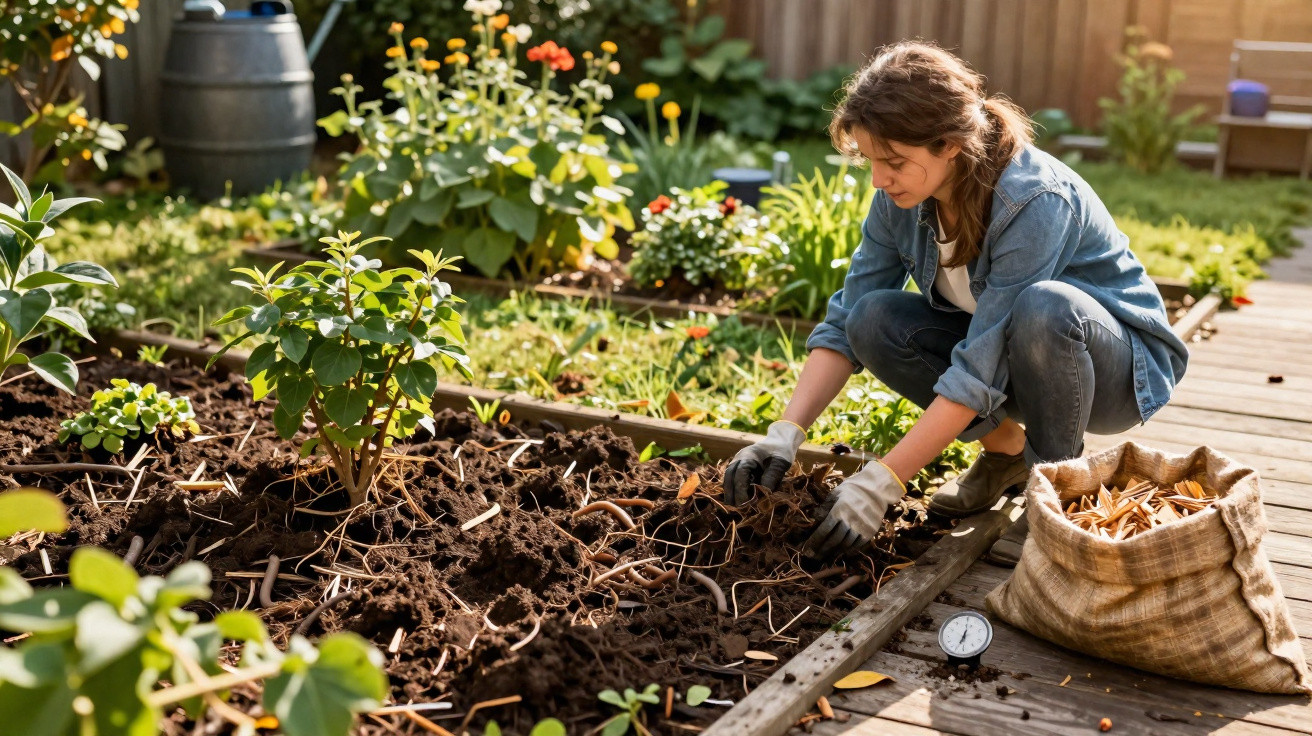
On a Saturday morning scented with damp earth and coffee, Emma stood at the centre of her back garden, looking at the ground as though it had let her down. The borders had crisp edges, and a deep, level layer of bark mulch covered them exactly as glossy gardening magazines seem to prescribe. It looked the part and even came out well in photographs. But her hydrangeas were unhappy, her tomatoes had stopped progressing, and the soil beneath that orderly brown cover felt… lifeless.
When she lifted a handful of mulch, she found a sour, compressed layer rather than the dark, friable soil she had expected. Roots were struggling close to the surface, while worms were almost absent. At that point, she understood that the issue was not too little mulch.
It was the way she had applied it.
Mulch: a gardener’s best friend and hidden saboteur
Take a walk through any suburban neighbourhood in spring and the scene is familiar: immaculate bark circles piled like doughnuts around trees, with rich chocolate-brown borders maintained to perfection. Landscapers tip out lorryloads of shredded wood and apply it in thick, close layers. Seen from the pavement, it suggests a successful garden. For the plant, though, it may be much like lying beneath a suffocating heavy blanket.
Mulch has increasingly become an outdoor carpet, valued more for visual neatness than for supporting living soil. That is where many gardeners begin to go wrong.
A local nursery owner told me she can identify “mulch victims” from the other side of the car park. Customers arrive with photographs of young trees surrounded by what professionals now quietly call “mulch volcanoes”: cone-shaped heaps pushed directly against the bark. Their leaves are turning yellow, growth is poor, and unexplained dieback often appears on one side. She takes them to the demonstration bed, pulls mulch away from a healthy tree and points out that its trunk flare is clearly visible above the soil.
Most people gasp. Then they see that they have buried their own trees like fence posts.
This conflict between a tidy appearance and what roots truly require lies at the centre of the mulch rethink spreading through gardening circles. Plants developed in untidy woodland, where fallen leaves decompose without accumulating against trunks like sand dunes. Water moves in pulses through loose organic debris, rather than a dense, even layer of black-dyed chipped pallets. When we imitate the appearance of magazine gardens instead of the workings of natural systems, mulch can change from a moisture-saving ally into a gradual source of plant stress. This is the common error gardeners are finally starting to recognise.
Rethinking how we apply, select and use mulch
This quiet shift begins with one simple action: take a trowel and lift back part of the mulch. Soil that smells sour, is compacted or sheds water is asking for air. One of the most useful techniques now recommended by experts is to keep mulch light, loose and shallow, with a distinct collar of bare soil around stems and trunks. For most borders, 2–3 inches is usually sufficient, while heavy clay or poorly drained sites need less.
Treat mulch as a breathable coat for the soil, rather than a weighted blanket that holds it down.
Many of the familiar “failure stories” begin in much the same fashion: novice gardeners with plenty of enthusiasm and a garden centre voucher for bulk mulch. They are persuaded to buy dyed wood chips because the colour stands out against the lawn. A well-intentioned neighbour advises, “Go thick, that’s how you stop weeds.” By late summer, those gardeners are watering repeatedly and wondering why the ground remains strangely dry. They do not realise that water is striking the hardened mulch crust, then flowing sideways out of the border.
We have all had that moment of recognising that something bought to encourage a garden may actually be quietly preventing it from thriving.
The straightforward reality is that many of us mulch more for our own benefit than for the plants’. We want the clean, even finish and the sense that the garden is “done” for the season. Nature doesn’t operate like that. Healthy woodland mulch consists of leaves, twigs, seed pods and decaying plant matter at several stages of decomposition. This varied layer nourishes fungi, insects and microbes, while allowing rain to pass through with ease. Replacing it with one dense material, laid like a floor covering and renewed annually without inspecting the soil beneath, interrupts the soil life that genuinely drives plant health.
Turning a suffocating blanket into living cover
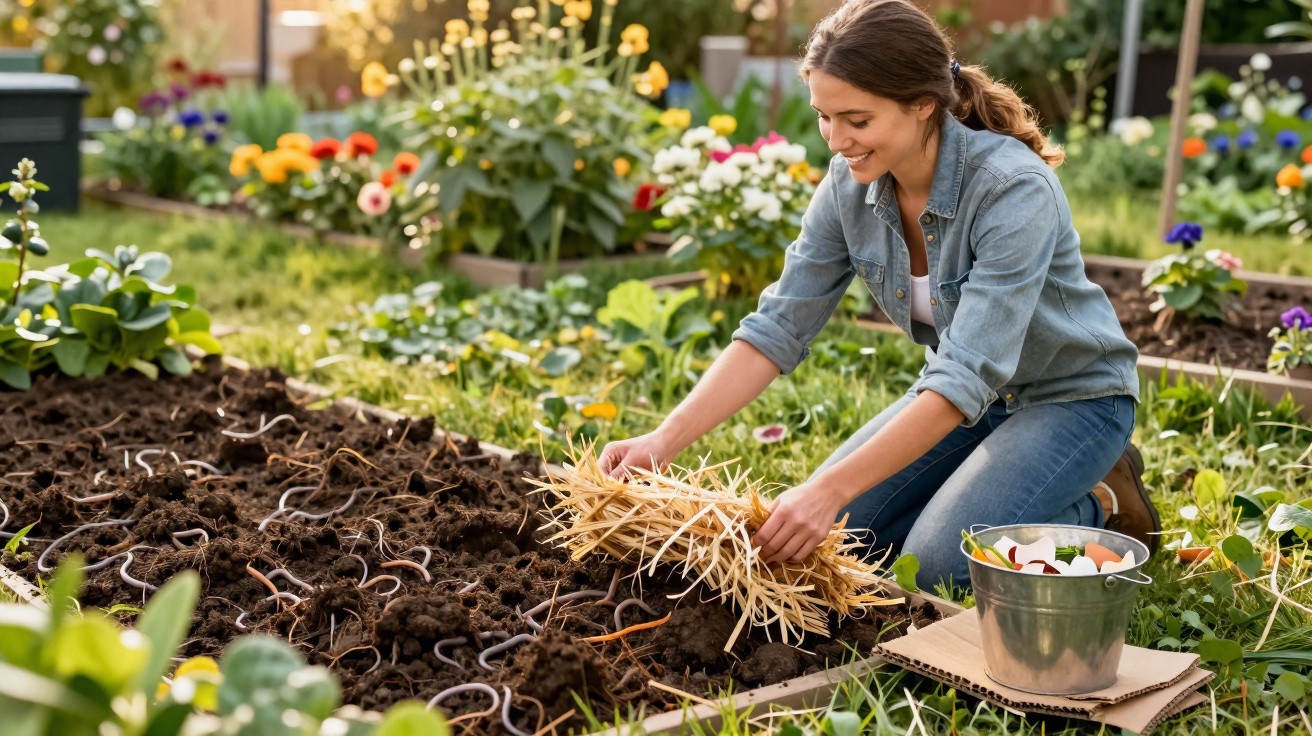
One practical change adopted by experienced gardeners is to use lighter, more varied layers instead of depending solely on heavy bark. Begin with a light foundation of compost or leaf mould to nourish the soil, then place a modest top layer of shredded leaves, straw or fine wood chips over it. Around perennials and vegetables, leave an open ring of bare soil around every stem, roughly two fingers wide. With trees and shrubs, keep mulch several inches back from the trunk flare.
The result can still look orderly, while plants have the space they need to breathe.
Another increasingly popular practice is to mulch in line with the seasons, rather than applying everything in one habitual session. Many growers who understand soil now wait until late spring, once the soil has warmed, before putting down their main mulch layer so they do not hold cold in the ground. They add only a very light top-up in late summer during extreme heat, then allow autumn leaves to do much of the work in autumn and winter. Let’s be honest: nobody really does this every single day. Even so, one or two considered changes each year can transform a border.
Gardeners who adopt this more adaptable method often notice an unexpected outcome: fewer pests, reduced fungal disease and richer, crumbly soil that is genuinely enjoyable to dig.
“Once I stopped treating mulch like a decorative coating and started treating it like food for the soil, everything changed,” says Carlos Rivera, a community garden coordinator who oversees more than 60 small plots. “We cut back on depth, banned mulch volcanoes, and started using whatever organic matter we could source locally. The plants responded within a single season.”
- Keep mulch shallow: For most borders, target roughly 2–3 inches; use less on heavy soil.
- Avoid contact with trunks: Maintain a visible gap around the bases of trees and shrubs to deter rot and pests.
- Mix materials: Use compost, leaves and finer chips together rather than relying on a single dense material.
- Watch the soil.
- Mulch for life, not looks: Put soil health ahead of a perfectly even colour.
A quieter, messier and healthier way to garden
Once your view of mulch changes, it is difficult to look at it in the same way again. Towering piles of bark around a neighbour’s young maples begin to seem less like “good maintenance” and more like future calls to a tree surgeon. Ordering a huge heap of dyed chips each year feels less necessary once you realise that last year’s leaves, chopped with a mower, can provide a subtler and more living alternative. Some gardeners even confess to deliberately leaving small areas of bare soil, simply to observe which insects and fungi appear after the suffocating cover has been removed.
This rethink is not intended to shame anyone who enjoys neat borders. It is about recognising when that aesthetic has quietly moved away from what plants and soil organisms need in order to flourish. Gardeners who pause, remove a little excess and welcome back some wildness often see their gardens respond with a quality that is difficult to quantify but easy to notice. Less watering. Deeper roots. Brighter leaves. A different form of satisfaction.
If mulch remains part of your gardening plans this year - and for most of us it will - the meaningful change lies in the question asked before spreading even one handful: am I covering this soil to conceal it, or am I nourishing the life immediately beneath its surface?
| Key point | Detail | Value for the reader |
|---|---|---|
| Reconsider mulch depth | Use 2–3 inches instead of thick, compacted layers | Stops roots from suffocating and improves water infiltration |
| Keep mulch away from trunks | Avoid “mulch volcanoes” and ensure trunk flares remain visible | Lowers the risk of rot, pests and decline in trees and shrubs |
| Choose diverse, living materials | Combine compost, leaves and fine chips instead of one dense product | Nourishes soil life, improves structure and supports healthier plants |
FAQ:
- Question 1 How close can mulch be to the base of my plants?
- Answer 1 Leave a small area of bare soil around stems and trunks. For flowers and vegetables, keep mulch around 2–3 cm away. For trees and shrubs, leave the trunk flare fully visible, with a gap of at least a hand’s width.
- Question 2 Is dyed mulch really that bad for the garden?
- Answer 2 The dyes themselves are often described as safe, but the wood may come from poor-quality sources such as construction waste or pallets. It generally decomposes badly and does not support soil life as effectively as natural, undyed options including leaf mould, compost or plain wood chips.
- Question 3 What’s the best mulch for vegetable beds?
- Answer 3 Many growers favour compost beneath a light layer of shredded leaves, straw or slightly dried grass clippings. As it breaks down, this combination suppresses weeds, retains moisture and gradually releases nutrients.
- Question 4 How often should I refresh my mulch?
- Answer 4 Annual topping-up is normally enough, and every other year can sometimes be sufficient. Check the existing depth before adding more. If a 2–3 cm layer is still working effectively, you may simply need to fill thin patches rather than renew the whole area.
- Question 5 What are signs I’ve over-mulched my garden?
- Answer 5 Typical signs include water collecting on the mulch surface, sour or musty odours when you dig, yellowing or stunted plants, and tree trunks that appear partly buried. If these occur, carefully remove some mulch and loosen what remains.


Comments
No comments yet. Be the first to comment!
Leave a Comment